![PortStrategy[GreenPort]](https://www.portstrategy.com/wp-content/uploads/2026/09/PortStrategyGreenPort.svg)




Difficult To Read
Drewry anticipates the ‘lurch towards protectionism’ will squeeze trade’s contribution to global GDP but it acknowledges the future is difficult to read in the Trump era. Felicity Landon reports
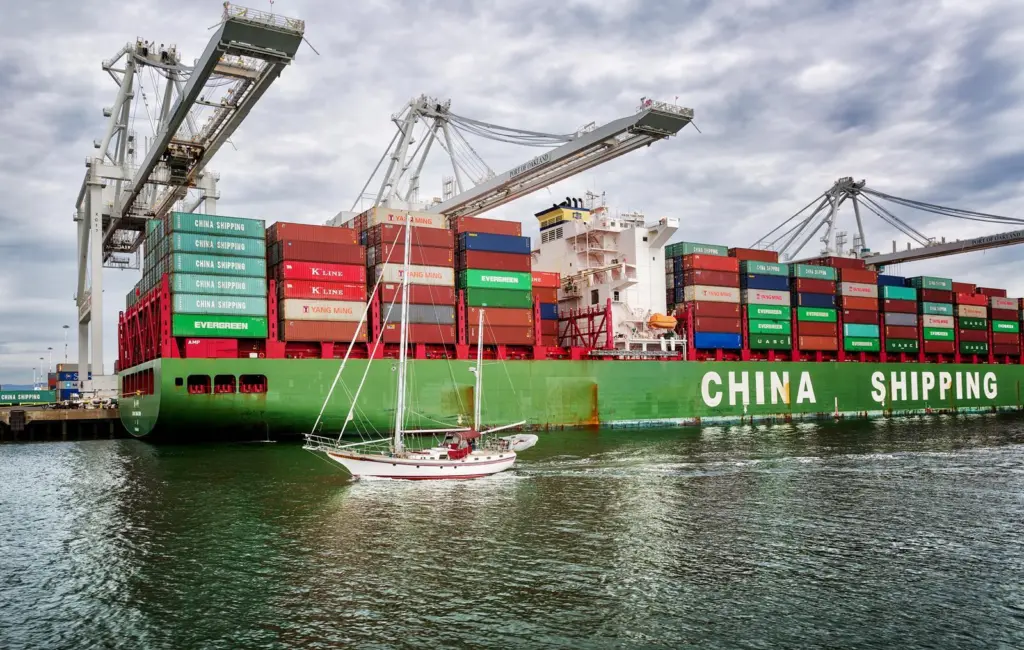
No prizes for guessing the main theme tackled in Drewry’s most recent webinar on its research into the Container Ports and Terminals Market – US tariffs and trade policies dominated the discussions with the allied difficulties of making accurate forecasts.
Considering the outlook for the second half of 2025, Eleanor Hadland, Senior Analyst, ports & terminals, Drewry said: “The key uncertainty here is tariffs and the US and therefore the global economy. The tariff announcements led most economists to revise their forecasts. This lurch towards protectionism is expected to greatly reduce international trade’s contribution to GDP, which will squeeze the GDP to container trade multiplier in very quick order.”
It’s certainly a challenge to find a fixed moment at which to assess the market, given President Trump’s habit of constantly moving the goalposts. In June, the WTO was forecasting that world trade would contract by 0.2% this year; Drewry expected container handling to decrease by 1% in 2025, the same level of contraction of 2020, during Covid. This would, said Hadland, be only the third year with an annual decline since Drewry started recording this data in 1979 – but “the news keeps on changing, so we expect to keep revising these forecasts,” she said. “Overall, all we can do is express sympathy with port executives and the rest of the supply chain that are trying to map out the game plan in a Trump 2.0 administration. There really are few, if any, upsides for container shipping in this trade war. And it must be noticed that tariffs can just as easily be with withdrawn and that could reverse much of the predicted damage.”
USA HIGH IMPACT
Beyond the threat to volumes, US port and terminal operators are set to be particularly hard hit by the US tariffs and trade policy, warned Hadland. “Yes, demand is a major impact and combining that with the proposed fees on Chinese owned and built ship fleets, the impact on the ports sector as a whole is going to be a very high risk to the US market and economy.”
However, she said, narrowing the focus back down to container operators, the American Association of Port Authorities has already issued a “very stark warning” in relation to port equipment and the “build America, buy America” push.
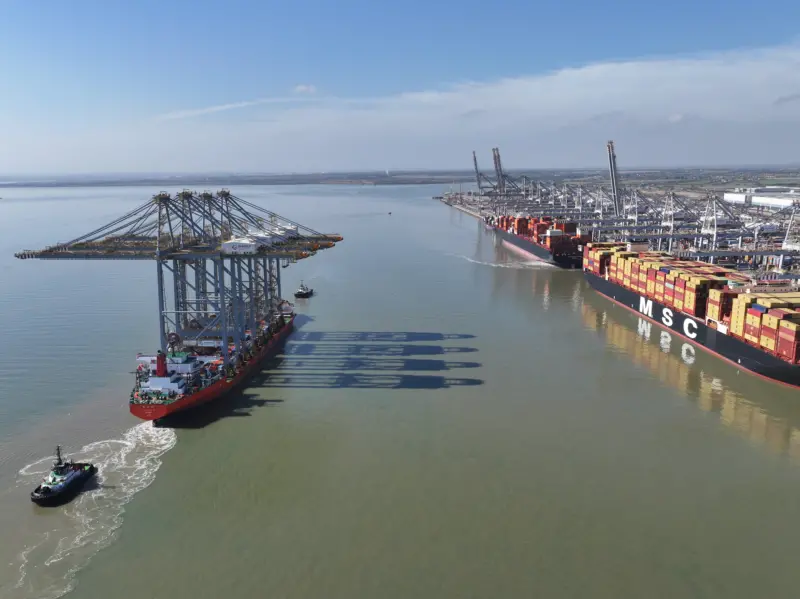
“If you look at the proposed tariff on a ship-to-shore cranes and multiply that by the four or five you might be buying to expand your terminal or replace existing equipment, then the impact of tariffs on container operator costs must not be underestimated. It is important to note that in the current environment, there are a small number of crane manufacturers which are located outside China – but I wouldn’t have said that US policy is consistent or established enough yet for them to be putting in place investment plans to expand their production capacity. So for spare parts and replacement equipment in particular, US ports are going to see costs rise very steeply in the very near future; whatever the outcome, tariffs are going up on this type of equipment and the sector is one where those costs get passed back through to end users and eventually on to US consumers.”
The Drewry team also considered global port capacity and utilisation over the next five years. Hadland said that container terminal capacity is projected to increase at an average rate of 2.1% annually between 2024 and 2029, to reach 1.48bn TEU by 2029 – representing an additional 145m TEU of capacity coming on stream over five years.
Global utilisation is expected to drop below 65% in 2026, then recover to just below 68% by 2029.
While utilisation is expected to stay high in the Greater China market, there is major new capacity coming online – not least with Shanghai International Ports Group’s announcement that it is moving ahead with the next phase of development at Yanghshan Port, where it is planning to construct another 6km (6,000 metres) of deepwater berths over the next six years.
Related Articles
 EXPANSION & DEVELOPMENT
 CONTAINER & CARGO HANDLING
 PORT & TERMINAL NEWS