![PortStrategy[GreenPort]](https://www.portstrategy.com/wp-content/uploads/2026/09/PortStrategyGreenPort.svg)

Panama dispute intensifies
The Republic of Panama is trying to oust the Panama Port Company, a CK Hutchison subsidiary, from its Balboa and Cristobal container terminal concessions but PPC clearly has no intention of leaving quietly
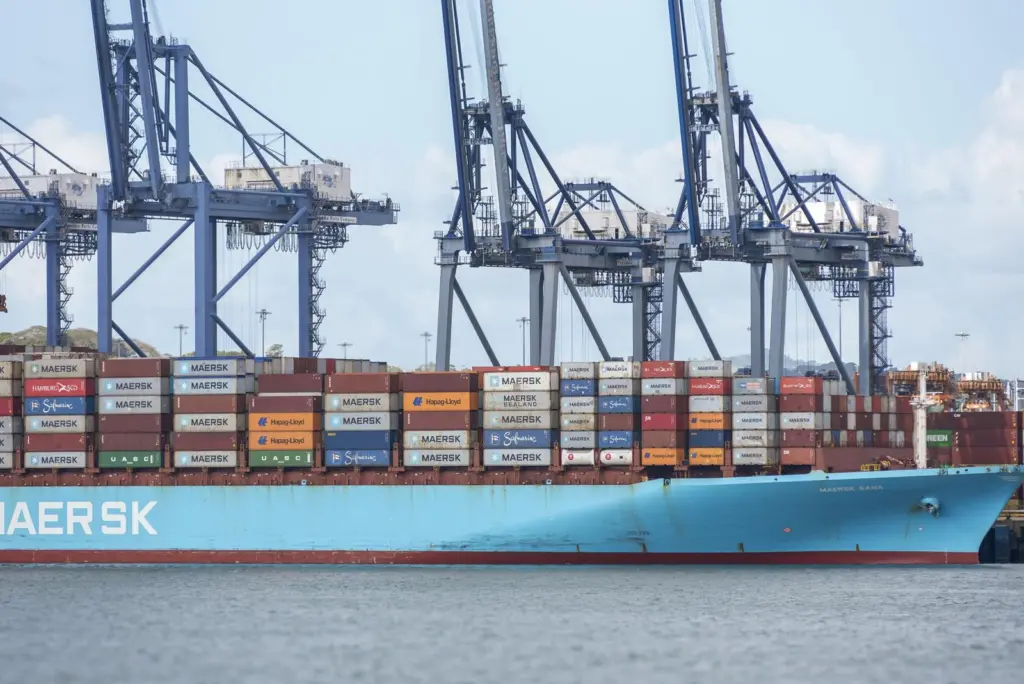
The Supreme Court of Panama’s announcement, in late January, that it had determined that the laws underpinning CK Hutchison’s terminal concessions at either end of the Panama Canal are unconstitutional raises a range of issues.
It is well known that President Donald Trump effectively triggered the legal review of the concessions after complaining of undue Chinese influence over the Panama Canal and threatening to take it back under US ownership. This led to Anel Flores, Panama’s Controller, undertaking an audit of the terminals which found alleged irregularities said to have cost the government US$300m since 2021 and around US1.2 billion since 1997. 2021 saw the concessions for the ports of Cristobal and Balboa extended for 25 years.
Not surprisingly, CK Hutchison has decried the decision emphasising that it “lacks legal basis” and is “diametrically opposed” to previous rulings and will “undermine the reputation of Panama as a reliable jurisdiction.” The Chinese government expressed similar views and has said it will act to protect the interest of Chinese businesses in Panama.
Subsequent to this, Jose Raul Mulino, President of Panama, issued a statement offering reassurance that the terminal operations would continue and that the government would work with the Panama Maritime Authority and the Panama Ports Company (PPC), the Hutchison subsidiary, up to and through a transitional phase until a new concession process could be implemented. This was all said before the decision of the Supreme Court has become final, as per legal process.
Equally, it is interesting that the President, in the same statement, announced that APM Terminals (APMT) would operate the two Canal-adjacent terminals during the transition phase. An announcement corroborated by a release from the company itself expressing its willingness to fulfil this role subject to the Supreme Court’s ruling becoming final.
PREDETERMINED?
The overall feeling generated by this chain of events and the allied results is that they were predetermined – a foregone conclusion arrived at largely due to pressure from the Trump administration. Equally, it is interesting to note how quickly the APMT option to operate the two terminals surfaced following the Supreme Court announcement. The latter appears to suggest earlier dialogue between APMT and the Panama government.
In 2025 APM Terminals acquired the Panama Canal Railway Company which operates the 76-kilometre single-line railway adjacent to the Panama Canal.
Adding fuel to the fire, the Hong Kong local government – CK Hutchison is based in Hong Kong – has issued a statement underlining that it “opposes any foreign government using coercive, repressive, or other unreasonable measures.”
ESCALATION
The basis of Panama’s Supreme Court finding focused on Law No 5 of 1997, the legal basis for PPC’s nearly three-decades of concessions at the ports of Balboa and Cristobal. It stated that it was unconstitutional, declaring that the laws governing the agreements violated the constitution and public interest requirements.
CK Hutchison responded saying that it considers any finding that Law No 5 is unconstitutional “to be unlawful.”
The Supreme Court ruling has to be formally published to enter into force and as of the time of writing, mid-February, this remained pending.
Matters unfolded quickly. CK Hutchison noted that early on Panama had taken steps “toward a forced exit of PPC and transition of the port sector, with no clarity as to operational plans.”
APMT in stepping up to offer its services to operate the two container terminals released a statement whereby it said it was “not involved in the ongoing legal proceedings and bears no role in decision-making regarding the short or long-term structure or future administration of the Balboa and Cristobal terminals.”
On February 3 CK Hutchison, hardly surprisingly, escalated its dispute with Panama, formally notifying the Panama Government of a treaty dispute. It initiated proceedings against the Republic of Panama under the terms of its concession contract and the rules of Arbitration of the International Chamber of Commerce.
It was also clearly not impressed with APMT/Maersk on February 10 cautioning it that any move by APMT or its affiliates to assume control of the Balboa or Cristobal terminals without its consent would expose them to potential damages and legal action.
Indeed, it is hard to fathom a logic behind APMT’s decision to get involved – it is perhaps naïve of the company to think it would not become a target for legal action. And beyond this there would certainly be no justice involved if APMT were to be handed the terminal operating rights on a long-term, basis without a proper concession process. Puzzling!
CK Hutchison has further stated that if the Supreme Court ruling is published and concession termination follows then “the immediate result would be to render PPC’s operations of its terminals…impossible.”
The situation is clearly volatile and further big chapters in this story can be expected.
Related Articles
 EXPANSION & DEVELOPMENT
 CONTAINER & CARGO HANDLING
 PORT & TERMINAL NEWS