![PortStrategy[GreenPort]](https://www.portstrategy.com/wp-content/uploads/2026/09/PortStrategyGreenPort.svg)

Rotterdam port plans future growth
The Port of Rotterdam is putting investment, infrastructure and international connectivity at the centre of plans to protect its position as a leading European logistics hub.
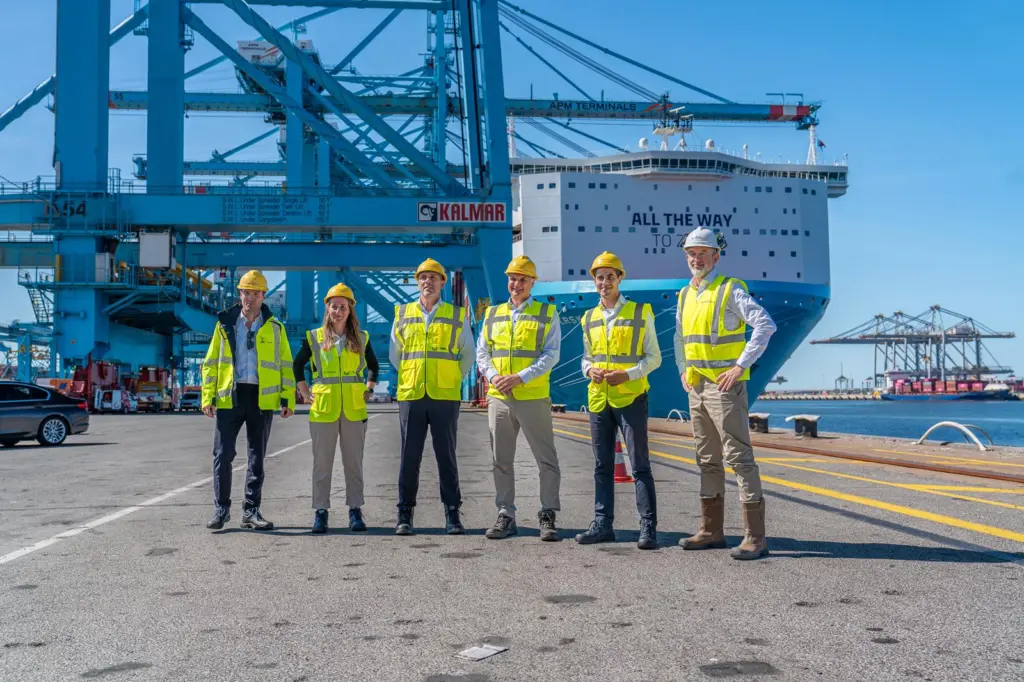
During a working visit to APM Terminals Maasvlakte II, attention focused on the conditions needed to support future investment and strengthen the port’s role in global trade. The priorities include maintaining strong European hinterland connections, creating an attractive investment climate and ensuring resilient infrastructure capable of supporting growing cargo flows.
The port also sees continued investment in innovation as essential to future competitiveness. Automation, digitalisation and electrification are already being used at Maasvlakte II to improve safety, efficiency and sustainability, providing a model for the development of future-ready logistics operations.
Boudewijn Siemons, chief executive of the Port of Rotterdam Authority, said investment must be matched by reliable connections across Europe.
“The Port of Rotterdam is a key driver of the Dutch economy and an indispensable link in international trade and logistics chains,” he said. “To maintain this position in the future, we need robust infrastructure, strong hinterland connections and close cooperation between government and industry.”
The port is also calling for continued collaboration between government and businesses to strengthen supply chains and ensure the Netherlands remains attractive for international investment.
At APM Terminals Maasvlakte II, managing director Harold Kunst highlighted the link between technological investment and economic resilience.
“Our Maasvlakte II terminal demonstrates how innovation, automation and sustainability can go hand in hand with economic growth and security of supply,” Kunst said.
He added that the Netherlands has the foundations needed to remain a global logistics hub, but warned that this depends on ‘an attractive investment climate, strong infrastructure and continued cooperation between government and industry’.
Related Articles
 EXPANSION & DEVELOPMENT
 CONTAINER & CARGO HANDLING
 PORT & TERMINAL NEWS