![PortStrategy[GreenPort]](https://www.portstrategy.com/wp-content/uploads/2026/09/PortStrategyGreenPort.svg)
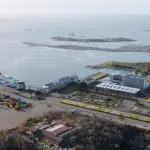

Tecon Salvador rises
Tecon Salvador, the box terminal for Salvador, is reaping the benefit of China’s advance into Brazil at the expense of the USA. Rob Ward charts events
The dramatic declaration of the new “Monroe Doctrine” by Donald Trump following on from his abduction of Venezuela’s President Nicolas Maduro on January 4th this year, is having a knock on effect on trade flows and port scenarios throughout Latin America, and especially in Brazil.
Trump’s aggressive move was partly a response to the United States losing its influence in Latin America, which President James Monroe, back in 1823, declared should be strictly within the “Sphere of Influence” of the US. Trump, in trying to justify his international law-breaking kidnap of Maduro and his wife, also pointed to the fact that Russia, Iran and China, who have invested decades of soft power and billions of dollars in hard cash in Venezuela especially, needed to “get out of America’s backyard”.
Among Americans it has rankled for several decades now that China in particular, has been “making deals” throughout Latin America and implementing its “Belt and Braces” strategy, which provides the funds for much needed infrastructure improvements.
A CASE IN POINT
A case in point of how China is taking over from the US is the Electric car market.
Ford Motor Co has for over a century been a major player in the Brazilian automobile market and since 2000 the American car giant had been producing various models (including the Ford Ecosport and the Ford Fiesta) from assembly lines at the Camacari plant, near Salvador, Bahia, in the Northeast region of Brazil. The American multi-national spent some US$4 billion on the plant only to close it down in January 2021, after falling sales, mostly due to cut-price Chinese vehicles entering the market. As a result, Chinese vehicles now account for 6% of the overall Brazilian market and their market share is rising every year.
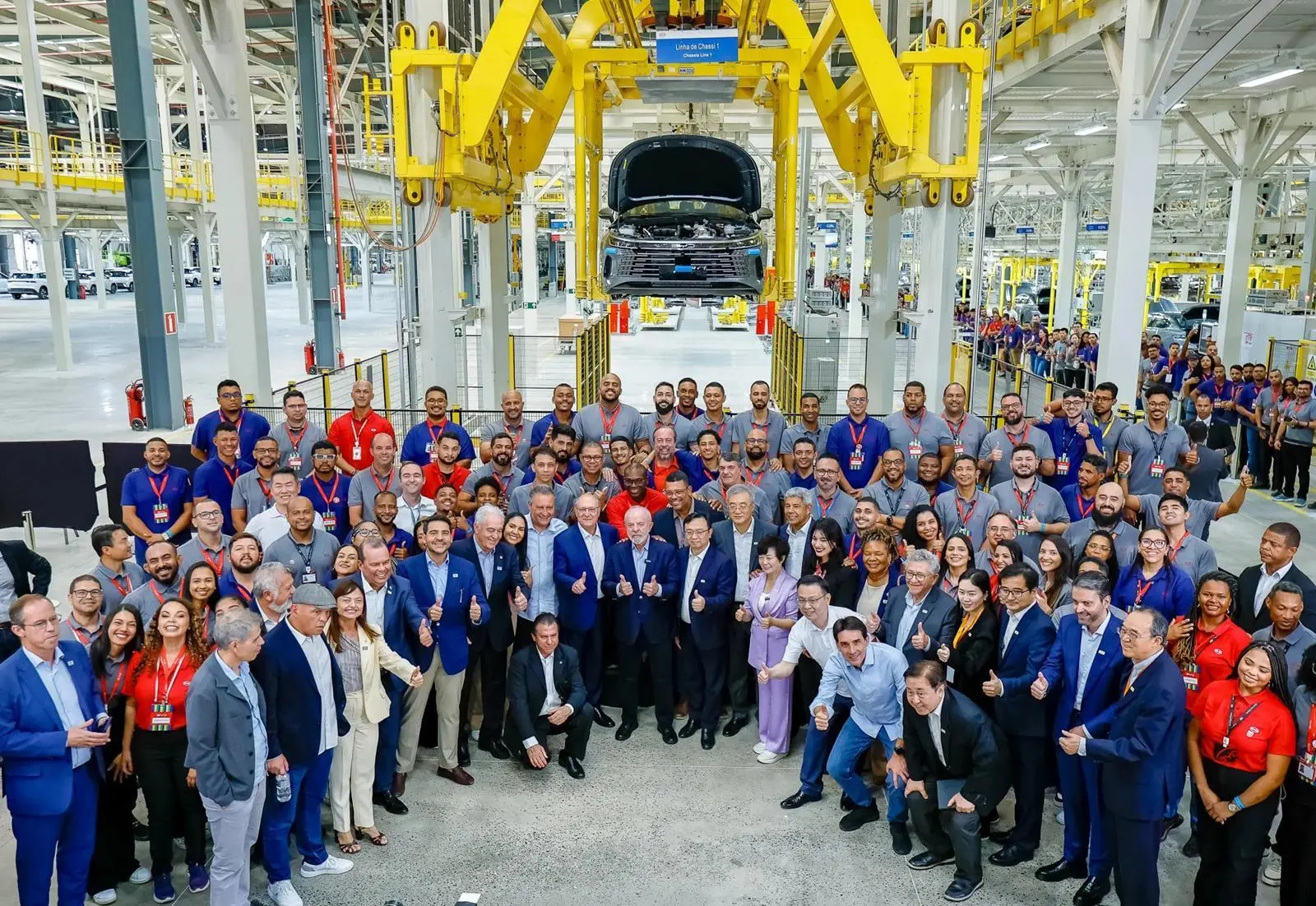
BYD, a Chinese company and the world’s largest EV manufacturer, has opened its Camacari plant, a former Ford production site and will be able to produce 300,000 cars per annum by the end of this year.
Similarly, the preponderance of rare earth minerals, such as nobium (90% of global output), graphite, nickel and cobalt, in Brazil is another magnet for the Chinese, and something Trump would love to get his hands on.
And so today, symbolizing the reduction of American influence and the upturn of China, Ford has departed after 101 years (when the iconic Ford Model T was produced in Brazil). Significantly, BYD, the Chinese EV maker, is progressively moving in, and investing some US$I billion in making the installation Chinese. The first BYD E-vehicles rolled off the assembly line in July of last year, and many more have been arriving in CKD kits for assembly. They are then shipped on to domestic and international markets via the nearby port of Aratu (22 miles away) and/or Salvador (38 miles away).
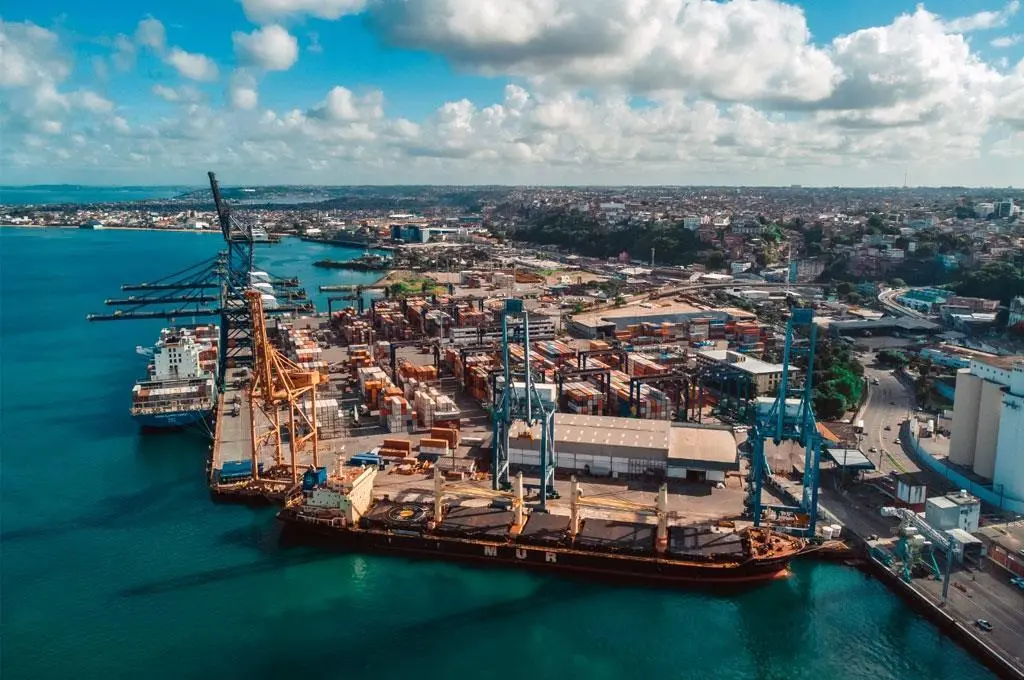
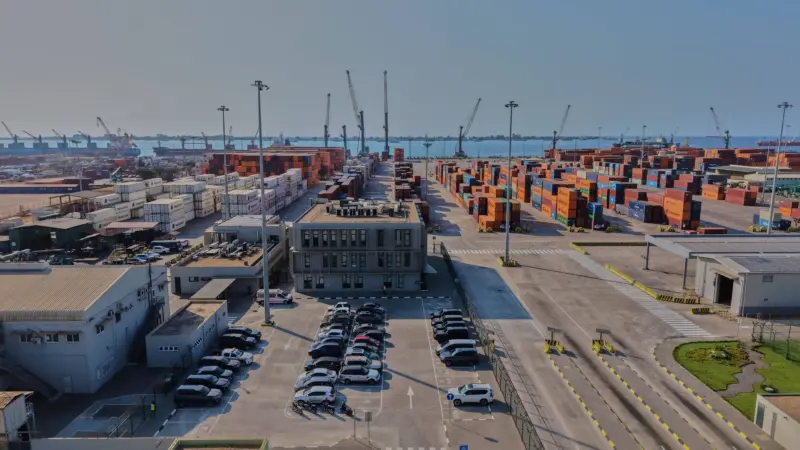
This is creating several shiploads of extra business for Tecon Salvador, the box terminal for Salvador, which saw MSC take over control from Wilson, Sons in October 2024.
THROUGHPUT JUMP
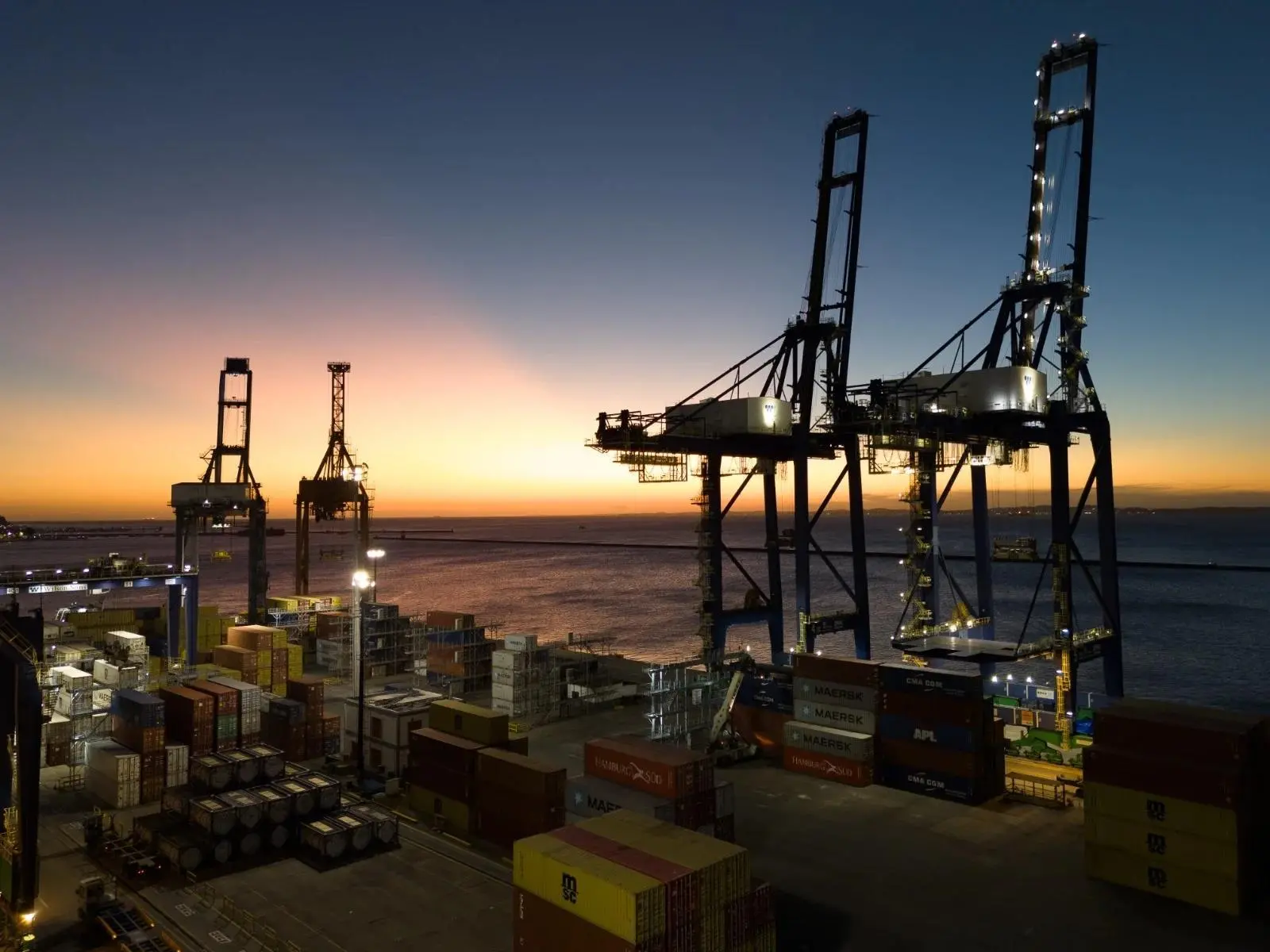
Throughput has jumped by 40% from 401,000TEU in 2023, to 560,000TEU in 2025, and is up 11.1%, from the 2024 figure. Exports (full) jumped from 94,000 to 120,000TEU over the two-year period, while imports (full) rose from 69,000 to 90,000TEU.
“The whole BYD project to transform Ford Camacari is huge,” said a spokesperson for Tecon Salvador. “At first it was mainly project cargo to build the complex and for machinery and then came CKDs, plus parts. This has benefitted not just us but also the entire Salvador port complex. It is clear that the Chinese are ambitious and will keep going; we are expecting them to build factories to produce batteries in Brazil in the future.”
The synergies are clear [for MSC and Wilson, Sons] and MSC has set up a new service to the Far East, the New Santana, which on ECSA calls first at Salvador, expressly to serve BYD’s import needs for their Camacari installation, and only then sails on down the coast to Santos,” notes Robert Grantham, of Solve Shipping Consultancy, who was once country manager for China Shipping. He adds that Cosco has also initiated new services to Tecon Salvador, to cater for BYD’s needs in Camacari.
At Ecoporto (the mostly breakbulk terminal in Santos, which handles around 55,000 TEU per year and deals with Chinese companies on a daily basis,
Luiz Araujo, Commercial Director for Ecoporto, the multi-purpose terminal that works closely with Chinese companies, similarly notes increased activity. He notes Cosco and Hongfa, which is a cousin of the Cosco family, are both rapidly expanding their activities in Brazil, both generating breakbulk and project cargo shipments with much of it destined for Camacari.
“Chinese influence is growing, especially in northeast Brazil,” Araujo tells Port Strategy. “They are buying land, and their automobile companies are expanding everywhere, not only in Brazil but all over the world – they are filling in the gaps left by the US. They have the money and the long-term strategies.”
TRUMP BACKFIRE
Although not as powerful as China, many logistics executives say Brazil is well equipped to counter Trump’s Trump-mageddon, as exports account for only about a fifth of its gross domestic product, with only 12 percent shipped to the US compared with 28 percent to China.
In terms of Trump-mageddon’s impact on Brazil, it looks as though it has backfired very badly for the American President.
Related Articles
 EXPANSION & DEVELOPMENT
 CONTAINER & CARGO HANDLING
 PORT & TERMINAL NEWS