![PortStrategy[GreenPort]](https://www.portstrategy.com/wp-content/uploads/2026/09/PortStrategyGreenPort.svg)





Legacy or lunacy?
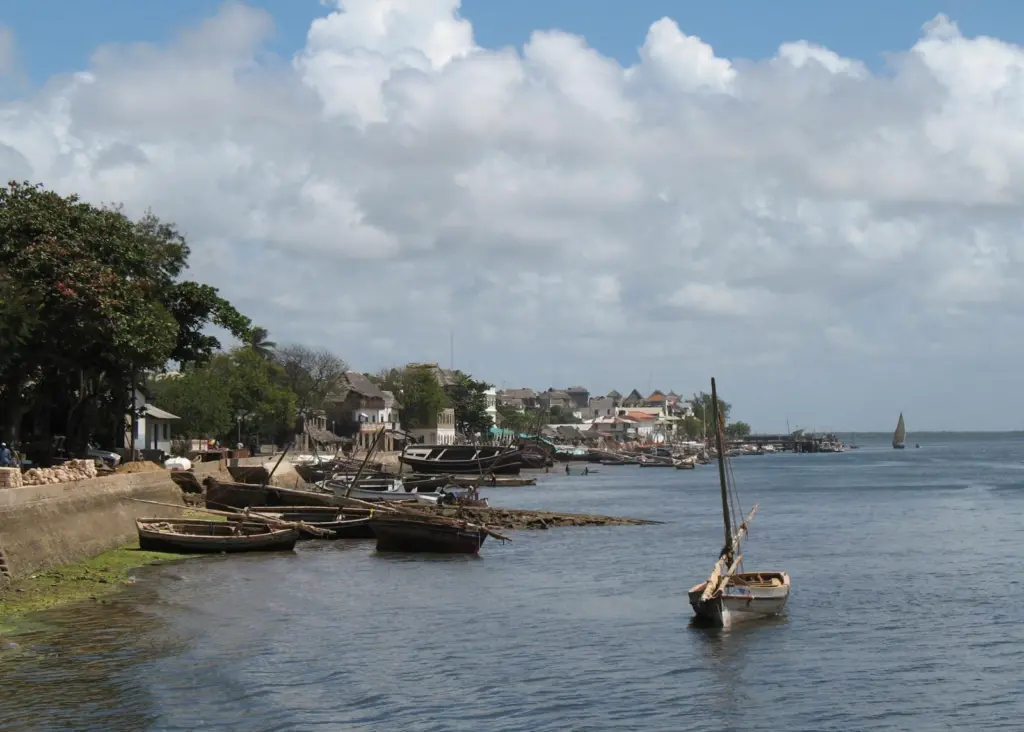
They say it will represent an important part of the legacy of Kenyan president Mwai Kibaki but how realistic is it to think that Kenya’s new port of Lamu will follow an effective development programme?
The idea is the port, which saw its groundbreaking ceremony last month, can serve as a gateway for oil exports from the newly independent country of South Sudan and potentially for future oil from Uganda, both landlocked countries.
It could also serve to lessen the cost of imports to Ethiopia and South Sudan and in time benefit Rwanda and central African countries too.
In theory, the port also stands as a model development of the type held up by institutions such as IMF and the World Bank.
Government taking a role in kick-starting the development through the provision of basic port infrastructure and road and rail connections; the private sector getting involved in areas such as marine terminal development and operation; and the project overall acting as a stimulus to unlocking the natural and other resources of impoverished nations.
But will theory go into practice?
In total, the development of the port of Lamu is expected to cost $24bn with part of this funding, according to government sources, coming from China. It is a hefty price tag for Kenya to pay and with only three countries overall having formally joined the project so far there is relatively little scope for sharing costs. Precisely where the funding is coming from in China is also something of a mystery.
There are also environmental concerns – the nearby island of Lamu for example is a favourite retreat of Hollywood stars and other affluent foreigners. It is these parties that President Kibaki accused at the groundbreaking ceremony for the port of Lamu of inciting civil rights activists who have been protesting against the new port project. There are fears about destroying a historic town and there are concerns about Somali pirates and rebels as well as about corruption.
In a wider context, it also has to be said that Kenya is not a country that has distinguished itself in terms of keeping pace with demand for port services and adopting modern port management and operational systems in a timely way.
The port of Mombasa, now Kenya’s principal port, has traditionally lagged behind in key cargo sectors when it comes to providing adequate capacity to meet demand. Today, for instance, Mombasa’s publicly operated container terminal operates with a throughput far in excess of its rated capacity.
Where more than one country is concerned this means politics, and this, in turn, does not always spell a spirit of cooperation. Uganda, Tanzania and Rwanda were three countries notable by their absence at the recent groundbreaking ceremony.
Recent media reports in Uganda also suggest that the Lamu port project has “stirred diplomatic tension” between Kenya and Uganda. One report, in the Daily Monitor, said Ugandan president Yoweri Museveni had been working on a deal with South Sudan to build a pipeline for both countries to export their oil via Mombasa, and he was surprised by the Lamu deal.
In its final form, the 32-berth port of Lamu would become the biggest port on Kenya’s Indian Ocean Coast, five times bigger than Mombasa. Whether, however, this plan is realised, and particularly within the four year timeframe envisaged by the Kenyan Government, depends – as has been made clear above – on a lot of challenging factors.
Related Articles
 INSIGHT & OPINION
 INSIGHT & OPINION
 INSIGHT & OPINION