![PortStrategy[GreenPort]](https://www.portstrategy.com/wp-content/uploads/2026/09/PortStrategyGreenPort.svg)




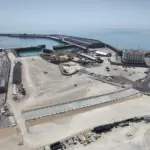

Zagreb Pier: White elephant?
COMMENT: In 1970, Sonya Gandhi, former president of the Indian National Congress, presented two Indian elephants – Sony and Lanka – to former Yugoslavia President Josip Broz Tito at his Summer Residence on the Croatian island of Veliki Brujini. Sony sadly passed away in 2010 but it looks like Lanka will finally get ‘company’ in the shape of a white elephant – the Zagreb Pier.

The construction of the new pier – currently planned for a container terminal – in Rijeka, Croatia, is underway, but is it realistic? Two previous tender rounds were halted due to a lack of interest.
Documentation viewed by Port Strategy states this new facility will be open for business by 2021, largely financed by the World Bank. But there is no need for further container capacity and serious logistical hindrances that will cost hundreds of millions of euros to overcome.
Rijeka has had a state-of-the-art existing container terminal, Adriatic Gate Container Terminal (AGCT), managed by International Container Terminal Services Inc (ICTSI) since 2011. The terminal’s throughput was 210,000 teu in 2017 and it has a capacity of approximately 600,000 teu with four ship-to-shore cranes. Significant investments have been made by both public and private sectors over the last decade. There seems to be no operational rationale for a second terminal.
Contrary to all current best practice in port planning, the new pier is being constructed in the middle of the city, with no easy routes in and out and in an area that, in the longer term, is best used for residential and commercial spaces (as seen in the rest of Europe). To create the new highway needed for cargo to enter and exit the city will require further public investment – and public debt.
Poor public planning
Overall, this project appears to be a case of poor public planning. As an example, the public authorities seem to be working with unrealistic container volume forecasts.
When Rijeka’s existing terminal, AGCT, was tendered in 2009, the government’s “Invitation for Tender” document forecast a strong ramp-up of container volume to a level of 450,000 teu in 2017 – more than double the actual throughput achieved. Overly optimistic and rosy forecasts came up against the reality of low regional economic growth and a lack of de-regulation of the railway which was needed to reach a wider hinterland.
Against this background more moderate forecasts would be appropriate for the planned new terminal. Instead, according to a presentation made in November 2017, the volume forecasts presented foresee total port of Rijeka container traffic jumping to 1.4m teu in 2030. This equates to 500%+ increase in volume over a 14-year period and flies in the face of all experience.
Frankly, this would be amusing if it was not tragic: public investments, and thus tax-payer money, being based on such flimsy foundations.
Related Articles
 INSIGHT & OPINION
 INSIGHT & OPINION
 INSIGHT & OPINION