![PortStrategy[GreenPort]](https://www.portstrategy.com/wp-content/uploads/2026/09/PortStrategyGreenPort.svg)



Turbulent times ahead
Looking to the future, industry consultants Drewry identify a turbulent container port market presenting challenges at every critical level. Felicity Landon Reports
With uncertainty and unpredictability the order of the day, what can container ports and terminals expect in 2025? Drewry’s Container Ports & Terminals Market Outlook webinar, held in March, came after the sale of CK Hutchison’s ports division to BlackRock and TiL was announced, but before the pushback from Beijing, with Chinese authorities seeking to block the sale.
Nevertheless the discussions at the webinar gave indications of what’s in store for the global container sector and how ports and carriers could be impacted in 2025 – we’re talking not only about the planned sale of Hutchison ports and President Trump’s protectionist policies (which, of course, also relate to Hutchison’s presence at either end of the Panama Canal), but also about the impact of investment and expansion by global terminal operators in key locations, and the size of the orderbook for very large container vessels and ultra large container vessels.
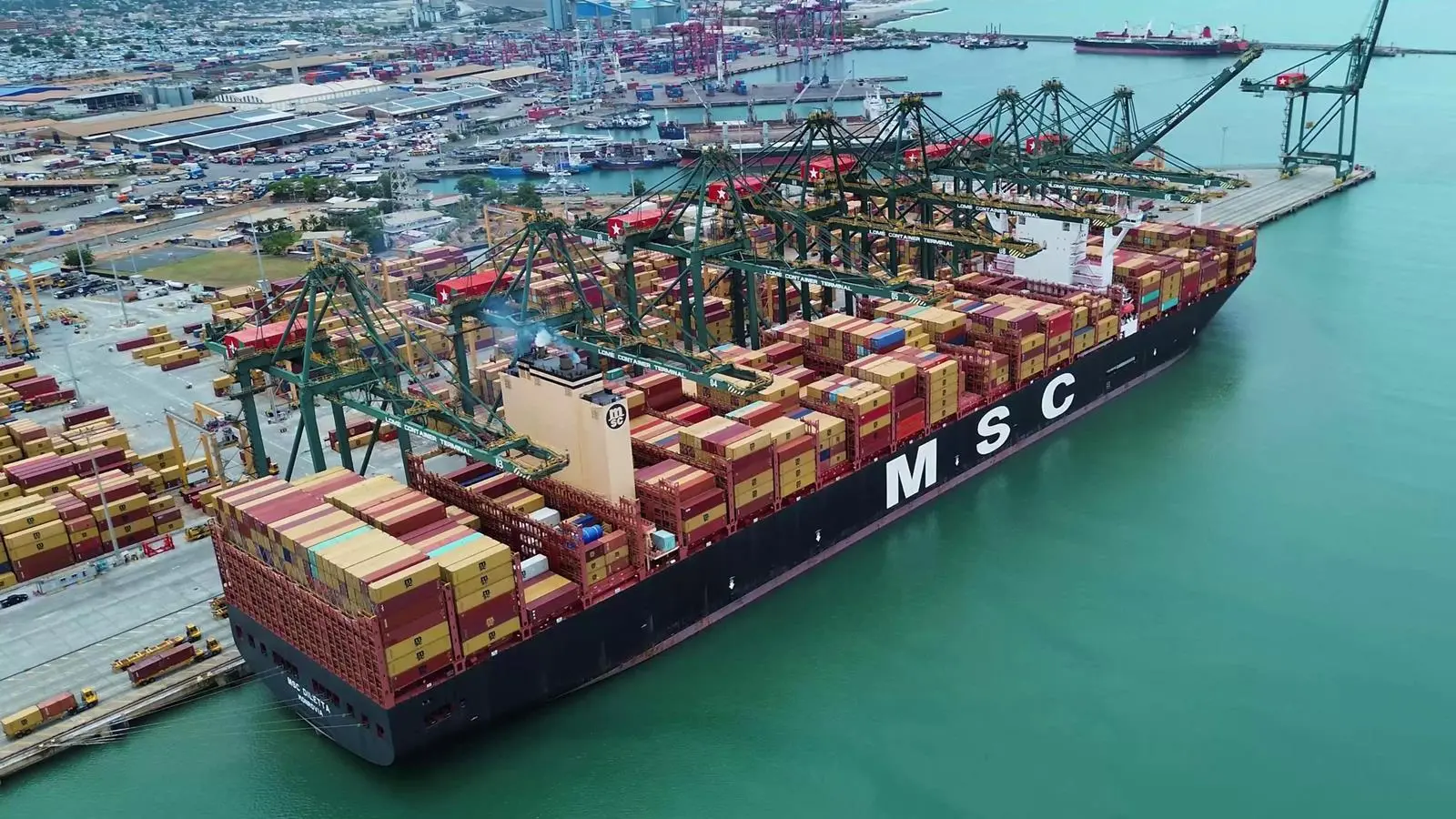
The sale of 80% of Hutchison’s ports to BlackRock and TiL, Mediterranean Shipping Co.’s terminal operating business, was news that catapulted the container industry into the headlines, said Eirik Hooper, Senior Analyst, Ports & Terminals. Assuming it goes ahead, it will be the largest acquisition in terminal operations history. “MSC already had one of the largest and most geographically spread networks. In 2023, MSC was the fastest growing terminal operator after the acquisition of AGL (Africa Global Logistics, formerly Bolloré Africa Logistics),” he said.
The AGL deal represented a 12% increase for MSC’s port operations, ‘small fry’ compared to the Hutchison deal, which could deliver a 100% increase in MSC terminal capacity, he noted. Having already announced the acquisition of its Altamira terminal in November 2024, TiL’s presence in Mexico would be considerable with the Hutchison portfolio added, said Hooper. MSC/TiL would have capacity in each of Mexico’s five largest container ports in one of the fastest growing markets in the world.
COMPETITION SCRUTINY
With any deal of this magnitude, there are always going to be overlap between the two portfolios, he noted. “It’s likely the competition authorities in certain key locations will want to scrutinise the deal. In particular, we note that there’s a risk of market concentration in the Netherlands, where the combination of portfolios would give MSC majority stakes in over 30m TEU of capacity in the Port of Rotterdam – not to mention its already significant exposure in Le Havre, Antwerp, Bremerhaven and Hamburg. There will also be a review of the much talked about Panama Canal ports, ostensibly the prime mover in bringing the parties to an agreement.”
Hutchison has two Panama Canal ports – Cristobal on the Atlantic side and Balboa on the Pacific site. “The Panama Maritime Authority is unlikely to overlook MSC’s minority stake in PSA’s Rodman port. Another potential area for concern is Spain, where the authorities will consider whether Hutchison’s BEST terminal in Barcelona addresses the same market as MSC’s terminal in Valencia and its €1bn development project there.”
Thanks to an extensive pipeline of new developments and expansion projects, MSC was expected to catch up with the big three GTOs – PSA, COSCO and APMT – even before this deal, said Hooper. Adding in the Hutchison portfolio for sale would take MSC and its subsidiaries to roughly 15% of market share – way ahead of PSA in second place with about 10%. This, of course, does not consider any potential divestments either forced or for strategic or commercial reasons.
MEGA ORDERBOOK
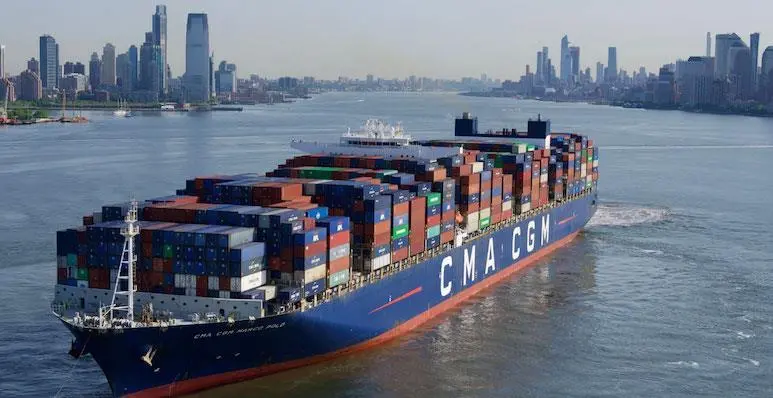
MSC has been one of the primary drivers of the increasing number of VLCVs and ULCVs, said Eleanor Hadland, Senior Analyst, Ports & Terminals.
In its recent ports and terminals insight analysis, Drewry “looked at the container ship fleet orderbook and asked the question – where will all these big ships go?”
Since January 2019, the global container ship fleet has grown by an average 4.3% annually when measured in terms of vessel numbers but by an average 5.8% each year when measured in terms of capacity. The share of global fleet capacity accounted for by VLCVs (between 12,500 and 18,000TEU) increased from 18% in 2019 to 23% in January 2025, while for ULCVs, larger than 18,000TEU the share has risen from 8% to more than 14%.
“When we look at the orderbook, it shows that this trend is set to accelerate. 50% of the orderbook capacity is accounted for by VLCVs and 23.5% by ULCVs.”
Multiple factors influence the deployment of these vessels – most notably, the level of cargo concentration at key ports, the balance of gateway and transshipment cargo, and the technical capability to handle them, i.e. channel and berth depth, berth length and crane size. “The fleet orderbook will put pressure on a wider range of ports to upgrade infrastructure and equipment to handle larger vessels,” said Hadland.
TECHNICAL CONSTRAINTS
The North American market should be well suited for VLCV and ULCV calls, she noted, as cargo is concentrated at a relatively small number of large ports, there is no transshipment activity and a high proportion of goods at major gateways is moved inland quickly by large intermodal corridors. However, the technical capability of North American ports, particularly in the US, will remain a constraint to the development of ULCVs entry into this market. The maximum berth depth of 16.8 metres at the main west coast gateway ports of Los Angeles and Long Beach, with the latest crane delivery for 23-row outreach, compares to the 20-metre-deep berths under construction in Rotterdam and the 26-wide cranes in operation in the UK and other European ports. “While there is a channel deepening project planned for the Port of Long Beach, it’s not scheduled to commence until 2027 – that’s 11 years after the draft environmental impact statement was first published!”
In contrast, Mexico’s west coast ports have invested heavily to increase capability and there has been a surge in the number of VLCV calls, said Hadland. However, there is a risk that landside constraints will hold back growth.
On the east coast, New York’s plans to deepen the main channel entered a four-year design stage in 2024, but the design vessel for this project is just 18,000TEU. In Savanah, air draft restrictions caused by the Talmadge Bridge keep maximum vessel size down to 15,000TEU.
In South America, COSCO’s new Chancay port (Peru), with a maximum berth depth of 17.8 metres, can easily accommodate ULCVs, but it will take time for the port to become established in the face of competition and more established terminals, said Hadland. Meanwhile, the Port of Callao handles the highest number of VLCV calls.
WEST AFRICA SURGE
West Africa, meanwhile, has seen a huge surge in VLCV calls since 2023, with the Red Sea crisis strengthening this trend. “However, we can see a growing gap between the infrastructure and operational performance of the modern terminals that are typically operated by GTOs and a larger number of small to medium sized ports where there’s a greater diversity in the quality of infrastructure and the ownership/management model.”
MSC’s announcement that it would shift its megamax vessels from Asia-North Europe to the Asia-Med and Asia-West Africa trades shows a level of confidence in the market, growth prospects and port capabilities in West Africa, said Eirik Hooper.
In its 2025 forecast completed in February, Drewry predicted a 3.4% increase in global container port handling, with an almost 8% increase forecast for the North American market. (Clearly, any forecasts have been thrown up in the air since President Trump’s so-called ‘Liberation Day’ and the ups and downs of his tariff imagination since then.)
Ports’ margins could be squeezed, said Drewry, due to an easing demand for storage and higher labour costs, but much depends on the carrier response to falling freight rates and, of course, the impact of tariffs on cargo flows has yet to become clear.
“It does seem likely that US consumers will end up paying more for imported goods and US manufacturers will struggle to ‘friendshore’ their supply chains as quickly as the tariffs are introduced,” said Hooper.
CONGESTION RISK
Meanwhile, the risk of congestion has risen due to the planned introduction of fees on Chinese-built vessels calling at US ports. “We expect this will result in streamlined schedules and greater cargo consolidation, which is likely to cause bottlenecks at the main gateway ports,” said Hadland.
“We would expect to see cargo rerouted via Canadian and Mexican ports or via those ports that have direct intermodal links – so perhaps good news for Vancouver and Prince Rupert. We’d also expect to see that transshipment hubs that are in proximity to the US are going to see an upturn in volumes as cargo could then be transshipped on to carriers with less exposure to Chinese vessels.”
The main takeaway? “It’s clear that the hybrid operators, that is the terminal operators owned by carriers, are gaining the upper hand in the market,” said Hooper. “Secondly, despite the confidence in the market shown by TiL and BlackRock, political and economic risks remain very high, with global trade clearly in the spotlight.”
PULL OUT QUOTE
MSC was expected to catch up with the big three GTOs – PSA, COSCO and APMT – even before the potential Hutchison deal
Related Articles
 TERMINAL OPERATIONS
 TERMINAL OPERATIONS
 CONTAINER & CARGO HANDLING