
Hamburg Port Consulting (HPC) has been selected to support the implementation of the first multi-port community system (PCS) in Brazil.
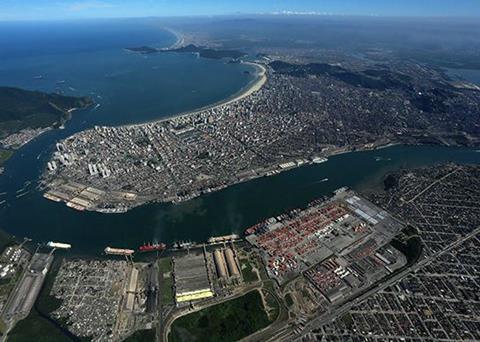
The PCS will connect the Port of Santos, Port of Suape, Port of Rio de Janeiro and Port of Itajai to foster effective port collaboration, support the ports’ modernisation and increase the ports’ efficiency.
HPC was contracted by Palladium International Limited to develop the governance model that develops a regulatory framework structure shaping the way the stakeholders collaborate and provides a professional change management process.
The project is part of the Brazil Trade Facilitation Programme, financed by the UK’s Foreign Commonwealth Office (FCO).
“Making data available to all the members of a port community, sharing what was previously strictly guarded is a huge paradigm shift”, said Pablo Bowen, market segment leader and project director at HPC.
He added: “Agility, equality, and transparency ensure to keep all involved in the process in line. A good governance model is a key success factor when you are implementing a PCS.”
Whole project guidance
HPC provides guidance through all stages of designing and implementing a PCS, including project initiation, systems analysis and design, implementation and adoption, and maintenance and growth.
The success of an inter-organisational information hub system such as PCS depends on the willingness to exchange company information with other partners in the supply chain that pass through the port. A PCS must therefore have the broad support of all parties. This high level of acceptance can only be achieved if all parties are involved as early as the project initiation phase.
HPC has been involved in several projects initiating a port community system such as Hamburg Vessel Coordination Center (HVCC), RheinPorts Information System (RPIS) – an inland port community system for nine ports across three countries at the Upper Rhine and a PCS definition in a South East Asia country.