



North Sea fracture stores CO2
According to a report from the ECO2 project – a collaborative project funded by the European Commission’s Framework Seven Programme – a large fracture storing CO2 has been discovered in the North Sea.
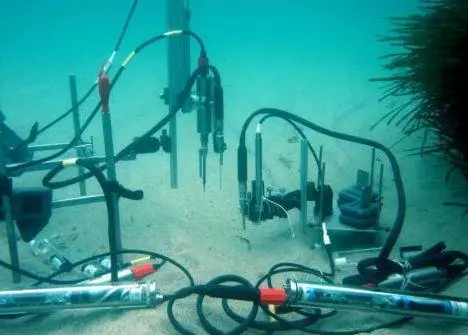
The ECO2 project aims to assess the risks surrounding storage of CO2 below the seabed. The large fracture measures 3km in length and was found with the help of an autonomous underwater vehicle (AUV) during a scientific research cruise in 2011. Following two ECO2 cruises later this summer, it was revealed through seismic and sonar data that the fracture breaks through 150 to 200m deep into the subsurface.
The project sets out to study the potential short term and long term impacts of CO2 storage on marine ecosystems. Findings show that the newly discovered fracture acts as a canal for the ascent of methane gas from the deep subsurface. Once the gas has risen it dissolves in near-surface pore fluids.
Samples of soft sediments from where the fracture meets the seabed were taken by a remotely operated vehicle (ROV). Analysis showed that microorganisms completely convert the dissolved methane into CO2. Accounting for the entire fracture area, around 1 tonne of methane-derived CO2 is released into the seawater per year.
The ECO2 project will continue to examine and monitor the area in order to evaluate its permeability for methane gas and CO2.
Related Articles
 ALTERNATIVE FUELS GREENPORT
 NEWS
NEWS