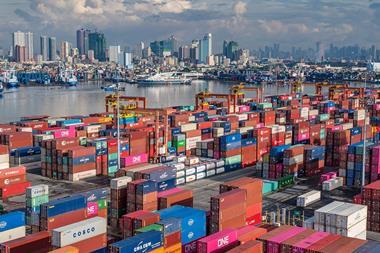

Cargo crime is rapidly evolving into a global threat, driving urgent discussions around port security, container shipping and the wider cargo supply chain.

A new report from the Girteka Group, ’Cargo Theft: Risks, Targets, and the Essential Role of TAPA TSR for High-Value Goods’, highlights how theft has surged across Europe and beyond.
Losses in the EU alone reached €549 million in 2023 - a 438% increase from the previous year. In North America, thefts hit a record $455 million in 2024.
“Cargo theft has fundamentally evolved from opportunistic crimes to highly organised, transnational operations,” the report noted, stressing that criminals now use identity deception, cyber scams and insider collusion to infiltrate supply chains.
High-value risk
The rise in incidents has been particularly damaging for high-value commodities such as pharmaceuticals, electronics and food products.
These goods are not only valuable and portable but also in constant demand, making them prime targets in both road transport and container shipping.
Hijacking, vehicle theft and facility break-ins remain the most common tactics, with June 2025 alone seeing 634 recorded cargo thefts.
To counter escalating risks, carriers and shippers are turning to TAPA Trucking Security Requirements (TSR), a global standard designed to bolster cargo supply chain security.
TSR-certified providers implement 24/7 GPS monitoring, route risk assessments, secure parking protocols and strict driver training.
For businesses, adopting TAPA TSR compliance goes beyond operational resilience. The standard helps mitigate insurance risks, protects reputations and helps strengthen client confidence across increasingly vulnerable logistics networks.