Robert Blades, Global Commercial Sales Manager, Peters & May, drills down into mitigating rising risks and avoiding hidden costs when transporting specialist project cargo on multi-purpose vessels (MPVs)
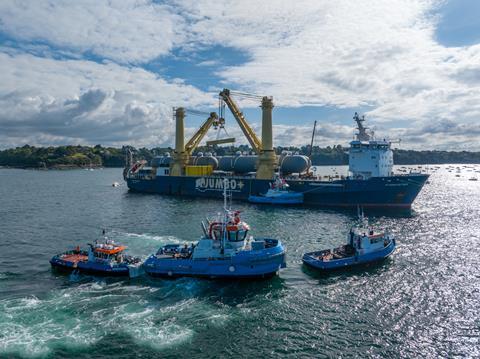
Transporting oversized, heavy and out-of-gauge cargo on multi-purpose and heavy-lift, specialised vessels presents unique challenges.
From pontoons, to wind farm components, to commercial vessels like tugboats or patrol boats, the movement of complex project cargo brings different risks and roadblocks for asset owners to consider at every stage of the process.
This type of awkward cargo calls for bespoke breakbulk solutions, requiring specialised cradles and lifting equipment, an experienced technical team, and expert loadmasters to provide drawings and load plans.
The need for tailored logistics also increases when dealing with the handling challenges of large projects, with foresight and precision coordination essential due to the more intricate decisions around vessel selection, route optimisation, port pairings and scheduling.
Although it is sometimes feasible for a specialist transportation partner like Peters & May to offer out-of-gauge options on container lines, it is more often the case that multi-purpose vessels (MPVs) are the only solution due to their capabilities to handle considerably more complex cargo and heavier boats – weighing up to 875,000kg in our experience.
These specialist vessels, which operate in the spot charter market, bring their own complexities, demanding more flexibility from the customer due to less stringent scheduling compared to container services.
In addition, MPVs often requiring more challenging port pairings, due to the nature of equipment that requires heavy-lift vessels – which is often for the energy market or similar sectors, located in areas with minimal port infrastructure.
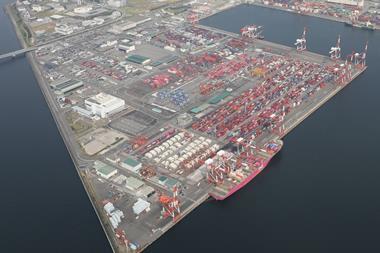
As cargo and asset owners demand reliable options for moving specialist project cargo safely by sea, some ports and terminals are needing to adapt and upgrade to support MPV operations, ensuring they adhere to key criteria in terms of capabilities, facilities and infrastructure to process such cargo.
Today, more than ever before, when using MPVs to efficiently move, load and offload high-value assets and project cargo in diverse ports globally, a smooth and seamless operation can only be achieved with the right approach, systems and mindset to mitigate risk, avoid delays and hidden costs, and manage expectations.
NEW RULES AND RISING RISKS
The movement of heavy out-of-gauge cargo on MPVs has become even more challenging in today’s uncertain and turbulent geopolitical and economic environment.
Planning for MPVs has become more complex, with longer lead times, as the prolonging of the Ukraine/Russia conflict and escalation in the Middle East, and the continuing threat of Houthi attacks on ships transiting the Red Sea, impact supply and demand dynamics, adversely affecting available tonnage and market stability.
Vessels are being forced to avoid the Suez Canal and transit around the Cape of Good Hope, rather than utilise the more efficient Asia to Mediterranean or Northern Europe route through the Red Sea. A 25-day transit now takes 45 to 50 days on the longer route, with substantial additional fuel and charter costs.
With an increased demand for MPVs compared to 2019/2020, the already tight availability has been exacerbated as the added pressures of territorial tensions and increased transit times result in less available spot tonnage in the market than previous years – but not necessarily in every region.
Asia is the in-demand region right now, where some big wind energy and oil & gas projects are consuming a lot of the available tonnage in the market. As owners look to send their larger vessels back to Asia urgently to meet their contractual demands, finding space is challenging and rates are high, with a minimum typical lead time of one to two months to secure space.
Europe and USA are in more of a decline and we are seeing plenty of opportunities from these regions, especially back to Asia.
Appetite for risk is at a low point and insurance providers are ensuring project shipments are fully up to the latest safety requirements. In Peters & May’s shipments, we are seeing a growing number of requirements for surveyor sign offs, particularly Marine Warranty Surveyors, who will review all technical documentation and report back to the insurers and give a ‘right to sail’ document, confirming they are happy with all aspects of the operation.
HANDLING COMPLEX CARGO
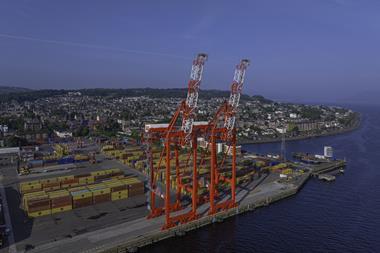
Seamless coordination with local port authorities is an important aspect in managing a swift and safe discharge – and reducing risks. We will use a local port agent, or, in some of our busier ports, we have direct communication or even a registered stevedore.
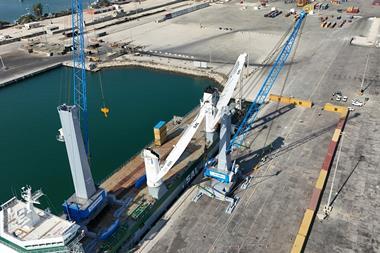
Port capabilities come into play when handling complex cargo as some cargoes do demand a specialist facility. The appropriate on-site storage and equipment, such as shore cranes, must be in place, along with experienced stevedores.
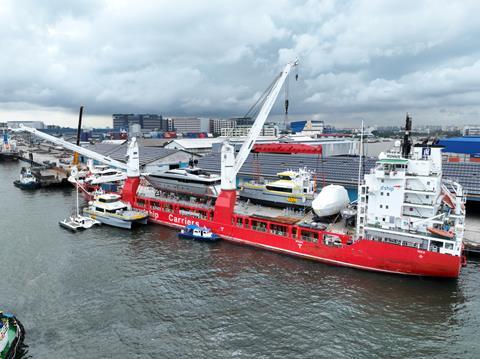
If they are to be considered for more specialist projects, ports and terminal operators need to ensure they keep up with a variety of cargo handling knowledge – and work to demonstrate to clients that they can handle all cargoes with the same level of expertise.
We are seeing some ports opting to upgrade to cater for larger vessels to handle project cargo and MPV operations – whether that is by improving their local infrastructure, building new berths to increase capacity, or dredging existing berths to allow larger and deeper vessels into the port.
In terms of specialist ports that focus on one cargo type, typically you will only have one covering a large area. Although ROI could be low without regular volumes, it is highly likely that the specialism is due to its geographical location and lack of competition in the region, combined with specialist knowledge and correct shore facilities.
While volumes may be lower at a specialist facility than a more general port, new avenues are opened up for increased fees and other chargeable services which means that these more niche capabilities, in the right circumstances, can prove to be a worthwhile investment, for example when incorporated into a multi-purpose terminal.
STABILITY IN TURBULENT TIMES
For asset and cargo owners and operators, it is difficult to manage schedules, budgets and new obstacles with confidence in these turbulent times.
However, it is possible to mitigate these risks with the support of a partner with a deep understanding of specialised transport requirements and an insight into geopolitical trends. By applying lessons from previous experience it is possible to identify potential problems and react quickly to ensure a safe and timely delivery of the owner’s items, even when faced with an unpredictable scenario.
Our recent shipment of a high-speed catamaran from Southampton, UK, to South Korea demonstrated the need for rapid rerouting due to rising geopolitical risks. The vessel’s planned passage through the Red Sea was ruled out by the shipowner following deteriorating conditions, including renewed Houthi rebel attacks on commercial ships. The team quickly adapted the voyage plan, securing the necessary permits, port arrangements, and vessel support to accommodate the new route back through the Suez Canal and around the COGH, while considering weather variations, fuel resupply, crew scheduling and increased transit risks over the longer distance.
The challenges for other projects may centre around a bespoke architectural design of a vessel, for example specialised lifting lugs integrated directly into the structure – which was the case when shipping two new 22m tugboats from Vietnam to the Port of Saint-Malo, France.
For some marine cargo, it is essential to ensure a suitable specialised cradle is in place to avoid additional insurance costs, while, for some cargo owners, stringent budget and dates are the focus, requiring a seamless end-to-end service with no delays.
We regularly see how expertise and experience when planning operations results in the avoidance of hidden costs. For example, one potentially expensive mistake which we see regularly is a discrepancy between the supplied Gross Registered Tonnage and Displacement Weight of the cargo. Our technical team can quickly spot any errors and inconsistencies, which, if unnoticed, could result in the wrong type of vessel being selected with cranes unable to lift the cargo.
Another instance where more efficient transportation can be achieved is by combining cargoes on an MPV already scheduled to sail, meaning that costs, including fuel, port costs, chartering, cradling and lifting equipment, and manpower costs, can be shared and saved.
EXPERIENCE AND EXPERTISE
The importance of forward planning and the support of specialist, experienced problem-solving experts with a deep understanding of specialised transport requirements and an insight into geopolitical trends is more critical than ever before when transporting project cargo.
To navigate new rules and risk, partnering with a specialist for out-of-gauge cargo planning and risk-managed transport solutions is an added value which cannot be underestimated.