


Professor takes the Transnet helm
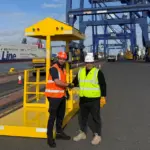
The challenge of running South Africas national transportbusinesses is hardly academic, and yet its been put into the hands ofone – Geoff Everingham, a university professor.
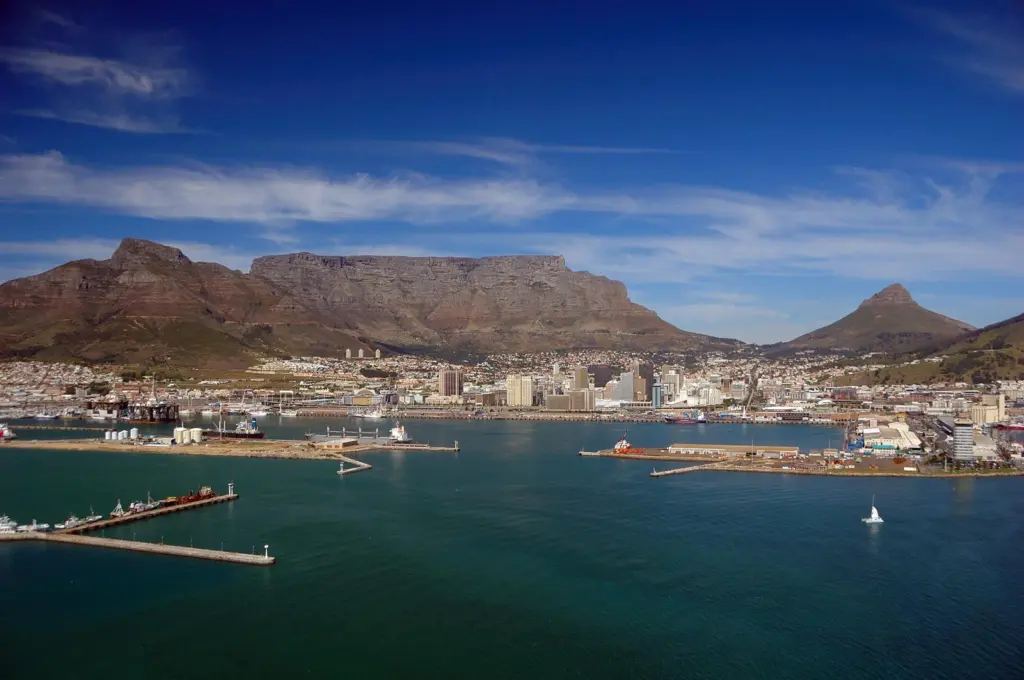
Prof Everingham is a widely-respected chartered accountant who is also Emeritus Professor of Accounting at the University of Cape Town, and now adds to his CV the role of acting non-exec chairman of South Africa’s Transnet.
Charting the course of the government-owned organisation is a monster of a job. Not only does he now have charge of the country’s primary trading hubs – Richards Bay, Durban, Saldanha, Cape Town, Port Elizabeth, East London, Mossel Bay and soon-to-be-operational Ngqura (Coega) in the Eastern Cape – but he’s also at the head of the country’s national transport businesses, including Petronet, Metrorail, Transtel, and South African Airways. No pressure there, then.
Prof Everingham has been part of the Transnet board for five years, non-exec, independent, and chairman of its finance committee.
And yet the role is merely an ‘acting’ one, taking the number of ‘acting’ officials at the top of Transnet to three, alongside Chris Wells as acting chief executive and Anoj Singh as acting chief financial officer, both who came into post this spring.
Port officials say that Prof Everingham’s experience means that he’s well-placed to ensure a seamless handover from his predecessor Fred Phaswana, but trade unions believe he should be given the post on a permanent basis, since that experience makes him the ideal candidate.
Both FEDUSA (the Federation of Unions of South Africa) and UTATA (the United Transport and Allied Union), feathers ruffled at the lack on consultation with them, have voiced concern that Prof Everingham’s post is not permanent, as they believe he has the qualifications for the job.
“We cannot understand why it is necessary to appoint acting members to the board of Transnet as it does not allow for continuity in management of Transnet,” they said in a joint statement.
But substantive position or not, Prof Everingham nevertheless finds himself between the rock of South Africa’s Public Enterprise Minister Barbara Hogan and the hard place of economic reality.
With Transnet now in its second year of a five-year development programme costing Rand80bn ($10.2m) Ms Hogan is pushing hard for greater operational efficiencies and productivity, especially in port operations, to meet aspirations of achieving world-class standards – though acknowledges there have been improvements in volumes handled in the ports and reductions in vessel waiting times.
In the last half of 2008, South Africa’s rate of economic expansion had been spurred by domestic consumption, investment growth, and strong international commodity demand for export shipments of gold, platinum group metals, chrome, manganese, and coal. All of these needed increased freight services.
When the economic downturn hit, South Africa wasn’t immune, and has seen reduced volumes and the consequent impact on revenues. Earlier this year, throughput at all of the nation’s ports was said to be 11% down month-on-month. However, that’s a mere snapshot, and a look at 2009 as a whole presents a slightly different picture. Analysts suggest martime imports will be swelled by a little more than 1.5%, buoyed by the impending World Cup of 2010. Neverthess, the economic downturn is expected to have a net negative effect, with exports down by more than 2%.
But the outlook isn’t gloomy in the longer term. Experts predict an average growth of more than 5% in maritime freight between now and 2013. Experts BMI rate the country above average for the Middle East and Africa. “It scores well in terms economic factors and in its regulatory background, but its record in relation to historic and forecast growth in foreign trade and in transport remains relatively weak,” says their report. Even so, BMI predicts that total value of transport and communications will rise to almost Rand304.5bn ($39bn) in nominal terms by 2013, representing more than 8% of South Africa’s gross domestic product.
Related Articles
 PORT & TERMINAL NEWS
 PORT & TERMINAL NEWS
 PRODUCTS & SERVICES