




Simple maths shores up PANYNJ prowess
New York/New Jersey is likely to remain the dominant US East Coast port for some time, says Martin Rushmere.
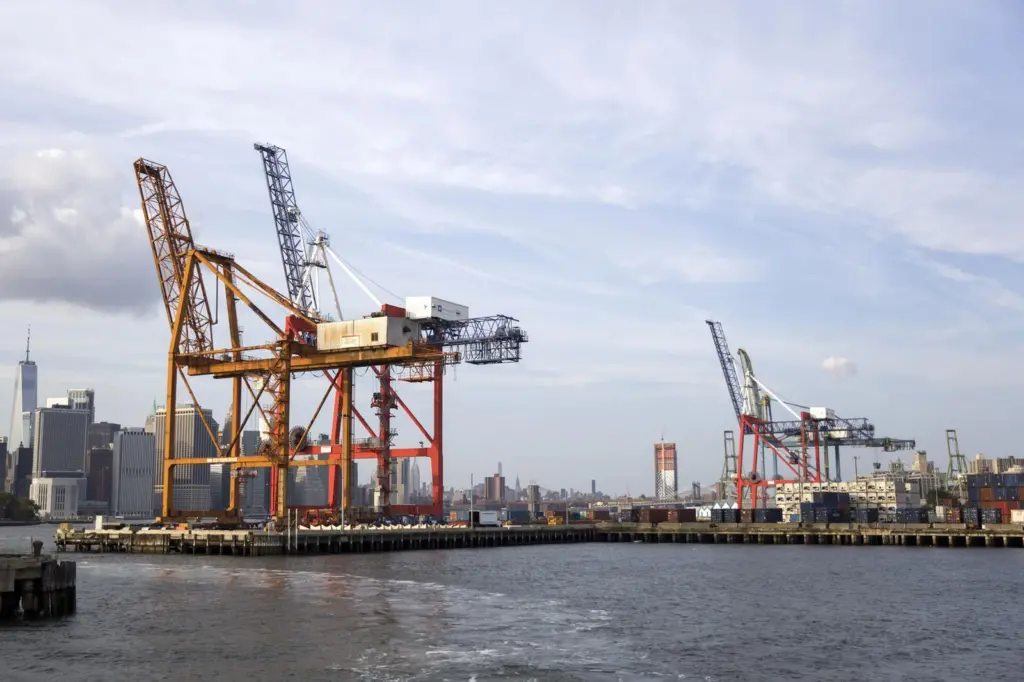
Beth Rooney points to simple arithmetic to give the true picture of the intensifying debate over who is winning in the market share battle on the US East Coast. “For Virginia and Savannah, a 1% change makes a much bigger difference than it does for us,” says the assistant port director of New York/New Jersey. In 2017, NY/NJ handled 6.7 m teu compared with 2.8m for Virginia.
“So, we are not worried at all about them taking a substantial piece of market share from us. What’s more, we are getting 78% of first calls of vessels to the US East Coast.
She says that simple maths adds to the region’s pull and attraction – shipping lines’ preferences, demographics, speed of rail connections and reach. “An 8,000 teu ship calling here has 80%-85% loaded capacity — and we get 70% of that. That leaves Savannah and Virginia vying for 30% of the cargo.
“Because of our extremely good intermodal connections, within 36 hours of a vessel calling here, we can reach 125m people and 45m within four hours. Virginia can reach 15m and Savannah 12m.”
Ms Rooney says one of the strongest attractions for shipping lines is the installation of the only appointment-specific system in the country at Bayonne. “A user logs in and can find out about a specific shipment or container — what time it will be collected and exactly where it is. All the other appointment systems are general — there is no detail about the shipment, just that an unnamed load will be delivered or picked up — and it’s been there for four years.”
Analysts acknowledge the port authority’s lead but point out that the network has still to be expanded to the other terminals, which is seen as involving a much greater degree of technological sophistication.
NY/NJ’s main competitor, Los Angeles, is working on a similar, port-wide system with GE — but this is still at the concept stage. Oakland’s freight portal is comprehensive, allowing all users to get into the same window and information system — but deals with a much smaller volume than NY/NJ.
So far, the looming trade war has not had much effect on the port. “We have not noted any significant changes in traffic patterns. What the tariffs will do is force people to make different business decisions, and they will have to deal with it. Terminal operators as a consortium have expressed some concern about crane tariffs,” says Ms Rooney.
Long term planning is for a balance between exports and imports, with a compound annual growth rate of between 3%–4%.
Helping hands
In the drive to improve and extend logistics connections from the port, help also comes from official and private agencies. One of the latest initiatives has come from The New York City Economic Development Corporation, which has launched its NY Freight plan, designed to reduce the 90% of cargo that goes by vehicle into the metropolitan area. According to the corporation, local volumes are predicted to increase 68% by 2045.
Specific projects will include building a new barge facility for Hunts Point Food Distribution Center in the Bronx, a new barge terminal at the South Brooklyn Marine Terminal in Sunset Park connecting Brooklyn to the new barge network and reactivating underutilised rail lines by constructing new transload facilities and new passing lanes within the existing rights-of-way.
Investment fund loan managers love the Port Authority of New York/New Jersey bond offerings because they are covered by such a wide base of activities. In 2017 the seaport generated revenue of $296m and a positive operating income of $135m and the budget this year forecasts $136m from $301m. Aviation is by far the biggest revenue earner for the authority with a positive operating income of $1bn from $2.6bn revenue.
The ratings agencies are equally enthusiastic. Standard and Poor’s rates the authority’s latest bond issues as AA-/stable, Moody’s assigns Aa3 stable to the consolidated revenue bonds while Fitch assigns AA-/stable to the 210/211 series bonds.
The 10-year capital plan to 2026 earmarks $1.1bn for the seaports.
Related Articles
 CONTAINER & CARGO HANDLING
 NEWS
NEWS
 CONTAINER & CARGO HANDLING