



South Oz ports pre-mortem report
Experts at the Institute for Supply Chain and Logistics at Victoria University in Australia have completed a “pre-mortem” report warning of the dangers of pushback by private operators and of the haste towards building a new port.
The experts said that port privatisation seems to have almost happened overnight with Brisbane leading the way and then others following suit, but warn that private operators are beginning to push back because of rent increases of up to 300% and increased port levies.
Peter Van-Duyn from Victoria University told Port Strategy: “The P/E ratios currently being paid for ports in Australia by private operators are way too high. I compare them with the high P/E ratios that were paid for container terminal concessions before the global financial crisis and where we now see write-downs or distressed sales of these assets by their owners.”
The report explains that the other issue that could spell trouble for south Oz ports is the haste towards the new Hastings or Bay West port development.
“The issue is that the Hastings or an alternative port development is needed at some stage, but probably not as soon as the government would like us to believe,” Mr Van-Duyn said.
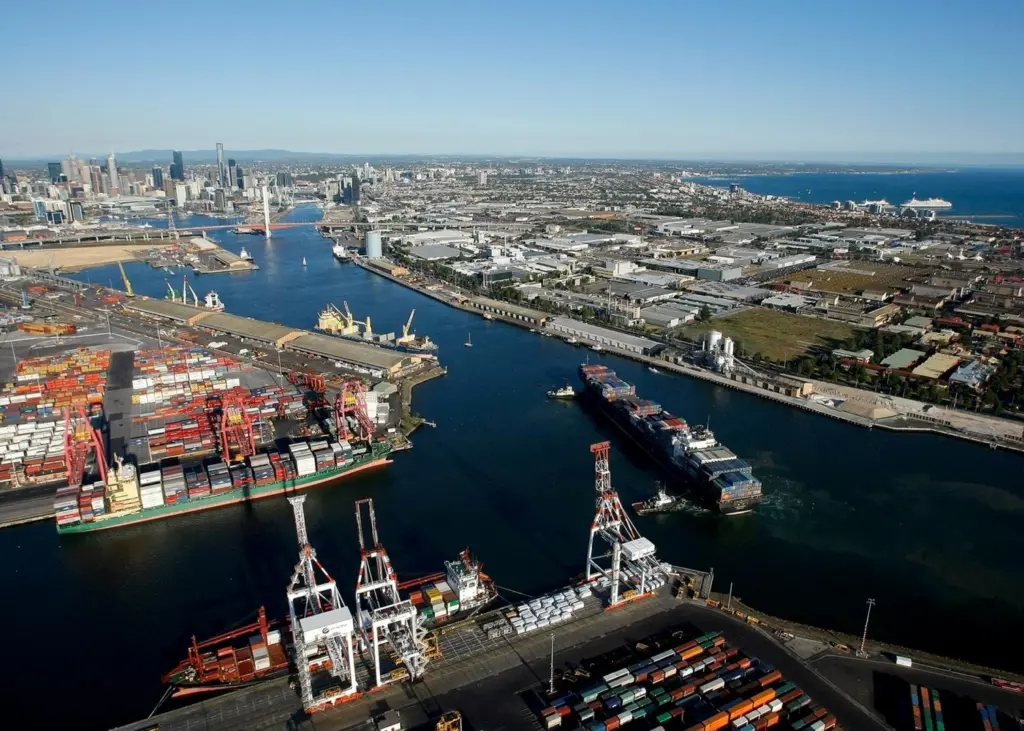
He used the example of the Port of Melbourne, which both the current Victorian government and the opposition are in favour of selling or leasing out long-term. Current volume at Melbourne is 2.5m teu and the proposed capacity for the future (including the new 1m teu container terminal at Webb Dock) is 5m teu. At a growth rate of 3 to 4% full capacity could take 15 to 20 years to be achieved, but Melbourne had a decline in container volume of 2.5% in 2012/2013.
“Growth rates for container volumes in Australia (and across the world) have slowed down significantly and in my view and other experts are not likely to vary that much in the near future.”
“A prospective buyer would need some certainty that container volumes will not be redirected towards the new port before Melbourne has reached its capacity,” Mr Van-Duyn told PS.
He said that the university’s report demonstrates the need for there to be a more balanced discussion on potential size of container vessels which are likely to visit Australian capital city ports and also potential costs for the establishment of an alternative port (be it Hastings or Bay West).
“The fact remains that most of the containerised export freight originates in the west of the State of Victoria and thus has to travel additional kilometres to Hastings. The area to the west of metropolitan Melbourne still has the best road and rail connections to distribute freight interstate so imports and returns will have to make their way across town if Hastings was chosen as the new site for a container port.”
Read the full pre-mortem report by the Institute for Supply Chain and Logistics at Victoria University
Related Articles
 WORLD
WORLD
 PORT & TERMINAL NEWS
 PORT & TERMINAL NEWS