

Go beyond unit price comparisons when sourcing new box positioning equipment, Alex Hughes advises
Going to the market for new reachstackers and straddle carriers involves a lot of homework. Ports and terminals have to find the most suitable unit at the most sensible cost; a tall order in this competitive sector.
And to add to the mix, unit cost price can be deceptive; its whole life costs that need most research, claim operators. When the Port of Liverpool issues new tenders for straddle carriers, it doesn't only consider the cost price.
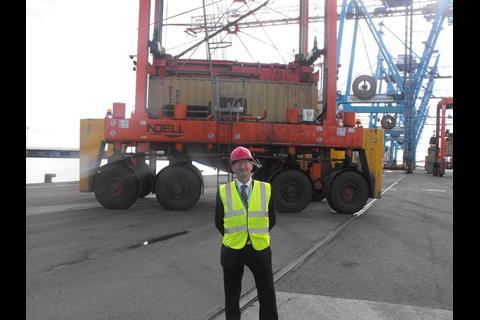
"We place a great deal of emphasis on whole life cost rather than nominal cost. Based on experience with our current supplier, Noell, we are able to estimate whole life cost by looking at maintenance schedules," says terminal manager Iain Robertson.
Getting that type of breakdown in operating costs could help terminals assess what the whole life costs will be. However, getting that information from most manufacturers is no easy task, operators claim, making it difficult to compare units offered by rival companies.
Liverpool's most recent straddle carrier purchase consisted of three units, needed to top up the existing fleet. Mr Robertson explains that two issues dominated calculations: the price of the units and the risk of change. In fact, the latter concern was so great that Noell once again won the contract.
"The risk to us of changing to another supplier is quite high. If we were to now buy carriers other than Noell's, we would need to assess additional costs, such as spares held at the terminal. We don't really want equipment from two different manufacturers, hence Noell remains our preferred supplier," says Mr Robertson, adding that driver familiarity is another important factor. "For any manufacturer to get a foothold in the port, it would therefore need to supply a substantial number of carriers."
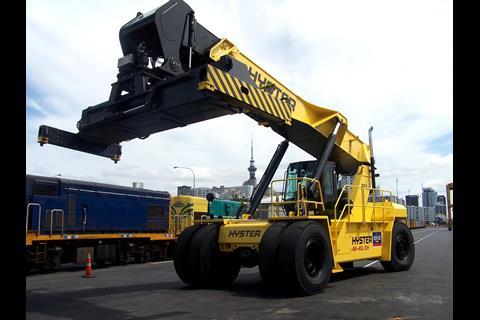
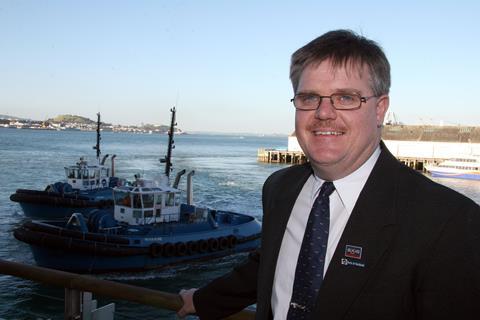
When Ports of Auckland issues a tender for reachstackers, it also does a lot of preparatory work to get a good estimate of total costs.
"We request information from manufacturers regarding spare part prices and service schedules. From this, we can determine the spare parts holdings we have to have, which may be impacted by whether parts are available locally, or if there is a long lead time and if we have to hold them in stock ourselves," explains operations engineer John Miller.
If a local service provider exists, the cost of its service is also considered.
Significantly, the weight of the machine is also viewed as highly relevant, since this is needed to calculate expected fuel consumption.
Mr Miller says manufacturers will make most of this information available. They already have spare parts pricing to hand, he says, and have to supply service schedules anyway.
"Many of these items are also subject to negotiation as part of the purchase process," he adds. "And when you do start comparing operating costs, there are very real differences between manufacturers."
Elme spreaders, for example, tend to be more economical than those supplied by reachstacker manufacturers themselves, says Mr Miller. Spare parts for branded items are usually easier to obtain, too. In the case of service costs, Ports of Auckland has found in New Zealand, companies like Caterpillar and Cummins have proved themselves to be cheaper than either Volvo or Scania.
"Operators have to be careful about acquiring machines incorporating custom electronics, too. It invariably works out cheaper to have units fitted with readily available components," says Mr Miller.
The port places great importance on drivability and comfort, to such an extent that its engineering team works closely with all plant operators to improve cab performance and comfort. Significantly, while the last batch of reachstackers acquired were the most expensive, they had many features that the drivers preferred.
Another key point is that Ports of Auckland buys equipment that is fully supported locally and is easy to service. Mr Miller explains that, in the past, the company had been forced into a situation of needing to buy reachstackers quickly, so had given overdue weight to the delivery date. The lack of local support for units supplied by that particular manufacturer means that Auckland's engineering teams have been faced with on-going problems with these units.
However, at Liverpool, all recently bought straddle carriers have performed as expected. They also came with a two-year warranty, during which time any serious issues were resolved.
Mr Robertson is the first to recognise that, being both lifting and carrying machines, straddle carriers are more prone to maintenance problems. However, he says that the Port of Liverpool has established a good working relationship with Noell. Joint solutions to any problems are generally found relatively quickly, in what Mr Robertson describes as the 'spirit of partnership' between the two parties.
Since major advances have also been made with rubber-tyred gantry cranes in the areas of energy consumption and pollution,
Port Strategyasked Mr Robertson what could be done to improve straddle carriers in this respect. "Noise is a concern here," he concedes. "So we welcome the news that a number of suppliers are working on diesel electronics, which would prove less noisy. In addition to resulting in a quieter operation, this would also reduce C02 emissions, smoke and help improve the overall working environment."