
The Tanzania Ports Authority appears to be swimming against the tide (accepted best practice) in its approach to awarding the concession for the Dar es Salaam Container Terminal. It is difficult to understand why!
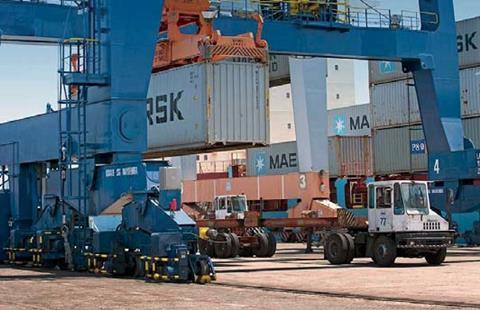
The award of the concession for the Dare es Salaam Container Terminal, the operating unit known as Tanzania International Container Terminal Services (TICTS), appears to be taking a course that contravenes Tanzanian Government policy.
With the termination of the concession held by Hutchison Ports for the terminal, the Tanzanian Ports Authority (TPA) has been the recipient of a number of unsolicited offers to take over the operation of the terminal with the main names mentioned in this respect being Adani Ports and Special Economic Zone Ltd (AP&SEZ), A D Ports and D P World. Adani is now in residence at the terminal working on behalf of the TPA on a management basis but at the time of writing, in mid-July, the bush telegraph beats that it is the entity that looks most likely to be awarded the terminal on a long-term concession basis.
This all appears a bit strange, however, as the TPA has reiterated time and time again that its main goal with TICTS is to raise its performance to a higher efficiency level. Accepted practice in the sector is that the route to attain international standards of efficiency is by a competitive bid situation, with each bid containing a financial and detailed technical component presenting in detail how the various elements will work together to achieve the required levels of efficiency. Certainly, this is the approach favoured by such eminent entities as the World Bank, International Finance Corp, African Development Bank and the SSATP, the umbrella organisation representing 41 African countries, including Tanzania, and other organisations that seek to facilitate policy development and related capacity building in the transport sector in Africa. Indeed, the SSATP in its Working Paper NO. 1O7, Container Terminal Concession Guidelines, very clearly states:
“The paramount concern of governments and public authorities when entering any kind of public-private partnership arrangement, like a container terminal concessioning process, is to ensure, and demonstrate to their constituents, that it will produce value for money, i.e. they will get more out of it compared to what they were getting with the traditional public operated system, and hopefully at a better price. To this end, they must convince all stakeholders that the commercial partner they will select is indeed the most capable of producing this outcome. A very effective way to go about this is to organize an open international competition. If properly managed, it will mechanically ensure the port is getting the best possible partner at this particular point in time. It will also avoid the suspicion that almost systematically comes in case of a direct negotiation with a single project sponsor. And as exposed before, a number of players are available today to compete for these concession contracts. So whenever possible, organising an international tendering process should be the preferred option to seek a professional operator for a container terminal.”
What is even stranger, however, is that following the publication of the latest report of Tanzania’s Controller and Auditor General, covering the 2021/2022 financial year, it was stated in the media that Samia Suluhu Hassan, President of Tanzania, was to set to crack down on irregular deals referenced – effectively signposting to government agencies the need to follow best practice. Potentially, the TPA in its current actions with TICTS can be seen to be out of sync with this ethic. It is certainly, at the very least, making itself open to accusations of corruption or lack of comprehensive effort in securing the best terminal operator.
TICTS is not just an important terminal for Tanzania but also fulfils the role of a key gateway terminal for surrounding landlocked countries including Uganda, Burundi, Rwanda, DRC, Zambia and Malwai. Millions of dollars have been pumped into capacity building the road and/or rail connections providing links between these countries and Dar es Salaam port, injecting further impetus to make sure the vital interface between land and sea of Dar’s container terminal is operating consistently at maximum efficiency. Invariably, these dollars come from external sources, as is the case with virtually all the US$10.04 billion funding for the recently signed contract with a Chinese company for the development of a standard gauge railway that will run from Tanzania’s ports to Burundi, DRC and Rwanda, as well as to Uganda through the Lake Victoria port of Mwanza. The stakeholders involved will doubtless wish to ensure there are no impediments in the supply chain, especially at port gateways, that impede overall system performance.
The TPA would appear to be well advised not to follow the often problematic approach of direct negotiation for the TICTS concession but to take up the more proven option of a competitive tender.