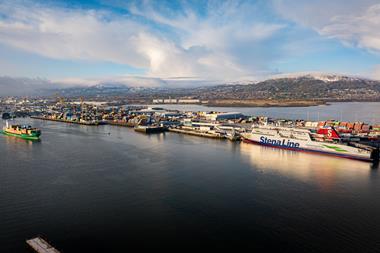
Stena Line and Associated British Ports (ABP) have announced plans to move forward with a GBP£200 million marine construction project for a new ferry terminal at the Port of Immingham.
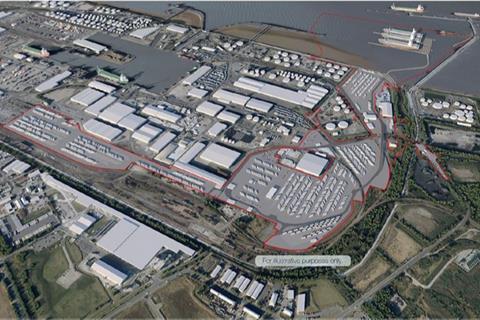
The UK Government’s approval of the Development Consent Order (DCO) marks a significant milestone, allowing construction of the RoRo (Roll-on/Roll-off) ferry terminal to begin.
“We are very pleased that the Secretary of State has approved the new RoRo terminal at Immingham,” said Niclas Mårtensson, CEO of Stena Line.
“This is a long-term commitment and will be integral to expanding our freight operations between the UK and Continental Europe, especially in response to growing demand.”
Freight focus
This new facility will expand Stena Line’s freight operations in the North-East of England, a key hub for the unaccompanied freight market.
Stena Line, one of the world’s largest ferry operators, signed a 50-year agreement with ABP in 2022 to manage the new terminal, which will support increased freight traffic between the UK and The Netherlands.
Henrik L Pedersen, CEO of ABP said: “We are delighted that the Development Consent Order (DCO) for the Immingham Eastern Ro-Ro Terminal (IERRT) has been granted.”
”This approval marks a significant milestone in our mission to Keep Britain Trading through enhancing the UK’s logistics infrastructure and bolstering trade capacity across the North Sea.”
The IERRT project is a key component of our strategy to strengthen the UK’s supply chains and improve trade connectivity, boosting logistics infrastructure and bolstering trade capacity across the North Sea.
It also responds to the trend for larger RoRo vessels, requiring larger port infrastructure and landside space.
The terminal’s strategic location on the Humber Estuary allows for faster sailings and the use of larger vessels, enhancing ferry terminal operations and boosting the region’s economic capacity.
Mr Pedersen added that the project will create hundreds of jobs during both the construction phase and ongoing operations, set for completion by 2026.