

The potential of inland waterways
Participants from across Europe gathered in Warsaw earlier this month to discuss how to enhance inland navigation in the Baltic Sea Region.
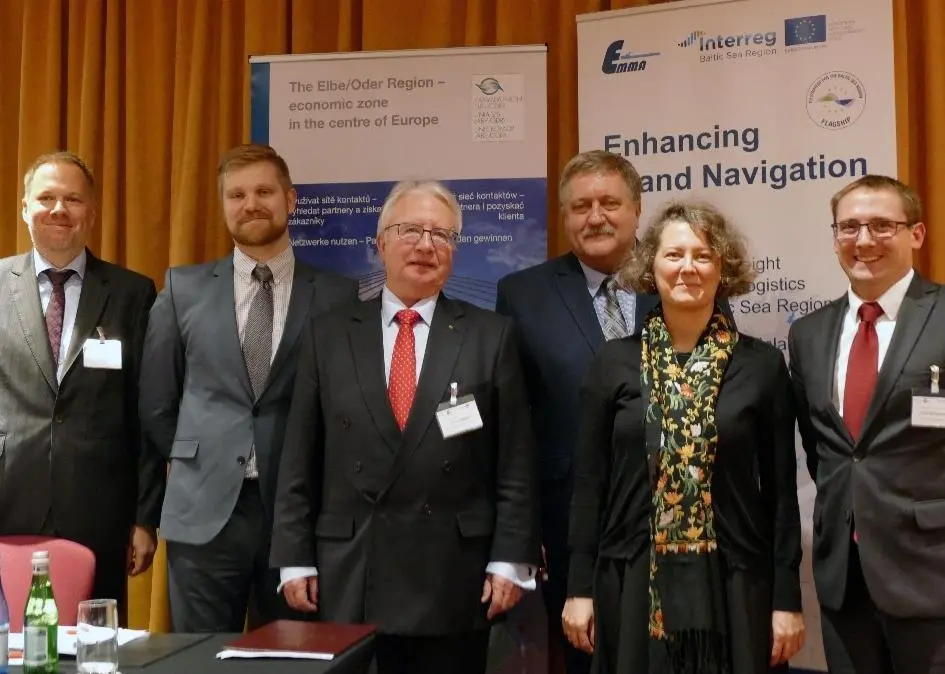
Inland navigation is a cost-efficient and environmentally friendly mode of transport which aims to provoke growth but it more European cooperation is needed to ensure it is fully utilised to ensure its multiple benefits.
Port of Hamburg is nowadays the second biggest inland port in Germany. Since road and rail infrastructure is in some parts of the Baltic Sea Region overloaded, inland navigation can offer a unique chance for expansion.
“Changing patterns is not an easy task, but we want to change them so that inland navigation would have a higher share in transportation”, said Maciej Brzozowski, of the Port of Hamburg.
EU aims to shift 30% of long-distance freight traffic from road to rail and inland waterways, as well as to have carbon-free city logistics by 2030.
Enhancing inland waterway transport can contribute to improved environmental status and help to reach sustainability objectives.
Dimitrios Theologitis, senior expert at the European Commission’s DG MOVE, explained: “Inland waterways have to be upgraded and inland navigation layer be seen as combined with seaports, inland ports, railways, motorways and logistic centres.”
Speakers and panellists of the conference emphasised that inland water transport should co-exist with other transport modes.
Related Articles
 ALTERNATIVE FUELS GREENPORT