


Trust Me pays off
Whilst forecasters warn dry-bulk volume growth is expected to slow – though not just yet – on opposite sides of the world terminal operators are working with their partners to streamline supply chains. Kevin Chinnery and Nick Elliott report.
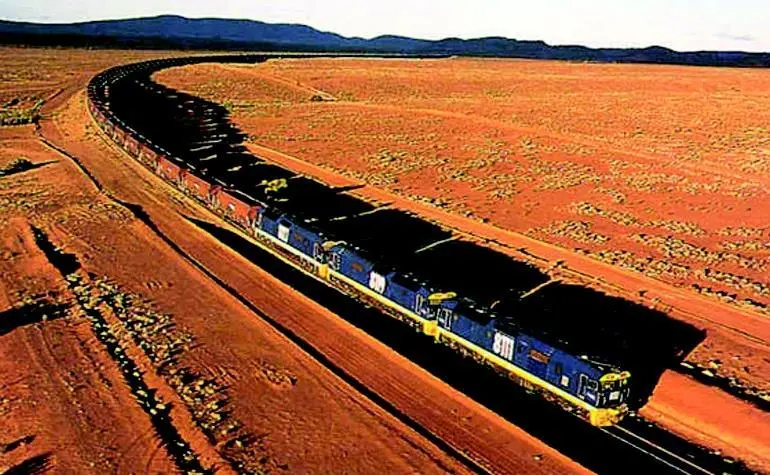
With Australian coal port infrastructure in the political cross-hairs over the past 12 months for falling behind the bull market, one Australian coal producing region has boosted export capacity by 30% – without a cent in capital investment, or waiting years for new facilities to come on line.
By comparison with the vertically integrated iron ore producers of Western Australia, the eastern coal industries can look like a sack of cats: full of jealously competitive miners, all interested in pushing as much of their own product as possible down a jumbled transport chain of state-owned or private common user assets, and with precious little interest in cooperation.
But the image of fragmentation is now a myth in the New South Wales Hunter Valley, says Newcastle export terminal operator Port Waratah Coal Services chairman Dr Eileen Doyle.
The Hunter chain is now marked by two major pieces of cooperation. First is the high-profile capacity equalisation scheme at the PWCS terminal, in which competing mines agreed to export quotas based on what they could get through the port rather than what they could actually dig.
Second is the less well reported but far more radical move to pool the planning departments of PWCS, train operators Pacific National and Queensland Rail, track owners Australian Rail Track Corporation and RailCorp, and the Newcastle Port Corporation, into one Hunter Valley Coal Chain Logistics Team (HVCCLT). In the team, terminal and rail planners sit side by side in one office to nut out both long-term expansion and day-to-day operations alike.
The team has now wrung another 22m tons of capacity a year out of the whole chain with no capital spending, simply by working the existing assets in harness. This year the chain will operate with a “declared capacity” – the official agreed target that the coal chain planners commit to – of 84.3m tons, against the 69m tons capacity in the chain two years ago.
The team, which started as a handshake deal in 2003 and is now a formal joint venture, sit in offices at Newcastle’s Carrington coal terminal with unique, end-to-end view of what is an extremely dense coal transport operation.
The chain comprises 30 coal mines, 17 individual coal producers, 23 loading points, 80 different export blends of coal, five coal berths and 1,000 ship calls – all connected on relatively short rail hauls out to 350km with very little buffer time.
The planning work the team does ranges from capital investment forecasting a decade out, to organising the fortnight-long cycle for loading each individual ship.
The HVCCLT’s general manager Anthony Pitt describes the decision by the Hunter Valley chain players to merge their planners as “a leap of faith?because planning departments effectively control assets in what is an asset-heavy industry”. But the concept works, he suggests, “because we all speak a common language of return on assets?. with the catalyst of a bull market as well”. But it was still a “trust-me moment”, he says.
The group quickly identified 30 areas of improvement, some as simple as co-ordinating maintenance shutdowns around the chain, which then took capacity up 74m tons through 2004 and on to the current declared 84.3m tons for this year.
“It’s been a 20% increase in capacity, all in intellectual input, rather than spending”, says Pitt. “It was not known until 2003 for example, that there was a shortage of pathways into PWCS – with 30 trains but only 33 pathways. The train controllers at Broadmeadow (a key rail junction near the Kooragang terminal) knew, but there was nobody to ask them”.
“If you had tried to put additional rolling stock through the system 18 months ago, before the operating improvements kicked in, all you would have got was more delays”, says HVCCLT strategic planning manager Rob Oyston. The team has already identified US$1.16bn worth of new capital investment over the next ten years that could double capacity to 150m tons a year worth an extra US$2.32bn in export revenue a year.
Related Articles
 CONTAINER & CARGO HANDLING
 NEWS
NEWS
 CONTAINER & CARGO HANDLING