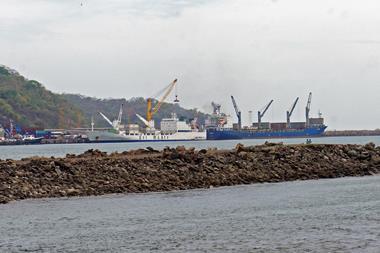


Things are looking up for Argentina’s ports since a number of factors, from politics to rainfall, might make for a short-term boom.

Firstly a series of pay-related strikes was resolved recently with port workers gaining a 27% salary hike for 2010. The strikes began at the end of March at two port complexes near Rosario, Argentina’s main export hub but spread to cover most agricultural ports in the region.
More recently, it seems that a bumper harvest will boost throughput. Analysts Oil World raised its forecast for Argentina's soybean crop by 1.3m tonnes to 53.3m tonnes, noting "abundant and timely rainfall in most parts of the country" during the quarter – this estimates a crop two-thirds higher than last year’s, which was dwarfed by drought.
On top of these factors, China’s major northeast soybean producing regions have been hit by bad weather, probably reducing output by 15% and putting up pressure on imports. Maybe prompted by this, China has withdrawn its boycott on soybean products from Argentina. Some may have put the boycott down to China’s tendency to posturing in trade negotiations, pointing out that China is dependent on the imports. The recent trade dispute began when Argentina instituted measures to stop Chinese imports flooding Argentina’s market. China then talked about quality concerns and solvents found in Argentine soy oil, and teetered on the edge of a boycott. However, Argentina is, globally, the third largest exporter of soybeans the largest exporter of soy oil, providing over half the world’s needs, and even on a good year, China can’t make up the gap.
And lastly, the Gulf of Mexico oil spill, although not disrupting shipping as yet from the US, might do so at some point, possibly leading to more being sourced from Argentina.