

The choice between rope and electro or motor hydraulic grabs depends principally on the cargo for which it is intended. But there are other considerations. Nick Elliott talks to the manufacturers to weigh up the pros and cons.
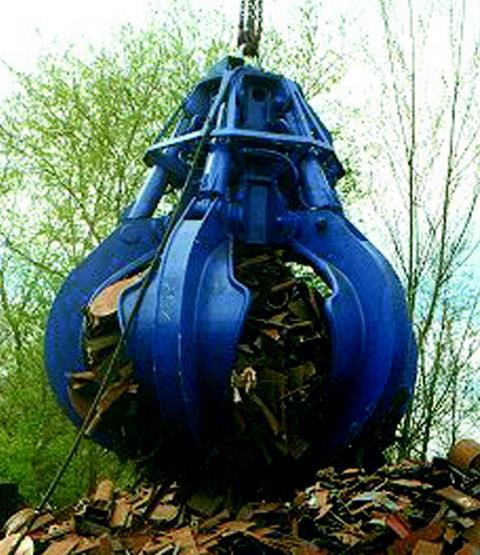
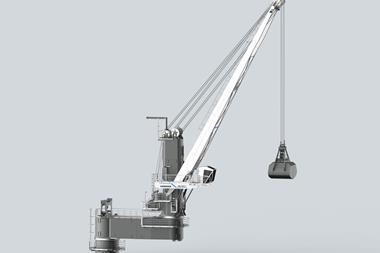
The rule is that ports will opt for rope grabs for coal and other bulks whilst the lighter electro-hydraulic option is chosen for scrap cargoes, typically where the port is serving a steel mill.
However, the majority of electro-hydraulic grabs are bought for shipboard use with the ship's deck cranes.
But there's a bit more to it than that. The electro-hydraulic variant has advantages that make it worth considering for other uses besides scrap. "If I was spending a lot of money on an expensive crane, then I would opt for an electro-hydraulic grab because the grab does the work and not the crane, " says Ivan Cloherty, md at IJC International. "With a four-rope grab, the crane is doing all the work.
It's already started to work before it lifts its first load. Whereas with the electro-hydraulic, the grab itself is doing the work."
Cloherty says if a port is already equipped with four line cranes, you're not going to buy an electro-hydraulic grab because it means outfitting them with cables, cable reels, control boxes, power supply, etc. So ideally the decision should be taken at the same time as the crane is purchased.
"What was happening was that customers would buy expensive cranes at $1m or $1.5m then go out looking for second-hand grabs.
If you're thinking of buying a crane you should start at the bottom end - i. e. the grab - because you may be able to save money. The question is what productivity do you want per hour and what grab size do you need to achieve that capacity? Then you say, if I can get 10 tons per grab-load and I want 300 tons per hour, can I get a crane that will do 30 cycles per hour? If I can, and I only need 300 tons an hour because I don't have a greater takeaway capacity than that, then why do I need a crane that will do 45 slews per hour? Perhaps I can save myself $200,000. That's the way it should be done. But so often, although a port's business or the receiving process isn't going to change, there's the mentality that it might, so let's be on the safe side. And so the crane is over-priced from day one."
Cloherty summarises: "What productivity do you want, how many cranes do you want and what type of grab is going to give you that productivity? So the whole decision-making process should be integrated."
Michael Guse of SMAG's Peinar grabs division makes some points on the various applications that the Peinar motor or electro-hydraulic grabs are deployed for amongst its port customers: "Last year we sold several dual scoop motor-hydraulic grabs to Moroccan ports, " he says. "They preferred these because they could use them with their older cranes with smaller SWL. Further they can use the same cranes for bulk and general cargo operation."
USE WITH MHCs INCREASINGLY POPULAR "A further possibility is their use in combination with mobile harbour cranes and this is becoming more and more popular. The UK's ABP group, for example, is using some of our dual-scoop grabs with 2-rope Gottwald MHCs. This gives maximum flexibility as the MHCs can be used for both conventional cargo and container handling."
The electro-hydraulic grab has the advantages of being lighter, therefore suitable for smaller cranes, more flexible as seen above, and easier to control in operational terms as it can be opened and closed independently of any crane movement.
As to their reliability, as long as the maintenance and greasing is done and - particularly for shipboard use - the motor is protected against ingress of seawater which is designed into the grab anyway, then the electro-hydraulic grab is a reliable option, maintains Cloherty.
On cost, he says: "If the crane is not already fitted with the operating system (cable reels, umbilical cables, control boxes and power supply, etc. ) then for a comparable sized grab you can more or less double the price to buy the electro-hydraulic equivalent. But if, for comparison, a 10cbm capacity, 7-tonne weight median is taken, then the electro-hydraulic unit alone would cost only 10-15% more than its mechanical counterpart."
What's the bottom line then? "All other things being equal, I'd go for the electro-hydraulic grab, " says Cloherty, "because the grab does the work and the grab is cheaper than the crane. So why wear out the crane before the grab? Motors and pumps on electrohydraulic grabs are much cheaper than comparable components for the crane."