![PortStrategy[GreenPort]](https://www.portstrategy.com/wp-content/uploads/2026/09/PortStrategyGreenPort.svg)





US WEST COAST: MORE NEEDED
Comprehensive measures continue to be introduced across the US West Coast (USWC) to alleviate the prevailing port congestion, but will they have the desired effect or are they hampered by fundamental flaws?
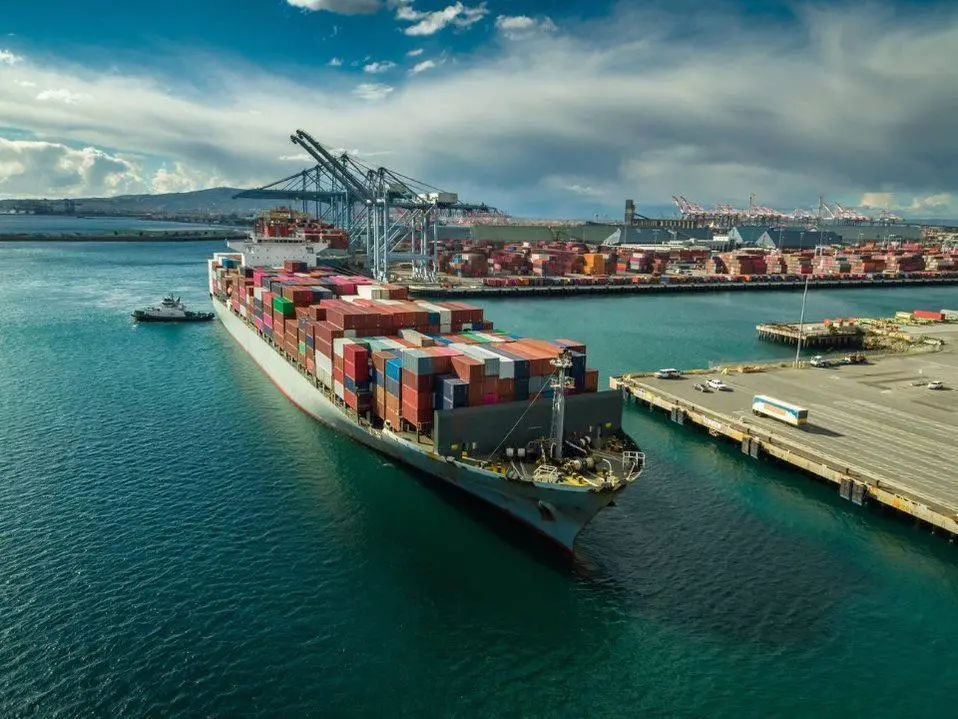
There are a number of ongoing issues on the western seaboard. The number of ships waiting to access both Los Angeles and Long Beach remains as high, if not higher, than ever, with reports of more than 75 container ships at anchor for much of this year.
A recent solution to the problem, approved by the Biden Administration, is to start charging an “emergency fee” on all containers that remain at the terminal for nine days or more, and rail containers for three days or more. The cost is US$100 per container on the first day past the set dwelling limit for terminal or rail, then increasing by US$100 increments for each day that follows (i.e., US$200 for day two, US$300 for day three etc.)
The plan for the extra levy followed the White House stating that the two San Pedro ports will operate on a 24-hours-per-day basis and increase operating hours at night to help relieve the build-up of boxes at the berths.
Strong words from government but little by way of explanation of how things will work, operationally. There are also other problems – a shortage of truckers and many warehouses due to receive containerised goods are lacking both space and employees.
Obviously the current issues will not be resolved until all major shippers and beneficial cargo owners are able to get their freight to where it needs to be, immaterial of what extra charges are applied.
That is even before the issue of who will pay the fees is considered. Simply adding such charges will only see them ultimately passed on to the end consumers.
So if the aim of applying extra fees is to put pressure on beneficial cargo owners and shipping lines to move the cargo away from the ports, it does not explain where these boxes will actually be moved to.
In general, the short-term measures could be interpreted as five out of ten in terms of an efficiency score. But this is perhaps not surprising with more fundamental challenges present in the USWC port working environment.
The unionised workforce and terminal operator employers are rapidly approaching time for another contract to be negotiated.
The prickly subject of terminal automation will be on the agenda, with the employers pushing for greater concessions from the unions and the workforce representatives still largely resistant to the concept becoming widespread.
The resulting discussions will eventually see a new agreement on wages and pensions (among other benefits) and this will see an increase in costs – in port locations that are already more expensive than competing ports in other key North American gateways, most notably the Pacific Gateway of Canada of Prince Rupert and Vancouver (BC) and the US South Atlantic, where Savannah and Charleston continue to invest in infrastructure and grow their volumes.
The potential threat of the US Gulf is also increasing, as amplified by the decision of APM Terminals to develop a new terminal in conjunction with Plaquemines Port, Harbour & Terminal District (PPHTD). The new facility is located on the lower Mississippi River, 50 nautical miles from the Gulf of Mexico, and will offer deep water access.
With current US port congestion in Southern California, this new project may offer some ships and beneficial cargo owners an alternate routing, especially for serving such key locations as Memphis and St. Louis. Sailing time to the US Gulf is longer than across the Transpacific to Southern California, but factor in the vessel delays and higher costs, and the Plaquemines project may be viewed as an attractive option.
It is clear that 2021 has been a year of strong port volume demand for the US ports on the West Coast, especially in San Pedro, and there is no end in sight for queuing ships and congestion in the two Southern California ports. These may be new challenges, but the old flaws still remain.
Related Articles
 INSIGHT & OPINION
 INSIGHT & OPINION
 INSIGHT & OPINION