![PortStrategy[GreenPort]](https://www.portstrategy.com/wp-content/uploads/2026/09/PortStrategyGreenPort.svg)





Gateway spiral
In the case of London Gateway, it is already known that costs for the project have spiralled hugely since the original days of the projects conception and its early development under P& O management. The most telling point is perhaps that they have reached a level significantly past the projected development costs for Felixstowe South and Bathside Bay and so practically speaking this puts the London Gateway project at a major competitive disadvantage.
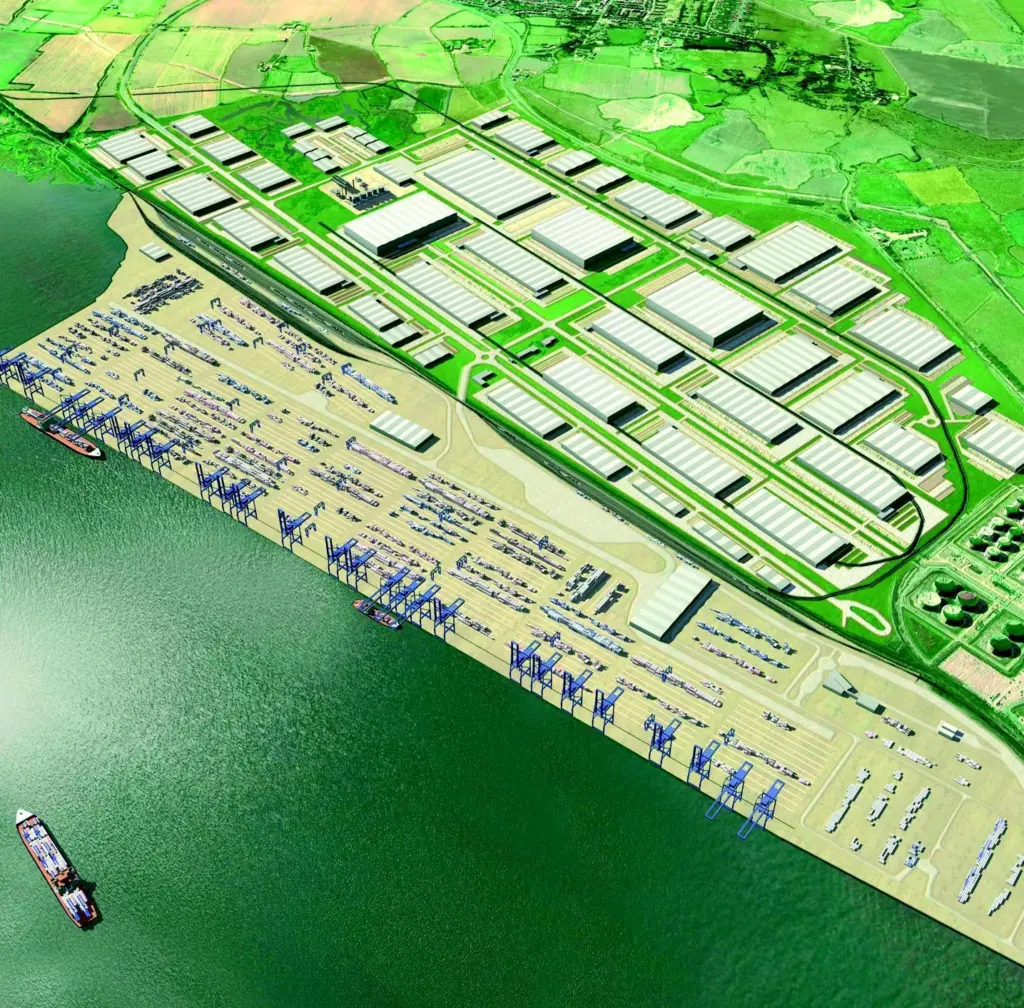
If brought to the market it will not be able to compete on a level playing field which, in turn, raises the real doubt that it will be able to achieve any sensible return on investment. The outstanding roadrelated issues are understood to be fairly large and as such their cost promises to compound this already negative situation.
This leads to the ultimate question – will it ever be built?
Container trade growth in the UK market over the next decade is seen as having a compound aggregate growth rate of just over 6% – not really enough to support a very high price development especially for a global operator who can relatively easily identify higher returns elsewhere for a lower development cost. Against this, however, you have to factor in the reality that there are some exceptional factors that may come into play – notably, the reality that DP World has a reputation for acting outside the normal commercial parameters and putting its money down where other purely commercial entities wouldn’t. DP World is an integral part of the Dubai brand that is now trying to make its mark in diverse business sectors around the globe and doing so at times with more of a sovereign state-backed mentality than that of a pure commercial entity.
Does, however, London Gateway make sense in the context of any proposed initial public offering by DP World? The competitive parameters of the project would be pored over by analysts should the project receive the full green light from government and for the reasons already stated there is a strong probability that their findings may feed back negatively into any proposed IPO for the group as a whole.
At a more practical level, one other reason to not be convinced that the London Gateway project will be delivered is that the bush telegraph suggests that a major expansion of capacity is back on the drawing board at Southampton again where DP World owns 51% of Southampton Container Terminals (SCT). The buzz is that an expansion is planned that could eventually see a capacity of around 4m teu per year, a big increase on SCT’s existing 1.4m teu per year capacity. Pursuing such an approach may make more commercial sense even though the earlier Dibden Bay expansion scheme in Southampton received the thumbs down from government.
It is not just DP World that faces something of a quandary due to the high cost of port development in the UK, it can be argued that Hutchison does too. While it can certainly deliver new port capacity at a significantly lower cost than the London Gateway project, this capacity too is not inexpensive when measured in global terms. There are question marks as to whether the Felixstowe South and Bathside Bay projects offer acceptable rates of return on investment and as a consequence whether they will clear internal hurdles in this respect.
The situation regarding the introduction of new containerport capacity in the UK remains far from clear cut.
Related Articles
 INSIGHT & OPINION
 INSIGHT & OPINION
 INSIGHT & OPINION