


A change of scene
The North American Great Lakes artery has grand plans for the future, as Stevie Knight discovers
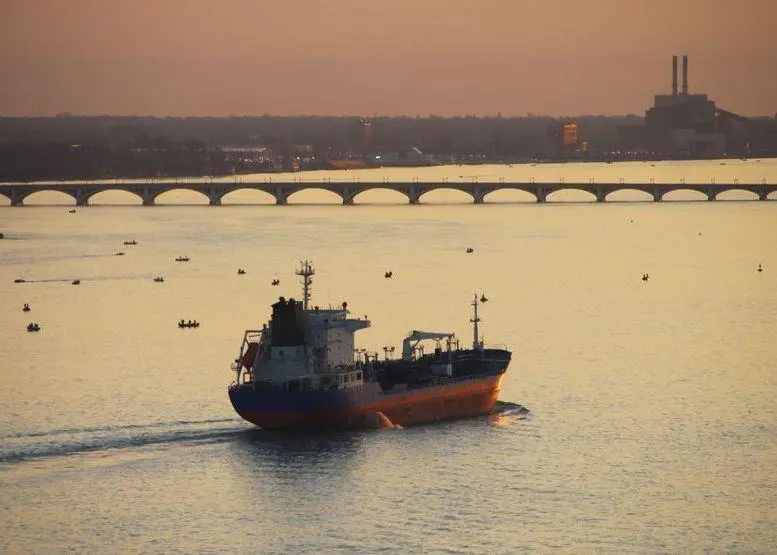
The St Lawrence Seaway has done very well for the last 50 years, mostly moving bulk and breakbulk commodities. But the industry has changed massively in that time and those involved in this important stretch of water recognise that the Seaway has to move with the times to remain relevant.
To start with, containers now dominate the scene, and have even made some inroads in moving bulk, says Terry Johnson of the St Lawrence Seaway Development Corporation. Further, the last few years have seen a market volatility that’s not been experienced before.
So one of the big questions is, what roles can the ports along Seaway now play? Closely followed by a related, bigger question: could the Seaway system be suitable for box traffic? The answer, as you’d expect, is a mixed one.
There’s no doubt that travel on the Seaway system itself has both benefits and challenges. Although there are a series of locks which have a fixed maintenance schedule – closing the Seaway route for two months a year – there are other alternatives when they are not open. And although there’s some restriction in draft, smaller vessels could traverse it.
It’s a remarkably fuel-efficient option, plus, it has lower air pollution and better safety – so its green credentials are large.
As to the first question, Mr Johnson explains that while it’s very difficult to market bulk and breakbulk services, the Seaway has an ongoing presence in the sector. However, it’s linked very closely to the heartbeat of the US economy; that falters, and Seaway traffic goes down. “We tend to be a barometer for the state of the economy, what ever happens out there, we feel it first,” he says.
However, the Seaway does have other strengths. It’s a chosen route for big, heavy pieces of machinery, specialist products that would cause problems on the road. These are as diverse as the generators for atomic power plants to wind turbine assemblies. “It’s a growing market, with parts going via Duluth to the new wind farms that are ranging from Minnesota out into the west.”
But, as to the second question of containers, there are differing views. Paul Toth, chief executive of the Port of Toledo, has the future in mind, but he’s doing a little ‘spread betting’.
He explains that Toledo is well positioned as an inland distribution point for North American commerce, “Toledo sits at a crossroads: the I75 runs from Canada to Miami, while the I80 and 90 crosses the US from east to west,” he says. What’s more, the new CSX intermodal hub – the largest and most efficient inland intermodal facility in the US – is just 40 miles south, and the port’s new 182 acre acquisition will allow it to bring in another connection to a Class 1 rail network.
His point is that the Great Lakes are traditionally linked to raw and bulk commodities, and the infrastructure is built around this kind of volume. However, Toledo has made the conscious decision to flag itself up as a ‘container-able’ port, even before there are any boxes to be had. To this end, the port has recently invested in two mobile harbour cranes, although Mr Toth, adds it has not been a foolish purchase, since the cranes are versatile enough to take on wind turbine parts as well as the more traditional bulks of pig iron, pet coke and limestone.
“More than anything, it’s a matter of everyone getting comfortable with the idea. Short sea has been well proven in Europe, but North America is still lagging behind. It’s partly just habit,” he says. “The shipping industry is fraught with acceptance of the status quo, even if it’s not a particularly efficient one. The attitude seems to be ‘there may be a problem, but at least it’s a consistent problem’.”
However, Maersk Line points to a lack of population density to warrant it. A north American Maersk spokesperson explains: “Ideally you want the freight owners to be close to these supply chain nodes, so when you look at it, a lot of infrastructure would have to move quite a long way to make it viable.” He adds: “We study the trade patterns and service requirement of customers and their supply chains: as of right now, we haven’t seen or heard of a need for such a service.”
Related Articles
 PORT & TERMINAL NEWS
 OPERATIONS
 PORT & TERMINAL NEWS