![PortStrategy[GreenPort]](https://www.portstrategy.com/wp-content/uploads/2026/09/PortStrategyGreenPort.svg)






Fact or fiction
Is Mediterranean Shipping Company offering for sale part of its global portfolio of container terminals or is it planning to spin off its terminal division in an initial public offering in Singapore?
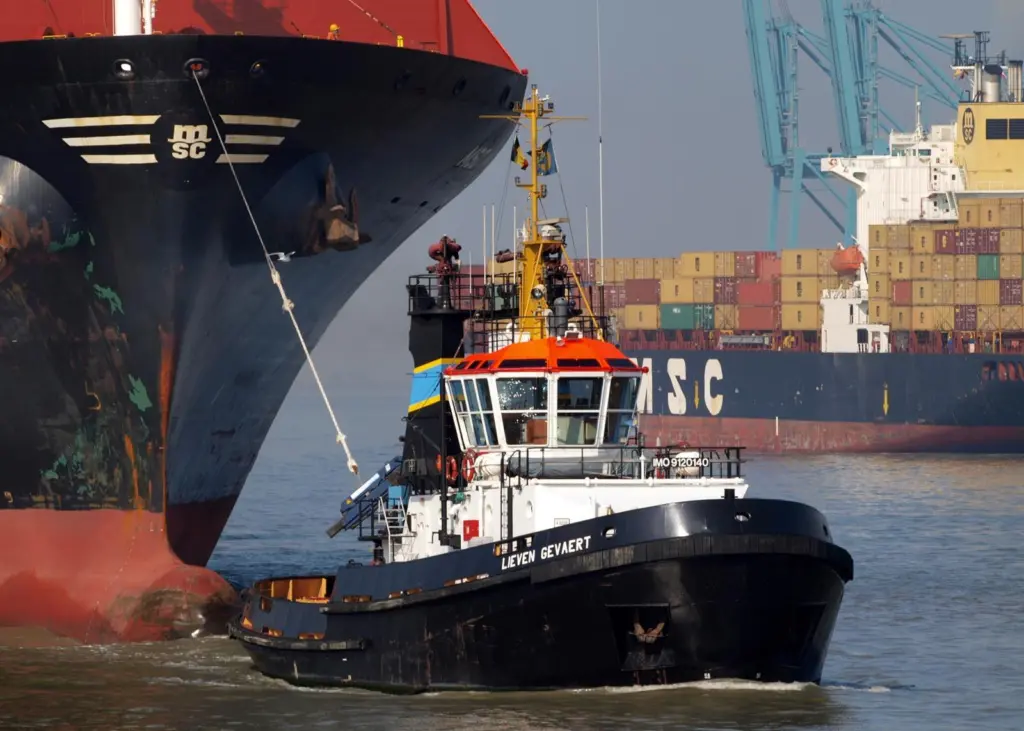
The initial public offering option has been strongly denied by MSC but it would nevertheless seem a sensible option for it to examine if it is going to go down the limited disposal route.
As Hutchison Ports has shown previously, with its limited terminal flotation, Singapore is a location that is friendly to share owners in terms of structuring a disposal, one of the main beneficial features being that it leaves them with a significant amount of control via the Trust mechanism.
The Hutchison IPO was actually the biggest one in Asia-Pacific during the first half of 2011 – a $5.45bn deal – and something of a coup for the Singapore exchange.
There is little doubt, however, that probably the preferred option for MSC is the straight sale of 49% of its terminal division to a third party investor or combination of investors. It is a step which, overall, is more in line with the culture of MSC which has traditionally been something of a secretive company enjoying the lack of limelight afforded by private ownership.
Bottom line, the straight sale to a third party is also a lot less riskier – flotation of part of the MSC terminal portfolio suffers from one major problem from an investor perspective compared say to the Hutchison flotation: shipping lines tend to treat terminals as cost centres rather than profit centres.
Their interest is in driving down terminal charges and not optimising them like an independent terminal operator would. As such, a sale via an IPO of part of the MSC terminal network might be a hard road to travel. The same problem exists of course with any individual third party or a combination of interests but the sale process is easier to manage and certainly there is less exposure to risk. If MSC does proceed to sell part of its terminal division then it appears logical for a number of reasons that it is more likely to be a private sale
Candidates? Hard to assess but likely that most international terminal operators will approach the opportunity with some scepticism for the reasons already outlined and similarly the more industry astute private equity funds. Possibly another Yildrim-style company will emerge – an investor in CMA-CGM’s terminal portfolio – but certainly no company is known to have put its head above the bar yet in this respect.
What is interesting is that MSC has not opted to go the Maersk route, namely that of spinning its terminals off into an entirely different division and aiming to give it a cloak of independence that enables it to more actively seek third party business. The barriers to this are perhaps that MSC is itself a part shareholder in a lot of its terminal facilities, not a 100% owner. Equally, MSC does not have a large organisation behind it as regards its terminal network – a lot happens at a local level. Thus at both a structural and organisational level the MSC terminal network does not readily offer itself up as a truly independent business that can be developed as a global brand with a much wider business base.
The only certainty at the moment regarding the strongly-rumoured-yet-hotly-denied sale is that it reflects the long-term trend that shipping lines will dispose of terminal assets during, or in the aftermath of, tough trading conditions. The core business – shipping – will always come first.
Related Articles
 INSIGHT & OPINION
 INSIGHT & OPINION
 INSIGHT & OPINION