![PortStrategy[GreenPort]](https://www.portstrategy.com/wp-content/uploads/2026/09/PortStrategyGreenPort.svg)





Deeper dredging demands
New deeper draft vessels keep coming, as do vessels with a wider beam and length overall dictating the need for deeper channel depth and draft alongside quays as well as other requirements such as larger turning circles.
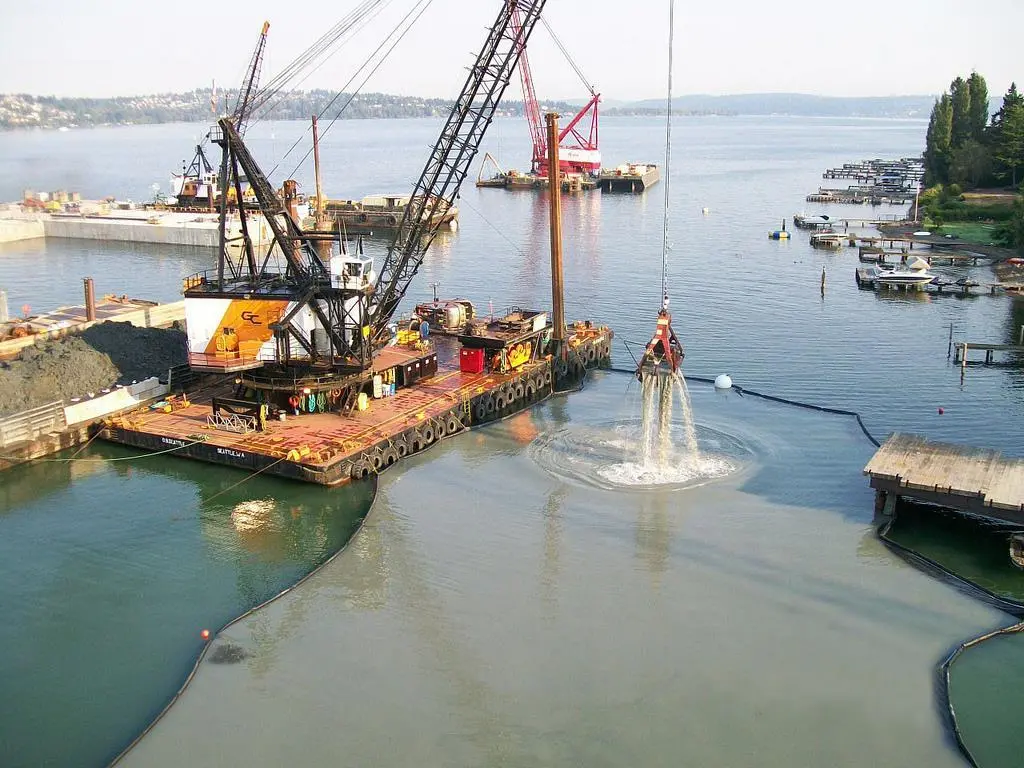
The dredging works involved are invariably high cost and meeting the large expenditure required is becoming progressively more challenging especially in emerging nations.
Slowly but surely this situation is resulting in two main trends: the public sector seeking creative ways to shift the burden of financing dredging works on to the private sector and in both a public and private context more rigorous tender processes with stronger qualitative aspects covering the work undertaken.
The traditional method of financing dredging is from state, regional or local government funds or directly from port authority income. The former method is justified on the basis of facilitating import and export trade or what can be termed a project in the ‘national interest’. The second method follows on from the development agency role of a port authority or simply its landlord role looking after the common parts of the facility concerned.
In both respects, however, as the capital cost of such projects has grown so the authorities concerned have looked to find creative ways to withdraw from them. Equally, when the private sector has had to engage with new dredging projects it too has been responsible for delivering new thinking in this area. A number of modern methods of financing dredging works have emerged.
An example of a ‘Dredging Concession’ can be seen in the River Plate where maintenance dredging is privatised. In 1993, the Argentine Ministry of Economy & Public Works issued a ground breaking concession for the dredging and operation of navigational aids of the waterway between Punto Indio on the River Plate and Santa Fe on the Parana River. The concession holder basically operates this like a toll highway where vessels using the waterway pay a fee to the concession holder.
Making a contribution
Australia’s New South Wales offers another tack with its ‘Contributions to Dredging Projects’, as featured in the NSW Government Sustainable Dredging Strategy 2013/14-2014/15. This is described as: “Shared responsibility for funding helps to ensure that proposals are realistic, soundly based and supported in local communities…. As a principle, the cost of dredging projects should be met in part by the beneficiaries on a ‘user pays’ basis.” This does not exclude the idea of government funding but looks to achieve a contribution from beneficiaries of all types right through to parties using waterways for leisure purposes, not just commercial.
A ‘BOT Concession’ permits the inclusion of dredging and reclamation related works in Build Operate Transfer (BOT) concessions. These are works usually in and immediately around the development site. A ‘General Improvement Contribution’ offers concessions that require a financial contribution to general port improvements.
Then, an ‘Infrastructure Charge’ could be applied as a per tonne or TEU infrastructure charge which can be used for dredging, while ‘Grant Aid’ involves obtaining, at least in part, grant financing of the sort provided recently to Malta Freeport by the EU for dredging works under its TEN-T programme.
On qualitative issues what is notable that these are steadily becoming a stronger feature of dredging contracts including arrangements such as ‘Performance-Based Payments’. These provide for payment if and when benefits are achieved following project implementation. This method can help solve upfront project funding problems, maximise the commitment of the contractor and limit the client’s financial risks without unreasonably increasing the contractor’s risk. It is most suitable for maintenance dredging projects.
Overall, who pays the bill and how the bill is paid is changing in the dredging world.
New options are on the table as to how to meet the capital cost of dredging and to confirm the quality of the works undertaken. This has to be of interest to ports worldwide in both emerging and mature economies.
Related Articles
 INSIGHT & OPINION
 INSIGHT & OPINION
 INSIGHT & OPINION