


After the storm
It’s the ‘big ships’ and not the Panama Canal that are the talk of the East Coast, writes Martin Rushmere
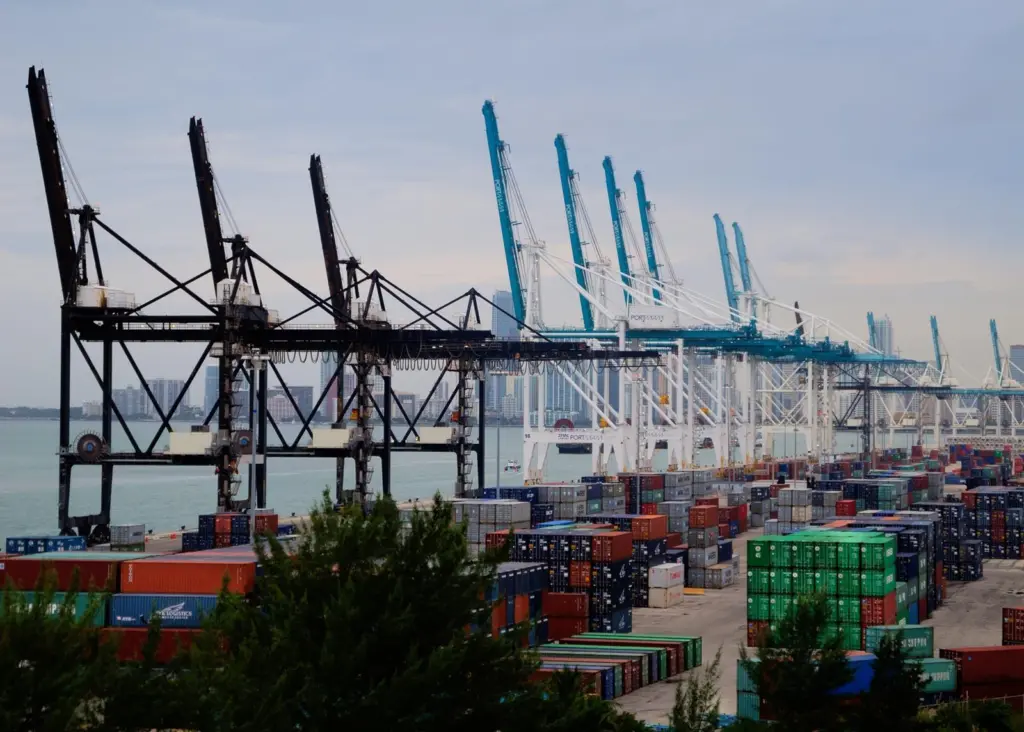
Less of the Panama Canal effect and more of the ‘big ship’ syndrome is taking up the time of planners on the East Coast. The wave of anticipation over the widened Canal has calmed down, “I think it’s going to be very modest,” is how John Reinhart, executive director of the Port of Virginia, has described it.
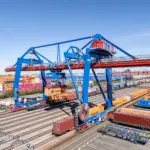
Capital expenditure on increased and bigger facilities is slackening off and the accent is on making what is already there do more. This largely centres on rail not just at the ports but extending to connections to the hinterland. Miami and New York/New Jersey make this a strong point of their growth plans.
“Longer term is the influence of improved CSX and Norfolk Southern railroad route clearance into the Midwest from Mid-Atlantic ports, with double-stack clearance for the Heartland and National Gateway rail corridors, providing a better alternative to trucking to reach west towards Ohio River Valley and Chicago,” says Paul Bingham, economics practice leader at CDM Smith.
Miami is extending on dock rail as part of a three-pronged plan to make the port a first call destination. Twin 1,500 feet loops have been installed and in October another 3,000 feet will be added, capable of taking 250,000 moves a year.
Non-container
Says Mr Bingham: “There are some non-container port competitive issues on the East Coast as well, such as competition for ro-ro and autos handling and the performance of coal export terminals, given the drop in domestic coal demand. The potential substitution of domestic crude oil supplies to East Coast refineries instead of foreign crude oil tankers (at least for New Jersey, Philadelphia, and Delaware) is partly due to crude-by-rail unit trains bringing in US domestic crude oil now.”
Anxiety levels have dropped over harbour deepening projects following the passage of the Water Resources Act, which allows ports to find extra sources of funding in partnership with the Army Corps of Engineers and radically improves the approval and permit process.
And there is some relief that the P3 Alliance has been stopped. An industry executive predicts that greater competition will be the result, as CMA CGM has teamed up with China Shipping and United Arab Shipping Company.
For the East Coast it will be a case of bigger ships of up to 14,000 teu making fewer calls. The most common size of vessels is forecast to be between 9,000 and 11,000 teu. Some ports have racked up impressive gains in cargo volumes, such as New York/New Jersey, Charleston and Virginia.
Virginia’s traffic volume and financial health are of particular interest in the industry because of the upheaval in senior port staff and changes in ownership pattern. The operating loss for the year to the end of June was $17m, compared with $15m for the year before. The port says the operating loss is being significantly reduced and points to a record 203,000 teu in July. That month also brought a $2m operating profit, up 6% on the year before.
The question that still needs to be answered is whether the decision was right to spurn the APM Terminals proposal and opt for a buyout of the terminal by a consortium controlled by money market funds.
Worker switch
At New York/New Jersey there is a significant change in the strategy of ship-to-shore shifting of containers. “We want to move away from a gang system, [dockers being allocated to specific groups] to a ship system, where dockers are called to a ship as and when needed,” says Rick Larrabee, Port Commerce Department director.
Other ports in the US have found this increases flexibility and improves efficiency significantly, as the number of workers needed can be varied according to the size of vessel.
Charleston is bullish about business. A South Carolina ports executive says that the forecast for the financial year from July is 975,000 teu, 3.4% over last year. Volumes from January through July this year of just over 1m teu were up 11% from 2013.
Breakbulk tonnage is expected to increase 9.8% in Charleston and 0.5% in Georgetown, “driven largely by strong performance of state manufacturers,” according to the executive. “Continued expansion of cargo diversity is a key part of our operations.”
A draft Environmental Impact Statement for deepening the harbour to 50 feet will be released in the last quarter of the year and a full report in September of 2015. “The project will be completed up to five years earlier than initially expected, with construction finished by the end of 2018. And the project presently has no constraints on either funding or staffing resources,” says the executive.
At Greer inland port the truck turn time reduced to roughly 10 minutes and traffic is expected to be better than the first phase goal of 40,000 moves a year.
For South Carolina, operating earnings were 20% above the forecast of $14.3m while revenue was up 17% to $164m.
Work on the 30-month project of expanding the Wando Welch Terminal is scheduled to begin in April 2015. The project will allow WWT to accommodate vessels of 14,000 teu in size. In addition, two new super-post-panamax cranes have been purchased for the terminal and are expected to arrive in the spring of 2017.
Chasing transhipment
At Miami, harbour deepening to 50 feet will be finished in July 2015, giving access to 14,000 teu vessels. Chief executive Juan Kuryla says that the aim is for container volumes to reach 1m teu by 2016, up from 900,000 teu at the moment.
“We also want to get transhipment business back to about 15%-20% of the US total, from the 1% at the moment. “ He sees this as partly a joint initiative with other Florida ports. “An important aspect is getting the cooperation of federal agencies such as Customs and Border Protection.”
Cruise ships make up 55%-60% of Miami’s revenue, with 4.7m passengers passing through in the current financial year. “We are developing a third revenue stream by commercialising the south-west corner of the port, building hotels, offices and the like. This is still in the planning stage.”
Over the last five years the port has spent $1.2bn on capital development and will probably invest another $500m more in the next five.
A huge infrastructure boon has been the opening of the toll-free tunnel linking the port to the city, which has taken away the congestion that has been an aggravating feature of business life.
Meanwhile, security fears about foreign control continue to affect an expansion project for Port Canaveral in its partnership with Gulftainer. The 35-year agreement calls for Gulftainer to put in $100m investment, while the terminal will handle 700,000 teu a year. A California congressman has called for the contract to be re-examined, citing unspecified security fears.
Control confusion
On the flipside, greater US involvement in foreign-controlled operations continues. Ports America has taken a 30% stake in ITS Terminals, which the US company terms “a long-term strategic partnership. The collaboration with ITS fits naturally into our strategy to deepen our partnerships with our global key customers.”
Ports America operates ro/ro terminals in Jacksonville, Newark, Brunswick and Charleston, handling 2.5m vehicles a year, and says this will continue to be a growth area.
The company says its East Coast container volumes “have been trending in line with the market. We have invested significantly in our footprint in Baltimore as well as in the NY/NJ area. Port Newark Container Terminal, will invest $500m into its expansion before 2030.”
New low sulphur requirements for vessels in the North American emission control areas are adding to cost strains for ships and ports alike. The market feeling is that costs will eventually be passed on to customers, although there is some uncertainty as to whether the costs will be as heavy as those cited by Drewry.
Says Mr Bingham: “Smaller carriers abandoning the route is a reflection of keen competition plus the relatively higher costs for older, less fuel efficient vessels, where the fuel consumed per unit of cargo is greater and thus higher fuel costs disproportionately affect those less fuel efficient vessels. Another question is how the supply side of the low-sulphur fuel market adjusts over time.”
Related Articles
 PORT & TERMINAL NEWS
 OPERATIONS
 PORT & TERMINAL NEWS