


Interest in the market
A port study by Rotterdam concluded that an LNG facility could possibly be of interest to a group of around 100 ships that visit the port at least once every two weeks.
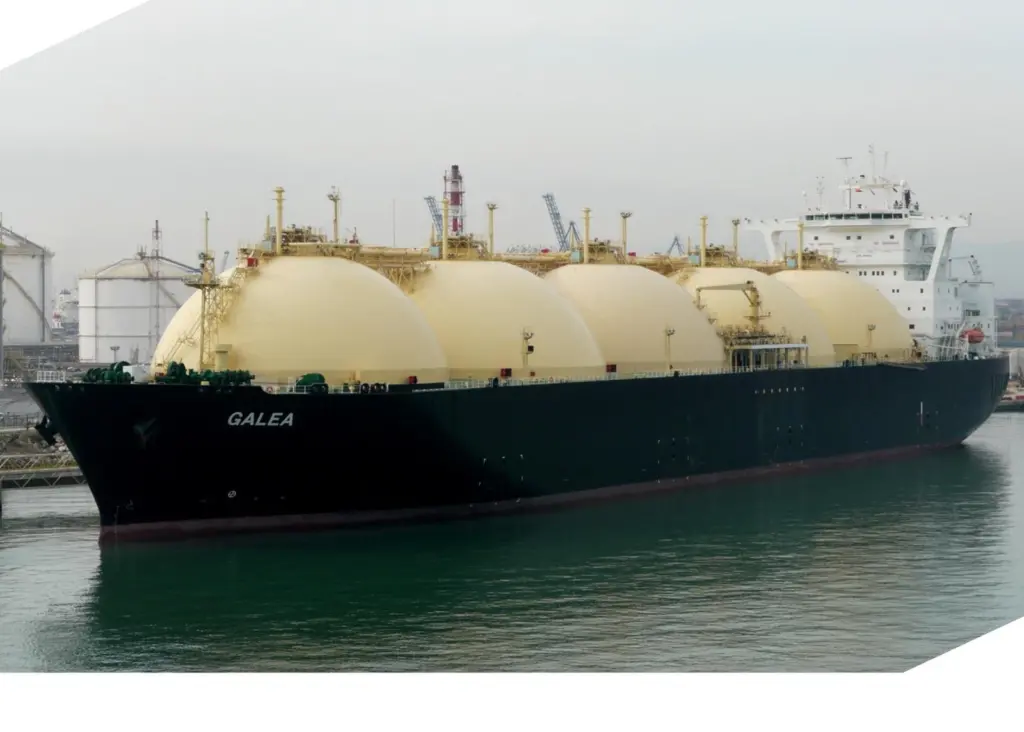
Adriaan de Ruiter explains that these vessels, which are mostly general cargo shortsea with a mix of ro-ro and ropax, would be candidates for LNG either because of their sailing pattern or because of the new low-sulphur rulings.
However retrofitting these ships is generally not considered a viable option, so although the group shows up the calling patterns, actual use of LNG would probably have to wait for newbuilds to come on stream.
Port service vessels, on the other hand, are an interesting option as the port has direct control over these vessels and these might provide a good basis to gain experience and set standards.
While the calculations for CO2 reduction are minimal, SOx, Nox and reductions are more significant. SOx and particulate matter (PM) emissions would be reduced by about 25% and of NOx by roughly 20%.
Cost for LNG fuel can be competitive with liquid fuels, especially MGO, depending on the contracted volume of NG and more importantly the price of crude oil.
However, Mr de Ruiter points out that LNG is not a durable energy source as it is not renewable – but it can provide a quick fix to pressing CO2 emission problems, as large quantities of LNG are now being stored at Rotterdam, courtesy of the new GATE LNG export facility, while the demonstration of it’s workability would clear the road for renewable energy sources like bio-LNG.
While it doesn’t have direct control over fuel choices, the port acknowledges that it has a large regulatory influence and strong contacts with private and public parties.
However, for the development of a LNG facility the port would have to find interested partners for developing both the supply and the demand side of the equation at the port.
Mr de Ruiter notes too that for most facilities, it would be important to have a regular demand, because stored LNG always suffers a certain amount of loss as it heats and turns into gas. While large cooling installations or liquefying equipment can be installed, these require a higher investment and operational costs so ports may well be looking at customers that will bind themselves to a contract specifying a minimum volume and price.
And on this same subject, he says “While constructing a facility to supply liquid LNG to trucks is not a major investment the design and construction of bunker ships and fixed pipelines are a more expensive operation – and it’s probably best, at least at the moment, to keep as many options open as possible.”
So, while Rotterdam has the benefit of the large LNG GATE terminal and therefore does have a pipeline option, most ports, he says, would be best developing a ship to ship bunker transfer – and even Rotterdam may well develop along this route at least at first.
“The use of LNG bunker barges seems the most promising concept offering maximum flexibility” says Mr de Ruiter. The small LNG carriers used in Norway (1,100 m3 to 7,000 m3) distribute LNG from main terminals to small regional terminals: this vessel design could therefore be used as a starting point for designing dedicated LNG bunker barges for Rotterdam.
“Ship to ship transfers are also attractive because you don’t get the queues associated with quayside operations – and it doesn’t need all the expensive infrastructure,” he adds.
Although he admits there are a few technical issues to be overcome, there are also processes and regulations that need to be brought into line – but its nothing too taxing. “In most ports there is a petroleum regime, and you can have a similar LNG regime adapted from it, with separate safety checks, procedures and regulations.
The bunker operators themselves have a commercial perspective on the matter of LNG fuel. Currently bunker operators in Rotterdam are involved in the local distribution of large quantities of liquid fuel to ships in the port area. The bunker operators are crucial to the market position of the Port of Rotterdam as one of the largest fuelling ports in the world, as they are the direct link between the fuel supply side and the demand side of the fuel market. Their position involves the buying and selling liquid fuels at the most profitable margins and this is highly market dependent. Therefore, rises in the costs of low sulphur liquid fuels could help push bunker operators into LNG fuel market.
So, for the bunker operators LNG fuel can offer an interesting new market opportunity, as long as the necessary investments are offset by the generated income for distributing LNG.
It has to be said that initial demand for LNG fuel will be small as the size of the user group is limited: when the tide starts to turn a trade off will probably have to be made between the loss of demand for low sulphur liquid fuels and new demand for LNG.
One last point from Mr de Ruiter. “A close cooperation and coordination between regulators and investors will be required to create a safe and efficient LNG fuel distribution system”, he concludes.
Related Articles
 ALTERNATIVE FUELS GREENPORT
 ENERGY & TECHNOLOGY GREENPORT
 ENERGY & TECHNOLOGY GREENPORT