

The value of a partnership approach to exhaust gas cleaning
“You may delay, but time will not”, Benjamin Franklin was once quoted as saying and this rings particularly true of the fast-approaching Emissions Control Area (ECA), 2015 0.1% sulphur limit deadline. The realisation that now less than 18 months remain until the revised limit will be applied has provided impetus for a change in attitude towards exhaust gas cleaning systems (EGCS) or ‘scrubbing’, says Sigurd Jenssen, Director EGC at Wärtsilä Environmental Solutions.
Despite initial caution associated with the maturity of the technology and potential future regulation, installation orders are gaining momentum. Ultimately, money talks, and shipowners are recognising that – with the right partner and technology choice – the figures quite simply stack up.
The history of exhaust gas cleaning lies with open loop technology. Based on the same technology used in Wärtsilä Hamworthy’s inert gas systems for more than 50 years, the system operates in an open loop, utilising seawater to remove sulphur from the exhaust. It remains the simplest solution with the lowest installation and operational costs. However it will not match the needs of every operator, which is why alternative solutions have also been developed.
The Wärtsilä closed loop system was developed for operation in areas of low alkalinity – for example The Great Lakes – as it is not dependent on the alkalinity of surrounding water. It can operate in zero discharge mode when necessary and store the cleaned wash water (effluent) for discharge at a later date. Although a niche product, which may only be viable for a small section of the global fleet, it remains an important option for certain operators.
The third alternative is a hybrid solution that continues to grow in popularity and has seen the most take-up over the past year. With the ability to operate in both open and closed loop, the hybrid approach enables flexibility of operation in both low alkaline waters as well as the open ocean. Using NaOH to automatically neutralise the chemical reaction, this solution operates in closed loop mode when required, for instance whilst in port and during maneuvering. The system can only be operated in zero discharge mode for a limited period and enables a switch to an open loop system using only seawater when at sea.
ECAs
Given the 1% fuel sulphur limits within ECAs and the impending stricter rulings of 0.1% and 0.5% globally, the hybrid solution is being favoured by ship owners as a means of a more flexible approach to future proofing their fleet.
Spending significant amounts of time within port waters, the cruise and ferry sector has been at the forefront of exhaust gas cleaning adoption with Color Line and TUI Cruises just two of the companies that have ordered exhaust gas cleaning technology from Wärtsilä. Ensuring operational freedom in the European, Mediterranean, North American and Caribbean waters popular among cruise passengers, the technology provides universal compliance with current and future sulphur emission limits both locally and globally, and will deliver cost efficiencies whilst also supporting environmental commitments.
With the 2015 deadline approaching, proactive shipowners are sensibly consulting docking schedules to identify and exploit cost effective opportunities for retrofitting. By taking a planned approach, cost savings are realised by maximising the utilisation of periods in dry dock and avoiding unscheduled downtime. Moreover it stands to reason that if every shipowner waits until the very last minute, a bottleneck will ensue as there will not be sufficient capacity in the supply market.
Although some shipowners are reserving space for EGCS on planned newbuilds, this actually increases the overall costs significantly. Not only are retrofitting costs higher than installation at the newbuild stage, the vessel will have to operate on distillate fuels until retrofitting an exhaust gas cleaning system during its next dry dock visit. With a current 45% premium for distillates compared to conventional high sulphur fuel oil (HSFO) and projections that amid increasing demand for marine distillates, that premium will only increase post 2015, fuel costs are likely to escalate considerably. The algorithm is simple; spend more time in an ECA and the return on investment for EGCS increases. For example, Wärtsilä’s data shows that a typical ferry operating for 250 days per year in an ECA would show a payback of one to three years.
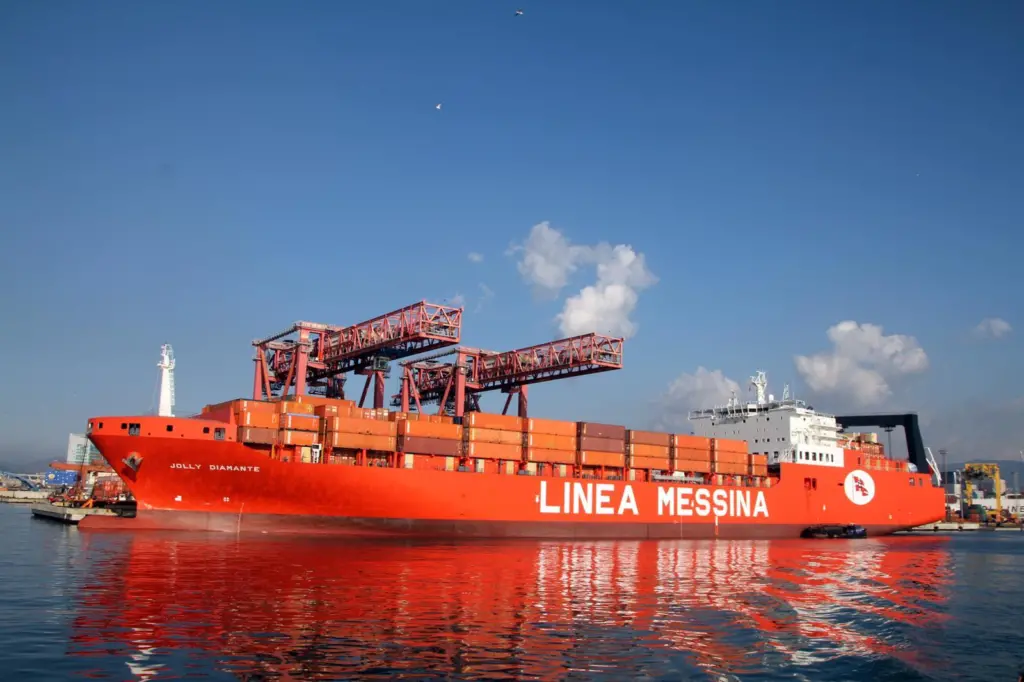
Commercial vessels with scrubbers installed are starting to enter operation. Notably the Jolly Diamante, a 45,000 dwt Ro-Ro vessel owned by Ignazio Messina with four Wärtsilä open loop scrubber systems for its auxiliary engines and a fifth for the auxiliary boiler, was delivered in January 2011, followed by installation throughout the summer. DNV approved the installation during testing in October 2011 and it has also achieved RINA classification. The Jolly Diamante was one of four vessels for Ignazio Messina to be fitted with Wärtsilä’s open loop scrubber system, and all vessels are the first of their type to gain RINA’s Green Plus notation.
Deliveries such as this and the increasing orders that the market is experiencing show a clear trend towards an awareness and understanding of the operational capability and economic viability of scrubbing systems. Wärtsilä has now signed contracts for 30 ship sets totalling 60 scrubber units and with many systems being delivered and installed now, early 2014 will start to escalate the provision of running hours so keenly sought by the market.
This growing confidence is palpable but also comes with an appreciation of the crucial partnership between supplier and customer. There is not a single ‘plug and play’ solution available – no two ships are the same, these systems need to be custom engineered and fine-tuned and therefore a close cooperation is vital to ensuring reliable and efficient operation.
Clarity, assurance and reliability
Wärtsilä’s experience in the exhaust gas cleaning market was bolstered by its acquisition of Hamworthy in early 2012 – the company that purchased Krystallon’s emission reduction product portfolio back in 2009. With 12,000 people working in its Services business across the globe, it is companies such as Wärtsilä that have the manpower and resources to support customers, not just at the delivery and installation stages, but also through life support when the solution becomes operational.
Regulatory uncertainty stems from the deadline for a global (non-ECA) sulphur cap of 0.5%, potential modification of the regulations, and the possibility of regulatory diversity between jurisdictions. What the industry needs is clear direction and agreement on the interpretation of the rules. Wärtsilä’s involvement since the very beginning of the exhaust gas cleaning sector has informed both regulation and product development, which ensures that the portfolio of solutions meets all current regulations. It also provides the confidence that any future updates to guidelines will be capably met with upgrades and modular add-on features.
No single exhaust gas cleaning solution will be suitable across all ship types, sizes and operating patterns. It is therefore vital for the EGCS manufacturer to partner with shipowners and recommend a solution that is right for each particular vessel. Yet, it needn’t be complex; all shipowners really want is clarity, assurance and reliability. From survey, design, equipment procurement, delivery and installation, to automisation, data and documentation updates, training and maintenance of the system, the assurance of experienced project management provides insight into best value and enables shipowners to make confident, informed decisions to meet their compliance targets, both now and into the future.
Related Articles
 ALTERNATIVE FUELS GREENPORT
 ENERGY & TECHNOLOGY GREENPORT
 ENERGY & TECHNOLOGY GREENPORT