

Size issues
West Coast ports are rethinking the notion that bigger is better, finds Martin Rushmere
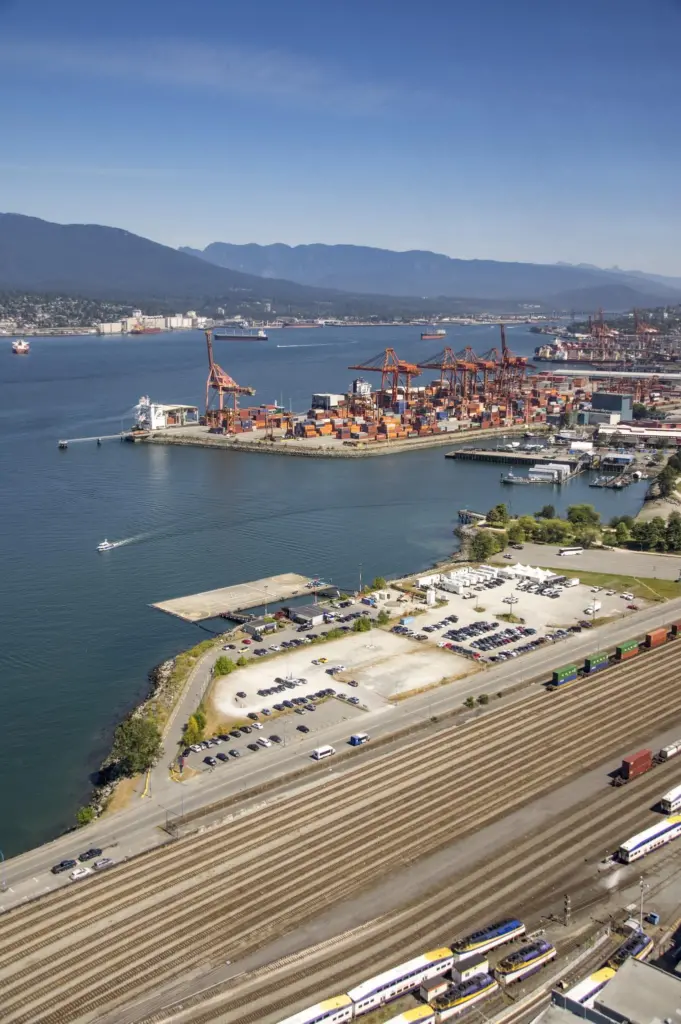
Despite assessments from international agencies of a significant switch in traffic from the Suez to the Panama Canal, observers and the ports themselves say the effect has yet to be felt on US West Coast ports.
The statistics confirm the shift: Alphaliner says Panama is taking 60% of all-water traffic, compared to 40% at the beginning of the year. However, freight rate wars, the advent of supersize ships vying for non-existent cargo at a time of unexpected international trade weakness, and the Hanjin collapse have been upsetting predictions and calculations about repercussions of the expansion of the Panama Canal.
US West Coast ports knew bigger ships were on the way but thought they would be able to keep pace with a gradual, manageable progression, instead of sudden leaps in size that surprised even some of the carriers. And it was also predicted that there would be a similar steady progression in business and trade volumes instead of world trade stagnation.
Initially, most attention was fixed on juggling transpacific strings and doing the sums on the optimum-size of ships to send through the canal. But, new concerns have led to an upheaval in perceptions, planning and execution.
World slowdown
Economist Jock O’Connell says the slowdown in trade, particularly US exports, has confused the issue and been a dampener for planners. “There has been no noticeable effect yet on business for the West Coast, partly due to the slow growth in exports and trade generally.”
Canada provides an indication of a slackening world trade outlook. Total teu volume to the end of July at Vancouver, the country’s biggest port, was down by 6.6% to 1.6m teu.
Maritime analyst Dan Smith of The Tioga Group points out that carriers are still trying to get the right balance of vessel size versus the cargo on offer and that the preference to use the canal instead of serving the US West Coast will be decided later. “Remember that the canal tariffs are based on vessel capacity and not the actual cargo. Most of the ships going through are 6,000-8,000 teu, which is what they were previously.”
Alphaliner puts the weekly capacity of the Asia to East Coast trade at 145,000 teu, almost 2% higher than the year before. The number of weekly services has dropped from 16 to 13, but average vessel size has increased from 4,600 teu to 6,400 teu. The average vessel size through the Suez is about 8,000 teu, while there are only eight weekly strings, says the agency.
“There is overcapacity on all trades at the moment and a vicious rate war on the Pacific lanes,” says Mr Smith. “There is not much to gain from opting for savings by going to the US East Coast.”
One region that could suffer from the wider canal is the US south east (Texas and surrounding states), according to Mr Smith, where considerable investment went into setting up distribution centres before the expansion project. “The trend to establish these will slacken off.”
Allianz Global Corporate & Specialty’s latest figures show that the US is by far the biggest user of the canal, with a total of 160 million tonnes (of which exports are 108 million tonnes) followed by China at 55 million tonnes.
Despite uncertainty over container traffic flows, ports handling breakbulk and ro-ro cargo have already benefited from the canal. Wallenius Wilhelmsen Lines is deploying 8,000 CEU ro-ros (car equivalent units), 2,000 CEU larger than previously, in a string that calls at Hueneme and Tacoma. Two of the ro-ros are in service and eight are planned to be in operation by the end of 2017.
The rise in vehicle imports could well have a knock-on effect for the virtually moribund Port of San Francisco. California-based Pasha Automotive Services has signed a 15-year lease to use the 200-acre Pier 80 to bring in up to 150,000 vehicles a year from a maximum of 96 ships a year. Pasha is using San Francisco because facilities at its other ports of San Diego and Grays Harbor, Washington are reaching maximum capacity.
Port shifts
As an indication of the uncertainty about where the ship flows are headed, Oakland recorded its biggest container throughput in 10 years in July, and suggested that part of the reason could be the wider canal.
“There were 153 ship calls in total, compared with 136 a year before,” said spokesman Mike Zampa. “We think this could have been due to the canal but will wait for the year to pan out before we can make any definite assessment.”
Countering this measured response, North Carolina Ports is trumpeting the arrival of bigger post-panamax ships. An 8,200 teu Evergreen vessel has made its first call, the biggest yet at Wilmington and Morehead City.
And the South Carolina Ports Authority reported its strongest August container volumes on record, handling 180,000 teu, a year-over-year increase of 5.6%. During the first two months of the 2017 fiscal year, the port’s container volume was up 3% with 357,000 teu.
One US West Coast port strategy to keep market share has been to cater for 14,000-18,000 teu vessels. The prime example of this was the call by a CMA CGM 18,000 teu vessel to Los Angeles, which allegedly paid $250,000 to be first port of call, and other West Coast ports.
The shipping line announced this as the start of a regular service, but changed its mind because of too little cargo. No other ships of similar size have since been to the US, while there are only a few calls by 14,000 teu vessels.
Economics doubt
A specialist in global supply chains questioned the economics of the CMA CGM visit at the time. “There is an elephant in the room, and I don’t think anyone is talking about it,” Nick Vyas, assistant professor at the Marshall School of Business at the University of Southern California, told a Los Angeles news outlet.
“The liners are losing millions of dollars, and I don’t think larger vessels are truly the answer. I personally believe we have met an inflection point. The question is how big is big enough? At some point, it has diminishing returns.”
Industry executives are saying privately that it is time to re-think the conventional notion that bigger is better for the US West Coast, because of the extra investment, and that there will be more revenue per container with the use of ships of 8,500 teu.
The new perception has led to a more guarded and critical response to the Ocean Alliance proposal to the Federal Maritime Commission for as many as 175 vessels ranging from 4,200 to 18,000 teu, increasing to 220 ships and a maximum capacity of 21 000 teu. Three years ago this would have prompted ports to agitate for bigger terminals and more berths but now ports are not as quick to rise to the bait.
BIG IS NOT NECESSARILY BETTER
Maersk has reinforced the new thinking of using smaller ships to call at the US West Coast by deploying six 4,000 teu panamax vessels on a new transpacific string to Los Angeles/Long Beach to fill the void created by Hanjin’s collapse.
And while Hanjin has opened the field to other players, it has also rattled the nerves of US port authorities. Long-term terminal operating leases that include financial guarantees/subsidies for terminal operators increasing their facilities could prove disastrous for ports if an operator/liner company files for bankruptcy.
The US has been jittery for some time that more than one bankruptcy is on its way and the industry does not want to be caught out.
Hanjin owns 54% of Total Transportation International, (TTI), at the Port of Long Beach, with MSC holding the other 46%.
The terminal handles 2m teu a year, and TTI also operates another facility in Long Beach and one in Seattle, totalling 460 acres. The head office is in Long Beach, with subsidiary offices in Seal Beach, California; Arizona and Seattle.
The main users at Long Beach are Hanjin and Mediterranean Shipping Company. Other customers include China Ocean Shipping Company, Maersk, Yang Ming Lines, K Line, CMA CGM, USL, NYK, and Evergreen.
Related Articles
 PORT & TERMINAL NEWS
 OPERATIONS
 PORT & TERMINAL NEWS