



More dialogue with ports and more involvement from port-related stakeholders at IMO is necessary, maritime stakeholders have agreed.
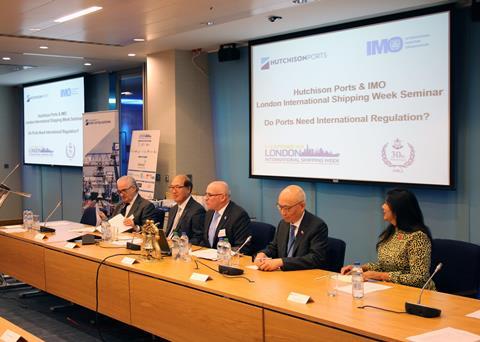
Speakers at a joint Hutchison Ports/IMO/IMO International Maritime Law Institute (IMLI) seminar addressing the question ‘Do ports need international regulation?’ said that more engagement was necessary particularly with advancements in automation and digitalisation, but the extent of any international regulation needed to be carefully discussed. Capacity building was also key to ensuring harmonisation and implementation of existing and any new international standards, codes of practices and guidelines.
During the event, part of London International Shipping Week, IMO Secretary-General Kitack Lim said that the IMO Convention does give the organisation a mandate to regulate in ports and some current IMO regulations do indeed extend to port operations - for example those surrounding security, reception facilities and the Facilitation (FAL) Convention.
"However, there are many opportunities to further explore and enhance the cooperation between shipping, ports and the logistics industries," Mr Lim said, adding that a port sector that can streamline procedures and remove barriers to trade, embrace new technologies, and treat safety, security and reputation as both desirable and marketable, will be a major driver towards stability and sustainable development – and support the achievement of the UN sustainable development goals (SDGS).
United Kingdom Maritime Minister Nusrat Ghani MP also highlighted the advances being made in the integrated supply chain. "What new standards will be needed is a question we need to answer," she said, adding that regulation needs to be responsive to new challenges and be fit for purpose.