





Dramatic reduction in emissions
The Port of Oakland has been achieving dramatic reductions in diesel emissions according to new research by the Lawrence Berkeley National Laboratory.
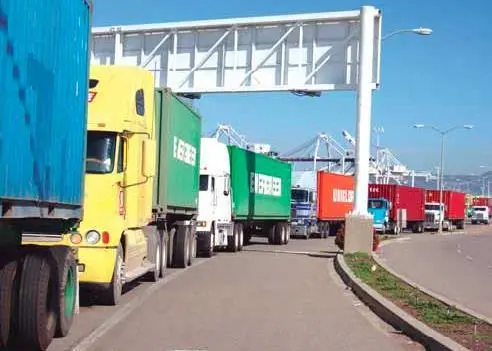
These findings are important because they show that the clean truck programme initiated at the port back in 2009 is paying off, despite all of the resistance from truckers since the new rules were put in place.
Dr Thomas Kirchstetter, adjunct professor at UC Berkeley’s Department of Civil and Environmental Engineering, said: “Our study is an important verification of the impacts of California’s air quality regulations. California tends to lead the way in air quality. The technologies we’re evaluating will eventually dominate truck fleets nationwide, so the significance of our study extends far beyond California.”
For the latest research, drayage (short distance) truck performance was monitored in 2009 before the new emissions rule was implemented, in 2011 during the rule’s phase-in, and in 2013 after the rule was implemented.
The study showed that between 2009 and 2013, the fraction of trucks at Oakland equipped with a diesel particle filter increased from 2 to 9% and the median engine age fell from 11 to six years. During the same period, the emission factor (or average emission rate) decreased by 76% for black carbon and by 53% for NOx emissions.
“These new control technologies on trucks improve air quality despite increases in vehicle miles travelled and fuel consumption,” Dr Kirchstetter. pointed out
His team plans to return to the port next summer and again in 2017 when nearly all heavy-duty trucks will have diesel particle filters installed.
Dr Kirchstetter’s research was supported by the California Air Resources Board and the Bay Area Air Quality Management District.
Related Articles
 ALTERNATIVE FUELS GREENPORT
 OPERATIONS
 ALTERNATIVE FUELS GREENPORT