

In a concerted effort to transform freight transportation and drive marine decarbonisation across the UK, what has been called the country’s most inland shipping port has opened at Stourton Wharf in Leeds.
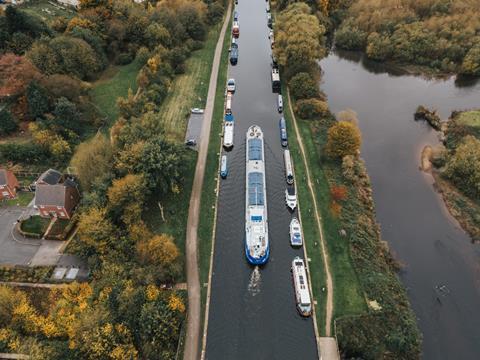
Located at a 1.5-acre site managed by Towngate PLC, Casper River and Canal Transport’s new development places a bold spotlight on the untapped potential of the UK’s extensive inland waterways network - reviving routes long overshadowed by road and rail.
“Waterborne freight transport is a significantly more efficient, cost-effective and sustainable option, but the misuse of our nation’s waterways means it’s not used as much as it should be,” says Sean Taylor, vessel operator at Casper River.
“This is why we’re on a mission to revive the UK’s inland waterways and freight barges.”
Rethinking green logistics
This pioneering port marks a significant stride toward more sustainable logistics.
Positioned strategically between Castleford and Leeds on the Aire and Calder navigation, it offers a vital commercial artery for transporting bulk cargo like steel, grain, cement and aggregates.
For every cargo barge in operation, an estimated 5,893 heavy goods vehicles will be removed from the UK’s roads, cutting congestion and eliminating approximately 1,434 metric tonnes of CO₂ emissions per barge annually.
The newly unveiled port is more than a logistical node, it’s a blueprint for modern cargo infrastructure designed with environmental efficiency in mind.
After a comprehensive three-month renovation undertaken with the support of Towngate PLC, the wharf has been transformed into a fully functional cargo hub.
Key upgrades include the clearance of dense overgrowth, ground levelling with aggregates, the demolition of over 60 metres of brick wall for access, new mooring bollards, safe stairs over flood defences and the installation of emergency canal steps.
A fully equipped welfare cabin with water and electricity has also been installed and site access gates were repositioned to allow easier movement of cargo handling equipment. A road sweeper has been added to maintain cleanliness during operations.
“We’ve had to put in considerable work,” Mr Taylor says.
“Between the wall and canal, we had to clear 70 metres of overgrown land. We’ve installed over 20 containers for cargo separation and containment. It’s now a fully functional, safe and sustainable operation.”
Strategic location
The decision to base operations at Stourton Wharf wasn’t made lightly.
As part of its broader expansion strategy, Casper River spent months scouting locations that could serve as a pivotal inland extension to its freight network.
“We were searching for a wharf for around six months,” Mr Taylor explains.
“After conversations with clients, it became clear West Yorkshire needed coverage. Eventually, we found this protected wharf at the old Copperworks ideally located just minutes from Leeds city centre and the M1 motorway.”
Jake Wilde, facilities manager at Towngate PLC, says: “With three private wharves along our site, it proved the perfect location. We’re pleased to have supported Casper River’s sizeable renovation and look forward to facilitating their growth.”
The Leeds-based port strengthens Casper River’s commitment to keeping cargo on the water for longer.
The firm already has mooring facilities in Rotherham and Burton Upon Stather and is now poised to unify its inland network, connecting sea and canal seamlessly to end users.
Leading the charge
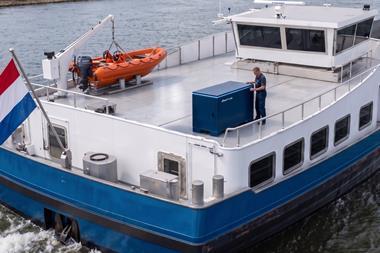
The environmental benefits of this new freight transportation model are indisputable. A single barge, like the MV Off-Roader, an ex-Humber Princess oil tanker, can replace up to 25 HGVs per journey.
This translates to 76% lower emissions per tonne of cargo compared to road haulage, with reduced noise and air pollution along the route.
“Each vessel will save the equivalent of the annual carbon footprint of 174 homes,” Mr Taylor says.
“And if initial trials go well with our first barge, we hope to discharge four vessels each week at Stourton Wharf.”
Casper River’s green ambitions extend beyond cargo movement.
The company is planning to transition its fleet to Hydrotreated Vegetable Oil (HVO) fuel, which it says can cut emissions by up to 90%.
Meanwhile, barges are being outfitted with shore power capabilities, allowing engines to be switched off while moored, further reducing emissions and improving quality of life for nearby residents.
“We’re also exploring solar installation at the wharf,” says Mr Taylor. “That way, when a barge hooks up, the only energy she’ll be using will be renewable.”
Restoring national assets
Despite having more than 5,000 miles of navigable rivers and canals, the UK has yet to capitalise fully on this historical asset for modern freight movement.
A combination of underfunding, lack of awareness and ageing infrastructure has meant much of this network lies dormant says Mr Taylor.
“Within Britain, there are 5,000 miles of canals and rivers that are navigable. But especially in the north, these have not been utilised to their full potential, or for what they were originally built for.”
“We need Government and the Department for Transport to realise that these waterways are not just for leisure cruises or fishing—they’re a proven method of transporting cargo sustainably.”
The timing is critical. With the Canal & River Trust facing a 5% annual funding cut starting in 2027, companies like Casper River are stepping in to demonstrate the commercial viability and environmental necessity of reinvesting in the UK’s waterways.
Expanding horizons
Casper River is already eyeing further growth.
It recently acquired three additional barges from the UK’s oldest barging company, Branford Barge Owners. The goal is to upgrade these vessels to current operational standards and expand inland freight activity throughout the Humber region.
And the ambitions don’t stop there. As a subsidiary of Casper Chartering Limited, which operates 15 shortsea shipping vessels across Europe from Turkey to the Baltic, Casper River is uniquely positioned to offer a seamless logistics chain that keeps cargo on the water from continental Europe right through to UK inland destinations.
“On the continent, they’ve already pioneered how barging and coasters can work hand in hand,” Mr Taylor says.
“That’s our model too. We want to see cargo moving as far inland as possible—across the Humber, Thames, Severn, and Mersey.”
With this unified approach, the company is establishing greener freight corridors that minimise road reliance, enhance supply chain resilience and set a new benchmark for sustainable logistics.
Charting the future
As the UK seeks practical pathways to net zero, Casper River’s inland waterway strategy offers a compelling case for modernisation, port infrastructure investment and environmental stewardship.
The new port at Stourton Wharf isn’t just about moving goods, it’s about moving the UK’s logistics sector in a cleaner direction too.
“We’re not just building a business,” Mr Taylor says.
“We’re helping to build the infrastructure for a more sustainable future. Inland waterways should be central to our national transport strategy.”
With its focus on efficiency, sustainability and strategic infrastructure, Casper River is doing more than unveiling a new port - it’s opening up a new chapter in the UK’s journey toward decarbonised, waterborne logistics.