![PortStrategy[GreenPort]](https://www.portstrategy.com/wp-content/uploads/2026/09/PortStrategyGreenPort.svg)


An Emerging Matrix
Political considerations continue to be profound influencers on the North American ports
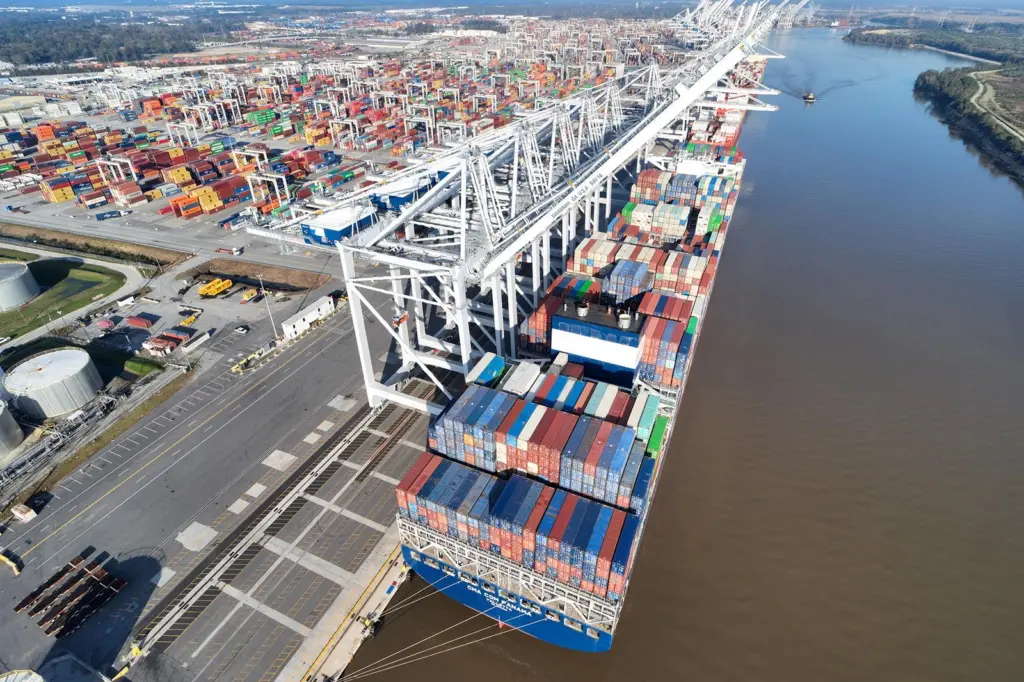
While North American ports saw funding gains from the Feds in Fiscal Year 2024 related to Harbor Maintenance Tax collections, these were pulled back in FY2025, with proposed FY2026 allocations keeping the same cutbacks. The ports, quite sensibly and correctly (this is an opinion piece, after all) have argued that they are necessary, vital, and even critical to infrastructure and commerce on a general level. Indeed, port projects support economic development with hefty multipliers of benefits compared to investment outlays. Taking a high level view, maybe from 42,000 feet, thinking of that old Byrds song, there are broader currents beginning to flow through U.S. maritime policies, with potentially outsized gains for US flagging of shipping tonnage and the associated development of vessel construction and repair facilities. We’ve seen this in the dictates from the office of the US Trade Representative (USTR) and within inchoate policies being formed to “Restore America’s Maritime Dominance,” a document issued in April 2025, during the first 100 days of the current Administration.
So, I’m wondering where seaports might fit into this emerging matrix. For the ports, supporting vessels of a specific registry, even one very close to home, could be a very tricky, though not entirely impossible channel to navigate. But the April 2025 document is replete with language alluding to infrastructure which benefits overall U.S. “security” (however you define that). Later this year, a group of Executive branch agencies will be releasing a report with plans on how the U.S. might: “…invest in and expand the Maritime Industrial Base including, but not limited to, investment and expansion of commercial and defense shipbuilding capabilities, component supply chains, ship repair and marine transportation capabilities, port infrastructure, and the adjacent workforce.” Ports, in their (typical) role as landlords, have a great deal of sway when it comes to landside real estate, and should be watching closely as decision makers in the White House develop their plans. Over the decades, the role of builders of commercial vessels has declined, but the infrastructure still exists.
The early 2020’s have seen port and regional planners’ abilities to re-purpose old and dormant facilities, with offshore wind (a separate topic, to be sure, especially when Washington, DC policies are part of the discussion) coming to mind. There may be some useful and readily applicable lessons here as the US maritime infrastructure evolves in the coming months and years.
Related Articles
 CONTAINER & CARGO HANDLING
 INSIGHT & OPINION
 INSIGHT & OPINION