![PortStrategy[GreenPort]](https://www.portstrategy.com/wp-content/uploads/2026/09/PortStrategyGreenPort.svg)






Fitch: Tariff ruling supports US ports
The U.S. Supreme Court’s decision limiting presidential tariff powers is expected to support U.S. ports by improving trade conditions, Fitch Ratings reports.
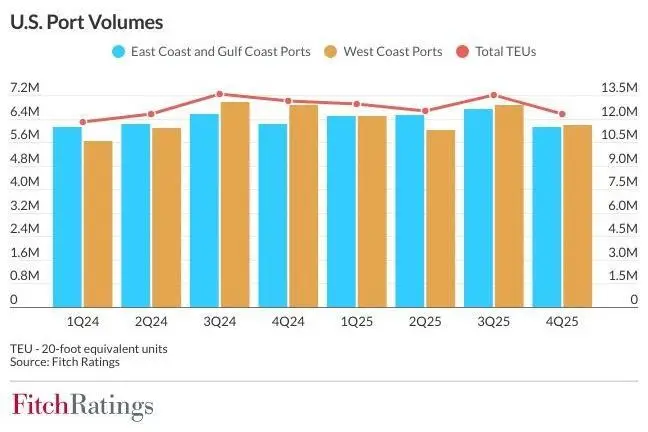
Fitch said the 20 February ruling curbing unilateral tariff authority could ease pressure on US tariffs, helping stabilise import demand, port volumes and long-term port revenue performance across American gateways.
“The ruling is generally positive for U.S. ports,” Fitch Ratings said, noting that a lower tariff environment may support recovery in U.S.-bound ocean freight volumes and strengthen port liquidity over time.
Ongoing sensitivity
The Supreme Court invalidated broad-based tariffs imposed under the International Emergency Economic Powers Act, reducing the U.S. effective tariff rate to 9.4% from 12.7%.
Although the administration introduced a 10% blanket tariff under Section 122 of the Trade Act of 1974 following the decision, effective tariff rates declined for 26 of the United States’ largest trading partners, with no country experiencing an increase.
Fitch said tariff-related uncertainty remains a moderating factor for port volume recovery. However, long-term contractual agreements between ports, shipping lines and terminal tenants continue to provide revenue stability despite fluctuations linked to changing trade policy.
The administration may still pursue alternative tariff mechanisms, including raising Section 122 duties to the 15% statutory maximum, though these measures are limited in duration and scope and may face congressional or legal challenges.
Port throughput trends remain mixed. Major U.S. container ports recorded marginal growth of 1.3% in 2025, while East Coast volumes remained broadly flat and West Coast volumes declined 5.9% year-on-year following cargo shifts linked to earlier labour negotiations.
This just underscores ongoing sensitivity of port volumes to tariff policy changes.
Related Articles
 CONTAINER & CARGO HANDLING
 INSIGHT & OPINION
 INSIGHT & OPINION