![PortStrategy[GreenPort]](https://www.portstrategy.com/wp-content/uploads/2026/09/PortStrategyGreenPort.svg)

FMC looks to smooth out box flow to and from terminals
Recently, the Federal Maritime Commission (FMC) announced that one of its Commissioners would be convening a set of meetings regarding movements of containers in and around the largest U.S. ports.
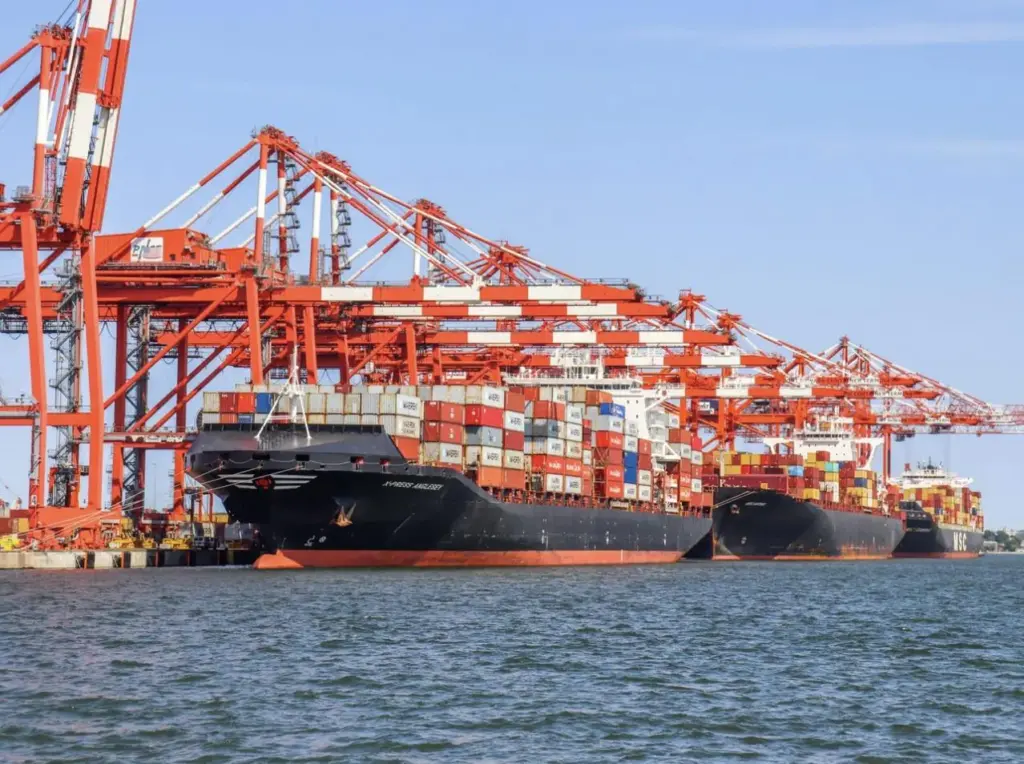
In the FMC outreach on this new effort, the emphasis was on speeding up cargo moves (with the next “supply chain disruption” being a matter of “when” and not “if”) through discussions with industry, rather than via regulatory mandates.
The thrust of the potential reforms would be smoothing out the movement of boxes in and out of terminals. A familiar refrain in this respect from seaport entities (sometimes, not always), is “We are a landlord port…it’s up to the individual terminal operators to keep throughput running smoothly.” Legalistically, there is a lot of truth to this. However, my hope always (sorry, readers, for repetition) is that all concerned- including port management bodies, would look at the bigger picture, and, where possible, participate in discussions arranged by the FMC (and by others in the future that will build on the FMC efforts).
This new initiative comes a year into one real regulatory effort- the Ocean Shipping Reform Act of 2022 (OSRA 2022); visitors to the FMC’s freely available pages on its website can follow the progress of the various complaints by shippers as they work their way thru the FMC’s administrative apparatus. In my view, most of them are smallish items, many by small shippers (one exception, Bed Bath & Beyond is in the celebrity case category- and, by the way, supply chain issues were not the cause of this retailer’s demise) against carriers who have contracted with various terminals in the ports.
From time to time, in scanning through some of the filings, I get the sense that ambiguity about localised container movements is a big part of the problem. And I can’t help thinking that some broader guidance, built hopefully with an industry consensus (in the style of another body well known to maritime readers- the International Maritime Organization, or IMO, which relies extensively on “working groups” of industry participants, to guide its efforts), might be helpful here.
So, back to the FMC’s upcoming meetings- the ports to be examined, actually by “Supply Chain Innovation Teams,” will be Los Angeles (approximately 9.9 million TEU handled in 2022), New York/ New Jersey (9.5 million TEU handled) and Long Beach (9.1million TEU handled). If problems at these three behemoths can be meaningfully addressed, then suggestions could be applied across a broader swathe of ports on all coasts.
Related Articles
 CONTAINER & CARGO HANDLING
 INSIGHT & OPINION
 INSIGHT & OPINION