![PortStrategy[GreenPort]](https://www.portstrategy.com/wp-content/uploads/2026/09/PortStrategyGreenPort.svg)






Forecasting economic growth: an uncertain activity
Using economic forecasts to help investors make decisions is an uncertain activity.
We rely on institutional and private sector models of the economy as a guide, but their track record is not inspiring.
The maritime industry, amongst others, is highly dependent upon a good economic forecast such as Gross Domestic Product (GDP), defined as the measure of the value added created through the production of goods and services in a country during a certain period. The modeling employed estimates Consumption + Investment + Government Spending + Net Exports. The data points are normally collected via surveys of the various economic players active in the economy and as a result are prone to revisions, which puts a question on their accuracy within specific time frames.
Most countries report GDP on a quarterly basis with two or three revisions, other countries such as the UK, report the economic growth on a monthly basis which is probably less accurate. The value of short-term projections is less than perfect, particularly in a volatile national, regional and global environment. Econometric models tend to over forecast or under forecast thereby providing a sense of optimism or uncertainty. The quality of the data going into the models is hard to measure.
The accuracy, hence, the value, of the forecasts are also biased. The World Bank suggests that forecasts from the World Bank are on average more accurate and less optimistic than forecasts from the IMF or the private sector. It comes down to who influences projections. Generally, institutions are less accurate than private sector forecasters. Forecasts can be out by 2.5 -2.7 per cent at the IMF and World Bank when comparing their January annual forecasts and third or fourth quarter results.
Based on the above, ports, carriers and cargo owners find it difficult to assess what the past month or quarter growth projections really are and what they might be for the coming months, to two or three years forward. Investment in ships, terminal expansion and inventories of goods essentially are carried out less by economic data and more by gut feel and experience. This of course helps to explain the swings in supply and demand as well as investment decisions which in turn impact pricing.
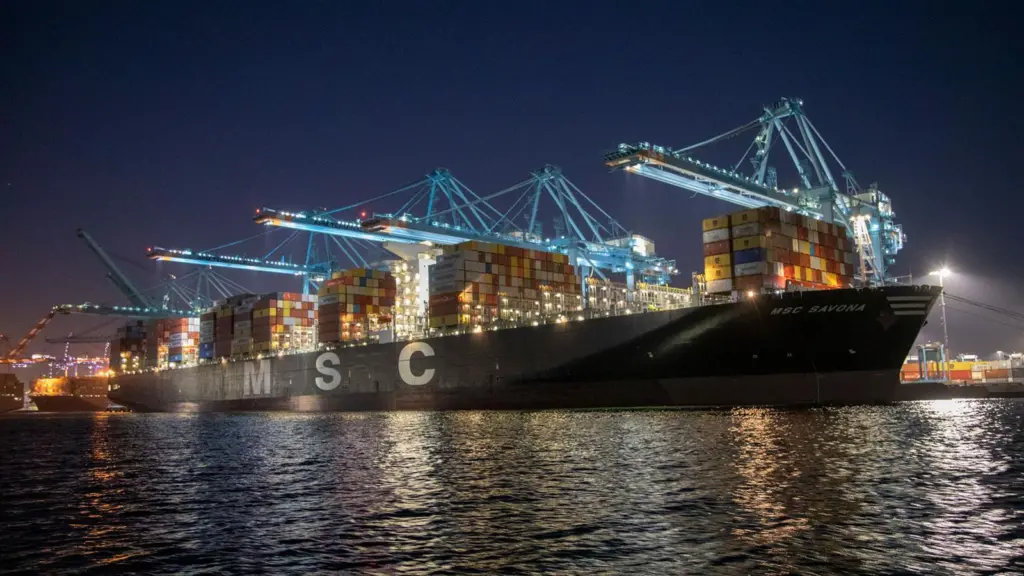
The results of investment decisions provide us with changes in the industries. Today, MSC, Maersk Line and CMA CGM are the three largest container companies as measured by TEU capacity. Ports are seeing new terminal operator investors such as YilPort and Abu Dhabi ports as examples.
On a positive note, this helps to keep us economists in business!
Related Articles
 CONTAINER & CARGO HANDLING
 INSIGHT & OPINION
 INSIGHT & OPINION