![PortStrategy[GreenPort]](https://www.portstrategy.com/wp-content/uploads/2026/09/PortStrategyGreenPort.svg)

Nigeria rethink required
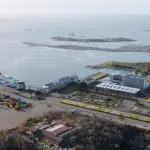
The Lagos ports of Apapa and Tin Can are at an important crossroads. These old city ports are mired in problems of vessel navigational restrictions (vessel length and draft provisions are way below international standards) and landside congestion is a daily reality.
Addressing this fundamental challenge requires proper public planning. Instead, the long-term future is being shaped by self-serving incremental and myopic lobbying and decision-making dictated by the scourges of Nigeria: vested interests and corruption.
It is plain that the Lagos ports are past their due date. They will never have the waterside or landside capabilities to serve a city the size of Lagos, let alone a country the size of Nigeria. But instead of tackling the issue, Nigerian public policy makers and private sector vested interests bury their heads in the sand and think of the next fiver years rather than the next 50 years.
Refurbishment questions
The award, by the Government of Nigeria, of a USD 700 million port refurbishment contract for Apapa and Tin Can to President Tinubu’s close friend and business partner Gilbert Chagoury has been implemented with minimal transparency or due process. Apart from the seemingly questionable process, this appears to have been done without any consideration of the existing operators in the port and whether this is the best way to spend USD 700 million of public funds in a deeply impoverished nation?
A fundamental question is how will the Chagourys coordinate these works with the operators currently working in the ports? The works will be hugely disruptive for years to come and the terminal operators will have no control of how the works are phased and implemented. Past hard-earnt experience tells us it would make much more sense for the operators to do the work so they had ownership of keeping the ports operational while construction work is on-going and with them accountable for delays and cost overruns.
Then there is the interesting assertion that this USD 700 million would be much better spent on opening up Nigeria’s ports of the future rather than spending it on early generation inner city ports. Here the private sector incumbents can take on the task of carrying out the necessary investments to keep them going.
For example, the government needs to invest in proper roads to and from the new Lekki Port which – despite Lekki Port’s optimistic assurances to the contrary – are still some way from fit for purpose. Or why not spend the funds on a breakwater for the proposed new Badagry Port? The huge capital outlay for the breakwater is the main constraint to attracting private sector investments into the port.
A rational policy
There is a body of opinion that the rational policy for Nigeria’s ports is to develop Lekki and Badagry Ports as the ports of the future and gradually, over the next decade, phase out Apapa and the Tin Can ports. They have significant potential to convert into residential and business districts as seen in locations like Sydney, London and San Francisco where old docklands are now vibrant urban spaces.
This would provide Nigeria with modern ports which can receive the large vessels that should be calling Nigeria rather than the smaller vessels currently calling, as well as alleviating the traffic congestion and pollution marring Lagos at present.
A strong, policy-setting, government would plan a gradual and coordinated phase-out of Apapa and Tin-Can while tendering out terminals east and west of Lagos city.
Instead, the government is engaging with current operators at Apapa and Tin Can who want to extend their current contracts. For the private operators, looking to their own pockets, this makes sense. But for the public good, it makes no sense.
A case in point is Maersk/APM Terminals which is the concession holder for the Apapa Container Terminal. For the last year or so, Maersk has been promoting the idea of some port upgrades against obtaining a 25-year extension of its contract and a reduction of its concession payments.
A clear-eyed policy maker would ask the following key questions:
- If Maersk is concerned about a long-term sustainable solution, then why did it walk away from the Badagry project which it had originally signed up to?
- Why should the government agree to lower concession fees for an operator that has made huge profits working in the port since 2005? Further, should the Government of Nigeria prepare a competitive tender for a new 25-year contract to see what other operators would invest and pay in concession fees to operate Apapa?
- Would it not be better to have an independent port operator running Nigeria’s biggest port rather than Maersk Line which has done all it can to protect its monopoly position in Apapa Custom Command? APMT, is often under fire for giving preferential pricing and berthing for Maersk vessels to protect its position in Apapa, while providing second-class service or even threatening to deny service to other shipping lines.
Indeed, it appears other terminal operators are currently following developments in Nigeria. And, they would like nothing better than a chance to bid for Apapa.
Related Articles
 CONTAINER & CARGO HANDLING
 INSIGHT & OPINION
 INSIGHT & OPINION