![PortStrategy[GreenPort]](https://www.portstrategy.com/wp-content/uploads/2026/09/PortStrategyGreenPort.svg)





Storm in a teacup
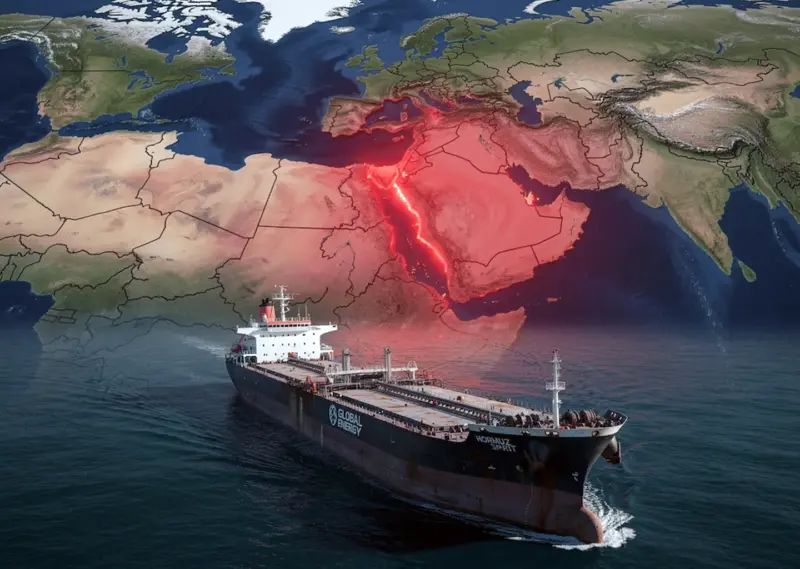
The war in the Middle East has brought knee jerk reactions to the dangers to ships using the Red Sea, primarily bound for the Suez Canal. Is it really such a disaster?
The Houthi attacks on shipping traversing the Bab-el-Mandeb straight at the southern end of the Red Sea is being treated as a major crisis for shipping and beneficial cargo owners much in the same way that acts of piracy off the coasts of Somalia, West Africa and Indonesia were perceived in the early stages.
Shipowners, be they container, dry bulk or tanker, will always assess the risks and costs and quickly find an alternative route for destinations in Europe and the North American East Coast. The first, and quickest to react by abandoning the Suez Canal option or the Egyptian SUMED oil pipeline, were the container carriers, with an estimated 80 plus per cent opting for the Cape of Good Hope (COGH) route, followed by the bulk carriers and most recently by the oil companies. It is all a matter of transit time, vessel supply and logistics management.
As ship owners were faced with the additional fuel cost of the COGH and loss of time they added additional capacity and extra speed to ensure that after a couple of weeks the logistics supply chain would return to normal without the Suez passage. Fortunately (if that is the right word) with the Global economy to a significant extent flat lining spare capacity has been readily available to reactivate. Ship operating companies were quick to pass on the costs of the diversions (and clearly ‘then some’) just as freight rates had fallen to a low.
This then raises the question as to who suffers? Clearly not the carriers other than in the initial act of reaching the decision to divert and to find additional capacity in order to ensure that fixed day services continue for container services. Cargo owners are losers as freight rates rocketed (no pun intended). The Suez Canal Authority is another loser, having reportedly lost over 40 per cent of its revenue so far and this will increase as diversions continue. The SUMED pipeline is another loser.
Ports on the other hand will likely see additional income as more vessels are introduced to the Asia-Europe services. Industry and retailers will have to dig into their inventories for a couple of weeks until the new service networks are fully functional.
Related Articles
 CONTAINER & CARGO HANDLING
 INSIGHT & OPINION
 INSIGHT & OPINION