![PortStrategy[GreenPort]](https://www.portstrategy.com/wp-content/uploads/2026/09/PortStrategyGreenPort.svg)


The fog of war and politics
The maritime industry has been hit by geo-political uncertainty and is in danger of being swept up in tit for tat tariff wars rising out of political consternation with China and Russia.
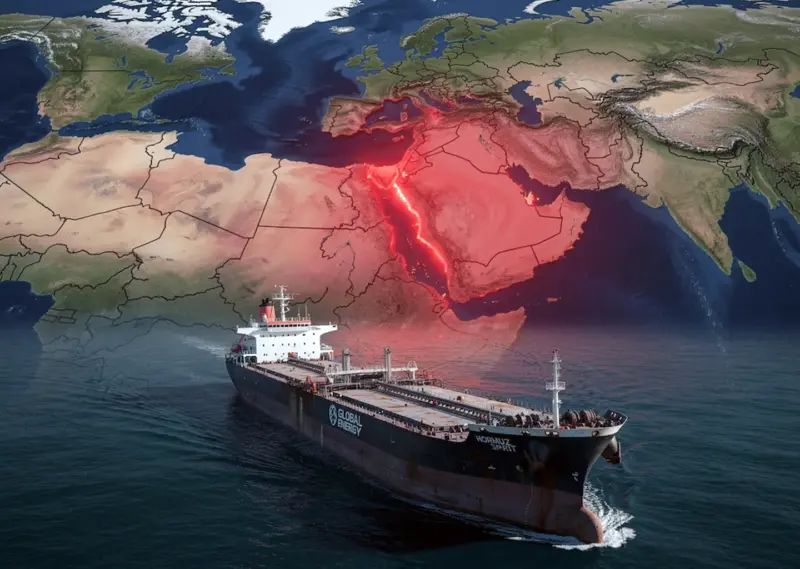
Very little seems to be clear these days as freight rates drop rapidly, then spike suddenly as the Houthi rockets and drones continue to fly ever longer distances and fog in China prevents ships from docking. We have to ask ourselves, how has a Yemeni terror group, the Houthis managed to get hold of Ballistic missiles and fire them for over five months? The answer of course is Iran.
Sea-Intelligence reported that vessel delays accounted for 5.7 per cent of the worldwide fleet in March 2024, which suggests that the Red Sea crisis is a relatively minor issue compared to the disruptions caused by the pandemic and according to the Baltic and International Maritime Council (BIMCO), over 1 million TEU in containerships were delivered in the first four months of the year.
It makes sense that rates went up in the initial 6-8 weeks of the Red Sea crisis. But after that most carriers on the European routes had their weekly network sorted out. What is causing the current port congestion and rate spike despite more than enough capacity available? With so much space around it is hard to work out why freight rates are rising.
Carrier CEOs are sending out mixed views for 2024, some optimistic, others pessimistic and some cautious. Stock market share prices go up and down like a yo-yo in this uncertain environment. What we are seeing is a plethora of short-term views driven by political distractions. The tariff war started by President Trump was not rescinded and the Biden Administration is now threatening further tariffs on China. In this new trade cold war, that is evolving as a by-product of the Russia-Ukraine war, and growing recognition that sanctions cannot be easily administered tariffs are an easier tactic. All of which threatens world trade.
As carriers reshuffle their alliances and vessel sharing agreements, partly under pressure from the EU withdrawal of alliance block exemption legislation, we see that further consolidation of large companies more able to operate on their own will likely increase the cost of operations. Added to this, the growing switch to cleaner fuels and the increasing size of vessels putting operational pressures on ports, will add further costs increases for cargo owners. In this confused environment is anyone thinking long-term anymore? Time will tell and let us hope that the fog lifts.
Related Articles
 CONTAINER & CARGO HANDLING
 INSIGHT & OPINION
 INSIGHT & OPINION