![PortStrategy[GreenPort]](https://www.portstrategy.com/wp-content/uploads/2026/09/PortStrategyGreenPort.svg)


The shift to opportunities?
There may be a shift occurring in thinking in the US and it could be beneficial to ports.
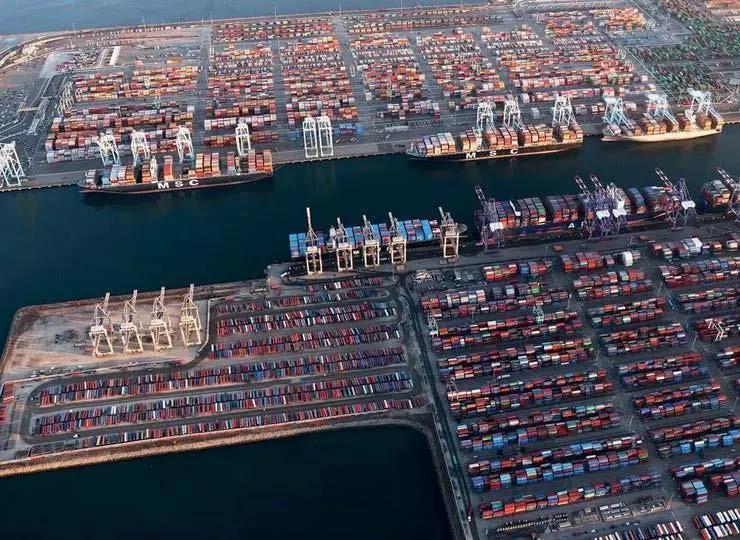
After the supply chain crisis, the “Ever Given”, and disruptions in the energy trades since early 2022, the movements of cargo are certainly in the public eye. That is actually good news for ports – if you believe the maxims about money following attention.
Traditionally, newspaper and TV articles have tended to be local, with funding coming from closer to home. But there has been a new fervor at the Federal level, as evidenced by large grant programs for port infrastructure, and now emerging, new funds sources coming in from mega-bills passed in 2021 and 2022. While I try to shy away from geopolitics, I have detected a not-so-subtle shift in attitudes about the US role in world trade. In particular, I attended a maritime conference recently in New York (happily back to “in person” style) where this came up.
Over the last few years, digitalisation and decarbonisation have loomed large on this event’s agenda. This year, those themes were certainly on the program, but the organisers were able to attract some speakers from inside the Beltway, giving their takes on how foreign affairs (sanctions but also broader trade policies) might be impacting the maritime trades.
On the way home from the event (held in a beautiful venue overlooking the East River in midtown New York), a big item on that day’s evening news was the mysterious balloon flying over the US. While the political speakers had not predicted the flyover (or the three others that followed during the next week), their remarks did suggest that the US was undergoing a shift in thinking towards a more protectionist and, dare I say, potentially insular approach to foreign policy. Certainly, a part of the new realities postulated by the speakers is goods production coming back to US shores, though not on a massive scale. Their feeling was that globalisation has gone too far to be reversed, but it might be fine- tuned, meaning that sources for inputs and finished products may shift around to alternative, and more “reliable” origins.
For the ports, now (as alluded to above) much more in the public eye, these shifts bring opportunities to liaise with customers and potentially develop new business. The conversation at the conference also touched on activities by large cargo interests actually chartering smaller vessels.
While this topic remains very circumspect and hush hush (show me those bills of lading, please!!!), to the extent that it actually becomes a sustained feature in cargo flows (I have my doubts), working with cargo interests and vessel owners on highly bespoke arrangements is clearly a business opportunity.
Related Articles
 CONTAINER & CARGO HANDLING
 INSIGHT & OPINION
 INSIGHT & OPINION