![PortStrategy[GreenPort]](https://www.portstrategy.com/wp-content/uploads/2026/09/PortStrategyGreenPort.svg)






Will Gemini’s shuttle network survive FMC scrutiny?
The USA’s Federal Maritime Commission (FMC) has requested additional information regarding the global operational alliance between Maersk and Hapag-Lloyd.
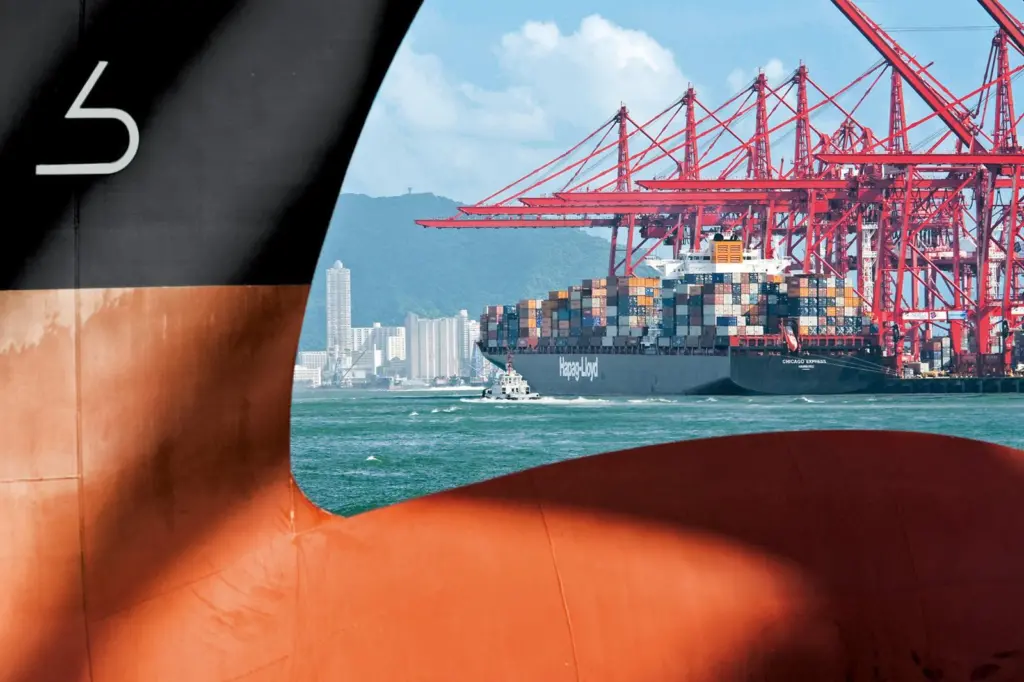
This new proposed alliance, that would become operational in 2025, is something of an innovation in shipping networks because of its heavy reliance on transshipment in hub ports. Gemini makes a distinction between a ‘mainline network’ and a ‘shuttle network’. The latter is used to serve important gateway ports such as Busan, Antwerp and Gdansk that receive direct calls from competing carriers. Thus, Gemini needs highly reliable terminal services and a strong on-time performance to be competitive in such ports. Gemini argues it is capable of delivering reliability because it operates the majority of the terminals in hub ports – through the sister companies APMT and the newly established ‘Hanseatic Global Terminals’ of Hapag-Lloyd.
The FMC has concluded that the submitted agreement is insufficiently detailed to assess its potential competitive impacts. The type of additional information requested is not published publicly as it is deemed commercially sensitive. I can only speculate about the concerns of FMC, but it is relevant to note FMC approved the current 2M cooperation as well as the once proposed P3 cooperation. The only area where Gemini is ‘bigger’ than those other cooperation agreements is in its inclusion of a joint shuttle network and the joint selection of a terminal in a hub port. In other cooperation agreements, partners choose their terminal operator in a port individually. This is not the case with Gemini, precisely because control over terminal operations in (hub) ports is critical for reliability. Likewise, shuttle (feeder) services are provided individually by the shipping lines in other alliances, but jointly in Gemini. While the current number of shuttle services is limited to services to large gateway ports, the cooperation agreement leaves the door open for potential additional joint shuttle services.
While there certainly will be effects of Gemini for service providers in ports, like towage and terminal companies, the potential effects for end users are central for regulators. In my view it makes sense for the FMC (or any other regulator) to note that extending cooperation to shuttle networks in general poses a threat of reduced competition in ports served by such shuttles. Consequently, the regulator may only allow cooperation in the ‘shuttle network’ to services to ports in which sufficient alternative services are available. That is the case in the current Gemini network but would put a limit on extending cooperation in the shuttle network. In any case the FMC decisions will be critical for Gemini’s future.
Related Articles
 CONTAINER & CARGO HANDLING
 INSIGHT & OPINION
 INSIGHT & OPINION