![PortStrategy[GreenPort]](https://www.portstrategy.com/wp-content/uploads/2026/09/PortStrategyGreenPort.svg)




World’s leading economy has swung to starboard
The global economy is facing disruption as the danger of trade wars driven by the introduction of tariffs returns to threaten world trade, particularly between Asia and the U.S. and Europe.
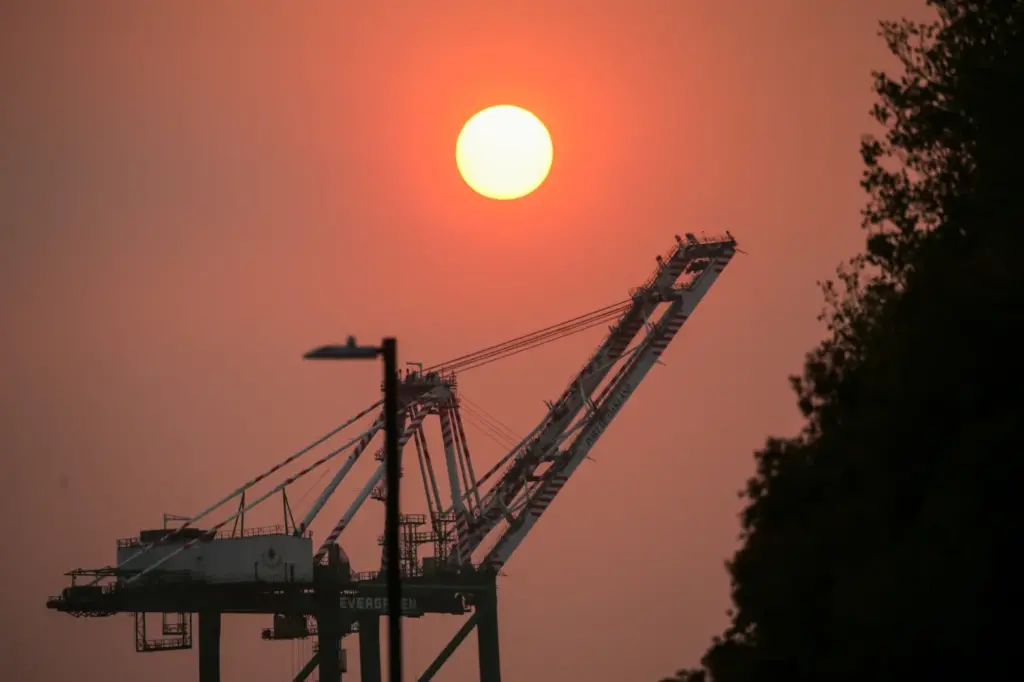
Global politics and the global economy are on a knife’s edge trying to assess what the impact of populism in the U.S. will have and who will suffer the most. And suffer is the key word here, President elect Trump’s policy proposals are inward looking and if implemented, will lead to isolationism and trade wars as he storms ahead with vicious tariffs, especially for China as well as for the European Union.
The disruption that will be caused after January 20th will be far reaching. We are already seeing the initial impacts as European and Asian leaders are assessing their future and trying to make friendly noises thinking it might take them out of the spotlight of trade wars. The UK is distancing itself from the EU and trying to negotiate a free trade agreement. The problem with this is that the U.S. sees free trade agreements as something that must benefit it, with not much thought of give and take. The Office of the Trade Representative is very much inward focused. Just ask Mexico and Canada who have a free trade agreement but are being included in the list of countries that are being threatened with tariffs.
One thing we know is absolute with tariffs, they end up with a tit-for-tat of counter tariffs which will impact global trade, causing a drop in demand as prices rise as someone has to pay the tariff which is usually the consumer. The origin country of the goods suffers not so much from a tax on its exports but instead, a drop in demand at the destination country as inflationary pressures are passed on to the retailers and domestic industries, thereby smothering demand. The maritime industry, particularly ports and container carriers, will be in the front line of those to feel the impact of a tariff war.
The maritime shipping sectors have overcome the loss of the Red Sea route by virtually inhaling the idle fleet and placing record breaking orders for new ships for delivery in 2024 and more in 2025, their thoughts of another multi-billion year of profits ahead may well be shattered as demand evaporates. We are witnessing “doomsday” demand in the U.S. as imports remain buoyant despite economic indicators suggesting that there is not much to be joyful about. The flood of ships will arrive just in time for the sharp decline in cargo volumes, which will also hit the big mega hub ports.
Overall, not a rosy picture in the disruptive state that we are entering. Time to batten down the hatches.
Related Articles
 CONTAINER & CARGO HANDLING
 INSIGHT & OPINION
 INSIGHT & OPINION