![PortStrategy[GreenPort]](https://www.portstrategy.com/wp-content/uploads/2026/09/PortStrategyGreenPort.svg)


APMT Durban action sparks motivation questions
At the beginning of April local newspapers in Durban including Business Day carried a story announcing a legal challenge by APM Terminals (APMT), part of the Maersk group, to the confirmed award by Transnet of the Durban Container Terminal (DCT) Pier 2 concession to International Container Terminal Services Inc.
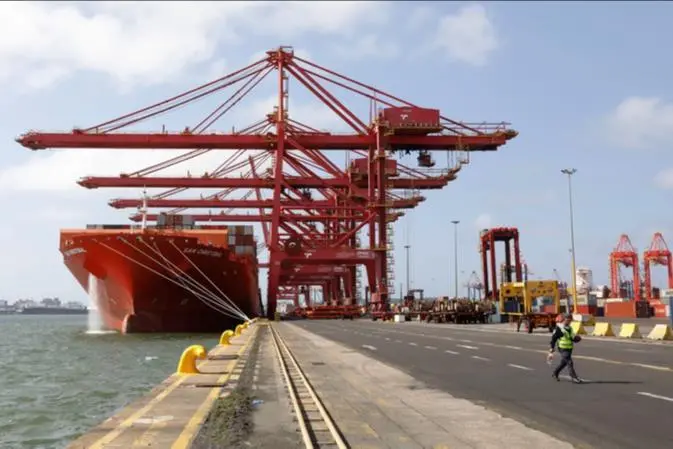
Interestingly, the story carried by Business Day, which features direct quotes from APMT, reflects the message from APMT that it is doing this for the good of the country overall, as part of its stated mission to, “Improve life for all by integrating the world.” It even says, “…we believe we would successfully deliver this in Durban.” Furthermore, Business Day quotes APMT as saying: “It is not our intention to delay the process unnecessarily or to cause any disruption.”
On top of these remarks that suggest APMT’s motives in bringing its legal challenge are quite altruistic it further states that it will “…ensure that the process is lawful.” Another statement pitched to occupy the higher ground.
There are, however, many that might take a rather different view of APMT’s motives.
The bid structure is understood to have been a two-part one with points awarded across both elements – the financial part and the technical submission. ICTSI won which clearly came as something of a shock to APMT. There was plainly an expectation that it had done enough to win. It had the motivation to bid high, getting a foot in the door with DCT pier 2, the jewel in the crown of Transnet’s container terminal portfolio handling over 70 per cent of Durban’s port traffic, would have enabled APMT, together with its sister liner company Maersk, to exercise a lot of influence over South Africa’s supply chains as a whole.
APMT might cite its latest branding as an integrator in this respect but there will certainly be others who see its objective in a different light, “control” being a key factor.
Looking back down the years it can be seen that Maersk, APMT’s sister company, has enjoyed a strong position in Durban accounting for over 25 per cent of throughput with its current operating partner MSC holding an even stronger position nearer to 40 per cent. Furthermore, when it comes to the important reefer trade it is well known that their respective market shares are higher, possibly accounting for up to 80 per cent on a combined basis.
One of the underlying reasons for Maersk being able to maintain a strong market position can be seen to be quay access. Together with MSC it accounts for the lion’s share of berthing capacity and the only route out of this situation is widely acknowledged to be productivity improvements – faster vessel turnaround offers more available capacity, in turn allowing more access by other liner operators. A more competitive situation, which has long been the objective of parties such as South Africa’s influential Citrus Growers Association.
While not cited by APMT it is clear, given the presence of such a scenario, that there are very strong commercial reasons for APMT to attack the award to ICTSI of partnering with Transnet at DC pier 2. As one source put it: “even maintaining the status quo (nothing happening) will work well for them, loss of control is the fear factor.”
Related Articles
 EQUIPMENT
 OPERATIONS
 OPERATIONS