![PortStrategy[GreenPort]](https://www.portstrategy.com/wp-content/uploads/2026/09/PortStrategyGreenPort.svg)

AT A CROSSROADS
The Port of Vancouver has successfully grown its container business but needs to expand – and quickly. AJ Keyes reflects on the port’s challenges and the initiatives of various stakeholders.
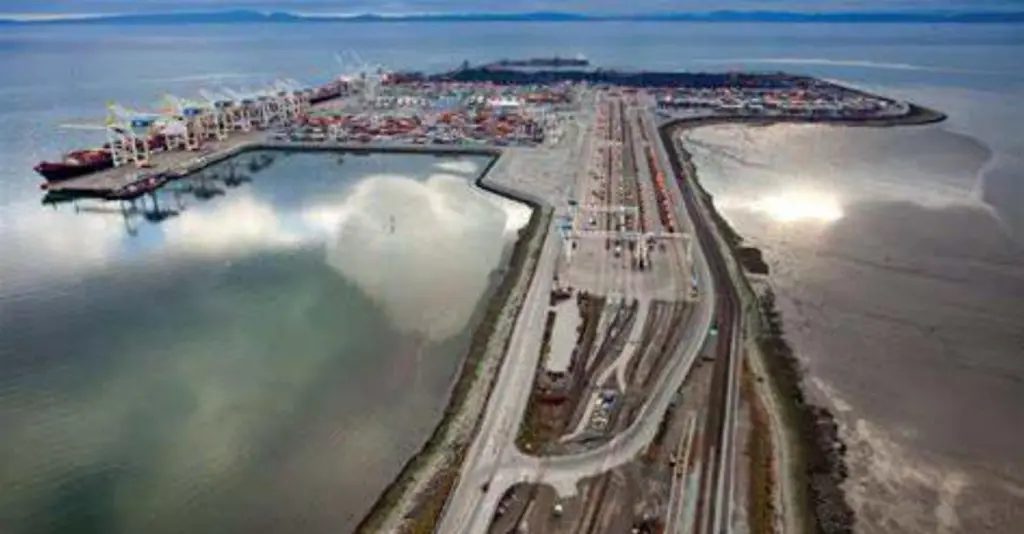
Vancouver Fraser Port Authority (VFPA) has seen its container terminals maintain good long-term growth, has a good mix of international and regional terminal operators, maintains a critical mass of major shipping line customers and has a long-term expansion strategy.
This all sounds highly positive and, generally it is, albeit that the ability to develop additional container terminal capacity for the longer-term is an ongoing challenge.
THE NUMBERS STACK-UP
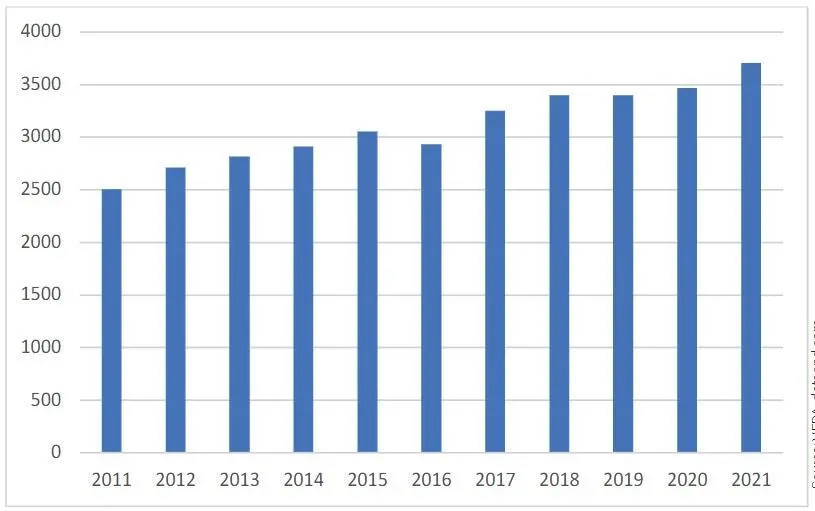
The numbers do stack up, at least in terms of demand for space at the port. Long term growth in the Port of Vancouver (BC) has been good, as Figure 1 shows. In 2011, the port handled almost 2.51 million TEU, which had increased to nearly 3.71 million TEU by the end of 2021 – albeit that last year did include some rebound from the onslaught of COVID-19 in late 2020/early 2021.
Overall, there is a continuing increase in container demand, though in 2021 loaded exports were down by 14.8 per cent and empty units were up by 30.8 per cent. Normal service is expected to resume in 2022. VFPA’s own container forecasts expect short-term base case growth in the region of 3.5 per cent per annum, which simply places more pressure on the need for additional space at the port.
The Port of Vancouver (BC) offers modern port infrastructure, with continued investment by the governing authorities and terminal operators of DP World (DPW) and GCT Canada – both highly-experienced terminal operators in this region and each operating two terminals at the port.
Both GCT Vanterm and DPW Centerm terminals are in the process of offering some short-term respite with additional capacity, but the longer-term need for more capacity is the port’s ongoing and well-documented challenge.
FUTURE IN HANDS OF THE GOVERNMENT
The proposed development at Roberts Bank Terminal 2 (RBT2) remains embroiled in a myriad of challenges, including from GCT Canada who wants to develop its existing Deltaport facility and continued strong opposition from the environmental lobby.
The latter has recently been boosted by a group of eminent scientists in Canada. They are urging the government’s Minister of Environment to reject the proposed expansion project, claiming it will threaten the ecosystem. In correspondence provided by the scientists, there is a claim that RBT2 will significantly impact Chinook salmon and Southern Resident killer whales, thereby creating a clear biological rationale for rejecting the project.
The planned RBT2 initiative has long been VFPA’s perceived solution for servicing long-term container growth, but it is now fully in the hands of the Canadian government, with its final environmental impact assessment decision due sometime in Q3 2022, if it is delivered on time.
CHALLENGES BEYOND PORT CONTROL
There are other day-to-day operational challenges that remain in the Port of Vancouver (BC), which are beyond the control of the port authority and terminal operators.
A key component of any port’s overall competitiveness are its linkages with other parts of the wider logistics supply chain. Canadian National Railway (CN) and Canadian Pacific Railroad (CP) both offer competitive intermodal services in conjunction with the port.
At the time of writing (mid-March 2022), however, beneficial cargo owners had been reportedly front-loading additional cargo on to CP intermodal trains due to fears of a possible strike or lockout.
The existing labour agreement finished on December 31, 2021 and with no signs of a deal being reached, a two-day work-stoppage commenced.
Fortunately, for shippers and the wider industry, CP subsequently agreed to start operations again and work with an arbitrator to agree a deal for its 3,000 strong workforce involved.
Unsurprisingly, shippers using the Port of Vancouver (BC) and CP remain keen to see a deal reached and normal service resumed as soon as possible. As one cargo owner, who did not wish to be named, explained there have been a number of recent challenges through this port gateway. “We endured the impact of COVID-19, the November 2021 storms and subsequent impact on rail infrastructure and operations, the current surge in imports resulting in critical space issues and now the threat of a strike…the past few months have definitely been challenging,” he underlines.
He has a point. By mid-March 2022, Port of Vancouver (BC) users and stakeholders had seen almost three months of continuous challenges involving vessel and cargo congestion. VFPA statistics at the end of the second week of March 2022 confirmed a total of 15 container ships were at anchor waiting for access to a berth, representing an increase on the February average which never went above seven vessels.
This position was further emphasised by a weekly customer advisory from Maersk Line which states how the port’s container terminals were “experiencing congestion” adding that yard utilisation was “at 85 per cent” – a universally accepted figure whereby congestion occurs and operational efficiency is greatly compromised.
Interestingly, VFPA is also still seeing container traffic utilising the Fraser Surrey Docks facility, operated by DPW, even though the access limits the size of ships that can call – such is the demand for space in Vancouver (BC).
To help alleviate the position, a new temporary storage site for empty units has been established in nearby Richmond. Robin Silvester, President and CEO, VFPA, explains: “As partners throughout the Port of Vancouver continue work to clear supply chain backlogs in the wake of November’s flooding, this new container storage site adds valuable capacity to support activities at Canada’s largest port, which in turn supports local and national supply chains.”
With the second phase of this storage facility now open, following the initial phase commencing operations in January 2022, the site is expected to remain in use until July 2022, at least. As the site is part of federal port lands and is intended to be used for terminal development in the future it is reasonable to assume it will remain in use permanently.
AT A CROSSROADS
The Port of Vancouver (BC) is at a crossroads. With approval from the Canadian Government for RBT2 it can continue to target discretionary US market cargo because it will be developing substantial future capacity.
No approval and the port will continue to meet localised demand, both imports and exports, but the discretionary cargo will likely move to Prince Rupert (which is expanding) or more worryingly from a Canadian perspective to a US facility, either Seattle-Tacoma or the San Pedro complex.
Until this decision is made, Canada’s largest volume container port will remain very much in no-man’s land. In the meantime, it will continue to work to ease congestion, mostly caused by circumstances beyond its control (severe weather and, potentially, strike action by one of its major logistics service partners) and hope a positive Government decision is made – and soon
Related Articles
 EQUIPMENT
 OPERATIONS
 OPERATIONS