![PortStrategy[GreenPort]](https://www.portstrategy.com/wp-content/uploads/2026/09/PortStrategyGreenPort.svg)





Don’t overplay the issues!
Non-specialist headline news sources have gone overboard on the impact of the Houthi-led Red Sea closure. Andrew Penfold takes a penetrating look at the cost impacts and other factors that will shape the outcome of any long-term loss of this routeing
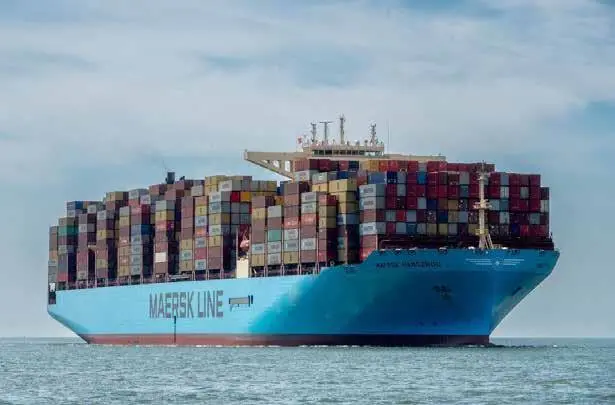
Much has been made of the inflationary impact of closing the Red Sea for container and bulk transit. In reality the impact of such a long-term closure will be quite limited – although the reorganising needed will certainly have a widely disruptive impact. We should be very careful about simply accepting that such developments would push up inflation significantly and push the OECD – especially Europe – into renewed recession. This kind of background noise is very useful for retailers in their permanent quest to raise prices and improve their bottom lines.
CONTAINER COST IMPACT
Table A summarises the actual price/cost impact on a typical consumer goods shipment from Shanghai to Rotterdam – in this case a 40-foot container with a cargo of training shoes. In the middle of last year, the headline westbound rate was placed at around US$1800. The immediate impact of diversion away from the Red Sea and via the Cape was to increase freight rates to around US$3800 – certainly a very sharp increase.
However, let’s look at the actual impact on retail pricing for a pair of trainers. If a 40-foot container can load around 6500 pairs of shoes, then the actual impact of freight charges per pair of shoes will increase from 28 cents to 58 cents. If the shoes retail at around US$120 this results in a price increase of just 0.49 per cent. This is a negligible adjustment that will have no immediate impact on economic growth and inflation. Of course, this is only one commodity grouping and there will be specific, more focused, effects in some instances. However, as an example of consumer goods this is highly representative.
| A: CONTAINERISED GOODS | |
|---|---|
| Freight Cost Cape Diversion Impact on Shipments from China to Rotterdam | |
| Assumptions: | |
| 40’ high cube container | |
| Retail price per pair of trainers: USD120 | |
| Typical freight rate Shanghai to Rotterdam mid 2023 | $1,800.00 |
| Typical freight rate Shanghai to Rotterdam Jan 2024 (Cape diversion) | $3,800.00 |
| Cargo: 6500 boxes of trainers per FEU | |
| Calculation: | |
| Freight costs per pair of trainers Mid-2023 | $0.28 |
| Freight costs per pair of trainers Jan-2024 (Cape diversion) | $0.58 |
| Retail cost impact of higher freight | 0.49% |
WHAT ABOUT BULK CARGOES?
Lower value cargoes – dry bulk, crude oil, LNG – will also be impacted. The diversion costs via the Cape need to be factored-in, although the lack of a Suez transit charge modifies the comparison. Table B looks at a typical VLCC voyage from the Persian Gulf to Rotterdam.
The voyage costs of the diversion – when fully built-up – results in an increase in costs from around US$2.3m to US$2.7m. With crude oil prices at around US$75 per barrel this equates to a CIF price increase of around 17 cents per barrel. Once again, the actual underlying cost impact for wholesale delivered commodities is very limited. The various assumptions used in this overview calculation can be adjusted or disputed but it is clear that, by itself, the cargo diversion will not induce a significant inflationary kick to the world’s economies.
| B: CRUDE OIL | |
|---|---|
| Freight Cost Cape Diversion Impact on VLCC Crude Shipments from Persian Gulf to Rotterdam | |
| Assumptions | |
| Crude oil price FOB per barrel | $75.00 |
| Voyage length Arabian Gulf to Rotterdam via Suez – nm | 6436 |
| Voyage length Arabian Gulf to Rotterdam via Cape – nm | 11169 |
| Trading speed – 11 knots (264nm per day) | |
| Voyage duration via Suez – days | 24.38 |
| Voyage duration via Cape – days | 42.31 |
| Time Charter cost per day | $37,500.00 |
| Calculation | |
| Charter costs via Suez – USD | $914,205 |
| Charter cost via Cape – USD | $1,586,506 |
| Bunker consumption – 55 tonnes IFO per day | |
| IFO price per tonne | $480.00 |
| Bunker costs via Suez – USD | $643,600.00 |
| Bunker costs via Cape – USD | $1,116,900.00 |
| Canal charge via Suez – USD | $815,000.00 |
| Canal charge via Cape – USD | $0.00 |
| Voyage costs via Suez | $2,372,804.55 |
| Voyage costs via Cape | $2,703,405.68 |
| Freight cost via Suez per barrel – USD | $1.19 |
| Freight cost via Cape per barrel – USD | $1.35 |
| Wholesale Price Impact | |
| CIF Rotterdam via Suez per barrel – USD | $76.19 |
| CIF Rotterdam via Cape per barrel – USD | $76.35 |
| Additional wholesale cost – USD | $0.17 |
| Percentage increase | 0.22% |
NOT JUST TRANSPORT COSTS
The actual impact can be seen to be limited and the broader hype around this subject is clearly overstated but the there are other considerations:
- Increased tonne-mileage demand from the diversion will require additional shipping capacity. It is fortunate – for the container lines, at least – that the fleet of Megamax and other large vessels is passing through a period of unprecedented expansion. The tonnage will be there to absorb the longer haul lengths in this sector. Other trades are more finely balanced, and this may well result in the upturn in freight rates being sustained – although the impact should still be limited. There also remains scope to increase trading speeds to meet such short-term needs, although there will be an impact on carbon emissions from this approach.
- There will be short term disruptions as a new equilibrium is reached and this ‘bullwhip effect’ could well see further short term increases in freight rates as a result of short-term mismatches of supply and demand.
- In the container sector, readjustment of transshipment strategies – for example a shift in focus from Egyptian Mediterranean ports to Algeciras/Tangiers will require reorganisation but there is sufficient available capacity to manage such moves. New opportunities will emerge such as using Nqura (South Africa) for transshipping Latin American and Caribbean containers. Equipment shortages may be a factor, with more containers required for a given trade if diverted via the Cape. Fortunately, there is an oversupply of containers at present.
- Voyage times will be longer and, with higher interest rates there will be a negative impact on inventory costs. Even here, the actual cost impacts on a CIF basis will be limited.
- There will be short term disruptions in the ports, but these will be insignificant in comparison with the type of chaos that was eventually managed during the Covid pandemic.
- One of the big losers will be Egypt. It is estimated that Suez Canal revenue accounts for at lease three per cent of the country’s national income. Given the precarious position of the economy this will be a major issue.
IN SUMMARY
It’s too early to assess the absolute impact of the Red Sea crisis but what is clear is that much hype has been generated on this subject. The direct cost impact will be limited, and the disruption impact should be manageable. It’s also clear that this presents a great opportunity for wholesalers and retailers to increase their prices. Ignorance of the true position offers an open goal for such interest groups. This is the real risk.
Related Articles
 EQUIPMENT
 OPERATIONS
 OPERATIONS