![PortStrategy[GreenPort]](https://www.portstrategy.com/wp-content/uploads/2026/09/PortStrategyGreenPort.svg)



Investment uncertainties build
The world looks quite different today than it did in 2019. The implications for port development of these structural shifts are far-reaching. How should the port sector adapt to the new reality? Andrew Penfold takes a look…
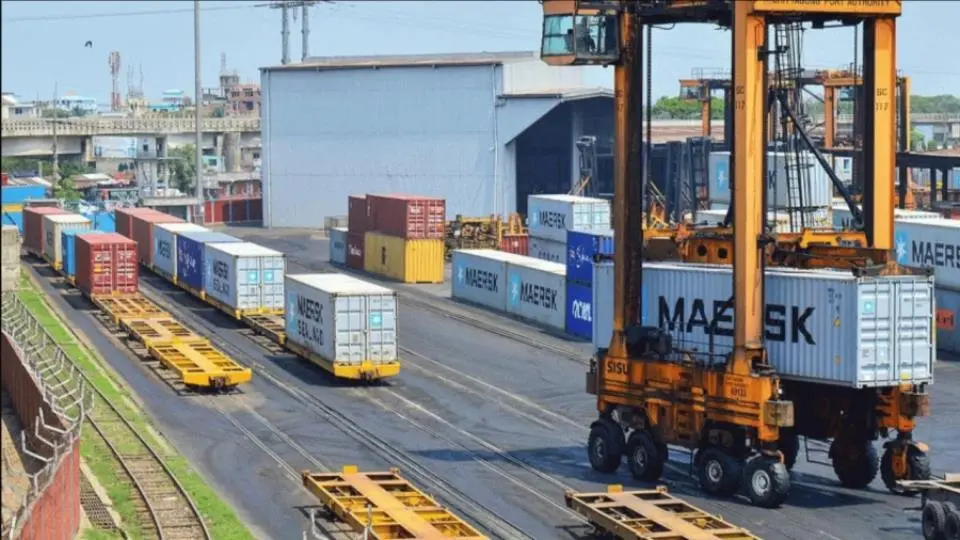
Port development – and especially the container sector – experienced at least ten years of growth and expansion in the period since the Financial Crisis of 2008-2009. Indeed, the process of globalisation was accelerating demand for many years prior to this. The situation from the current perspective looks quite different.
Until 2019 demand was expanding rapidly in nearly all the deepsea and shortsea container trades with this driven by accelerated investment from private investors – both from within and from outside the industry – and also from state players. Private equity involvement in the port/terminal sector drove up valuations sharply and ‘Belt and Road’ money from China accelerated many projects that now seem highly dubious. The grease in the engine of all this was low interest rates and (to a lesser extent) geopolitical motivation.
The US Federal Reserve dropped interest rates to just 0.25 per cent in the immediate wake of the Financial Crisis as a ‘temporary’ measure to save the major banks and financial institutions. This low rate was held for years, and sense was only beginning to return in 2018, but an immediate U-turn followed with the Covid Crisis and only now have rates increased from 0.5 per cent 5.5 per cent.
Superimposed on all of this were repeated rounds of government purchases of their own debt (‘Quantitative Easing’). This story is well charted but what are the implications for port investment?
NO MORE FREE MONEY
Terminal investors are now faced with several issues that have been largely unknown in the container sector for many years. Specifically:
- It costs mush more now to raise the money for investment – this cost pressure will work through into lower margins per box handled.
- The costs of supplies for development – construction and equipment – have gone through the roof, placing further pressures on the bottom line.
- Investors have been faced with much higher demand from the ‘green’ economy, both with regard to infrastructure development and required green features in the terminals.
The answer for any business faced with these changed reality issues and broad inflationary pressures would be to seek to pass these higher costs onto their customers. The terminal sector is seldom able to adopt such a strategy. Stevedoring contracts often have an inflation clause (usually CPI) that seeks to protect revenue from the worst effects of this kind of situation, but a closer look reveals that this may well provide only a false comfort blanket.
Take the situation in the European North Continent ports. Here, new capacity is coming on stream that predates the post-2019 realities. This capacity – especially in the deepsea sector – is facing a decline in demand or certainly slower growth. Whether this is a temporary situation or indicates a structural shift away from China is unclear. But it does mean that terminal operators will be in a highly competitive situation over the next few years. This will be compounded by increasing pressures for lines to run their containers through their owned terminals.
Under these conditions is it realistic to think that CPI protection will escape unscathed? Also, the lines are only now facing up to the challenge of over-capacity and loss-making freight rates. It is unlikely that lines will simply pay-up for higher charges in this environment. As was noted during other periods of shipping over-capacity there will be downward pressure on rates.
This situation is being mirrored in many of the major port ranges in the Developed World and any mismatch of capacity with demand will soon be reflected in other major port ranges.
If these uncertainties were not enough to at least put the brake on some development programmes the geopolitical instability following from the Ukraine war and (perhaps more worryingly instability over Taiwan) has lifted political risk. Some projects are now uninsurable, and others have seen much higher premiums quoted. This has also seen localised contraction in demand – for example transshipment from North Continent ports into the Baltic.
It seems certain that the following will determine the market in the next five years, or so:
- Much more realistic costs of capital – no return to cheap money.
- Inflationary pressures – especially in the near term.
- Uncertain demand development and redirection – lower growth.
- Weaker supply/demand balances – in some regions.
- Much greater political risk.
For commercial investors this clouds the outlook considerably.
DIFFERING PERSPECTIVES
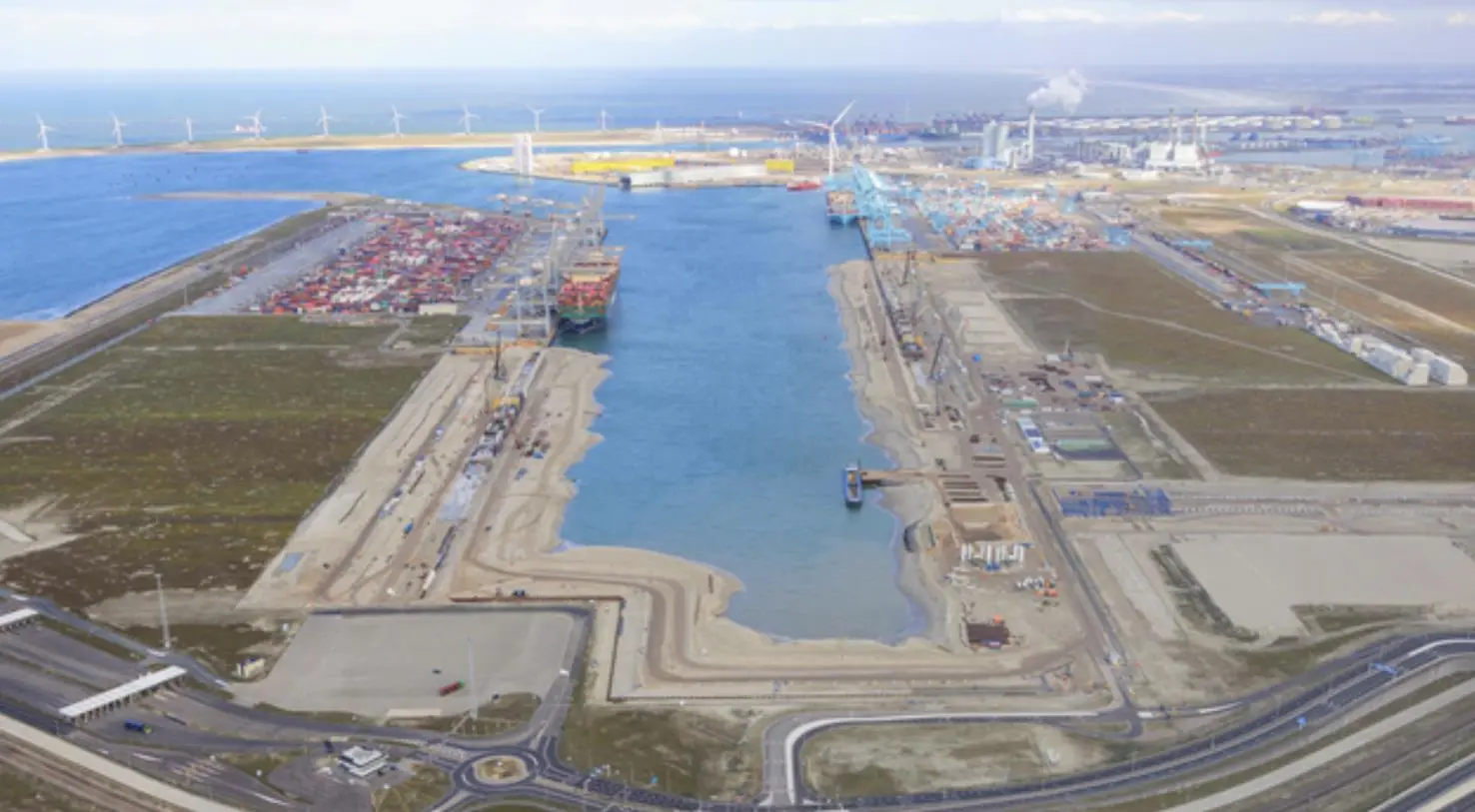
Development of a container terminal is invariably effectively a joint venture between the Port Authority (usually the local or national government) and the concession holder. The latter is usually commercially funded by infrastructure funds or industry operators (terminal operators and shipping lines). The situation is often blurred as in the case with many (now suspect) Belt and Road initiatives.
The Port Authority is, typically, concerned with the competitive position of their port versus other alternatives in the range. This has been the driving force for ports for time immemorial. Whilst this is still fundamental, additional responsibilities are now noted. The increase in green pressures has seen ports required to make investments in other – high cost – projects such as shoreside power or the handling and storage of ‘green’ fuels. In the EU this is driven by Union-wide regulations, but the absence of agreed enforcement rules results in intra-port competition on these issues. Emphasis on these ‘non-commercial’ investments needs to be accommodated.
In contrast to private capital Port Authorities have access to taxpayers’ funds and as pressures mount on costs there are already instances of significant upgrading of state investment.
This can clash with the priorities of terminal operators. The focus here is on making a profit or serving the line owner’s business. With revenue pressures mounting any calls for increased concession charges from Port Authority landlords will only be resisted. Also, new projects will be much more closely analysed – we are already seeing the level of interest from infrastructure funds in terminal development fall back sharply. A few years ago, infrastructure funds were queueing up to invest in terminals, with the result that prices were pushed to unrealistic levels. These days have gone.
At the private equity (pe) level, including where pe has acquired key suppliers to the terminal industry, there is also a distinct push to leverage charges sometimes well into double-digit figures – the net result is increased cost, another pressure on margins.
The divergence of interests between the terminal operator and the Port Authority seems certain to intensify in the next few years.
TODAY’S EVALUATION PROCESS
Since the early 1980s port development – especially for containers – has assumed a steady growth in demand. Under these conditions where ‘a rising tide floats all boats’ some marginal projects proceeded on the assumption that capacity will be readily filled and that demand forecasts could be simply accepted largely unchallenged.
This is no longer the case. In the current financial climate an appraisal needs to look very carefully at the robustness of cost and revenue assumptions. A new checklist must include at least:
- How will the IRR look if interest rates remain at high levels – or even increase further?
- How protected are revenue streams from adverse currency movements?
- Can inflationary cost pressures be readily passed on to the end user (shipping line or shipper)?
- Are line guarantees worth the paper they are written on? Counter-party risk is high and getting higher in the container shipping market.
- Just how robust are demand forecasts and what influence will local supply/demand balances have on pricing power?
All of these issues should always have been at the centre of investments but – unfortunately – this was often not the case, and this is now being manifested by marginal projects feeling the pressure.
At the end of the day an investor in a new or expanded container terminal will have to decide the level of risk they are comfortable with. Its always possible to overplay the risks, paint a pessimistic picture and decide to keep your money in the bank but in reality, the position now is much more complex than before 2019 and margins much tighter. This means that there is no alternative to a very careful and detailed review. Terminal and port investments are long term and can’t simply be ‘sailed away’.
There are many good opportunities out there but the population of ‘maybes’ is much higher than it used to be.
Related Articles
 EQUIPMENT
 OPERATIONS
 OPERATIONS