![PortStrategy[GreenPort]](https://www.portstrategy.com/wp-content/uploads/2026/09/PortStrategyGreenPort.svg)


Montevideo controversy
Rob Ward examines the pros and cons of the increasingly public dispute between Montecon and Katoen Natie over terminal operating rights in Montevideo
A long running dispute between Uruguayan port operators Montecon and Katoen Natie, sometimes simmering and sometimes flaring up, will now go to an international Arbitration Tribunal, to decide whether or not KN’s Terminal Cuenca del Plata (TRP) box terminal is allowed to operate a monopoly, or not, in the port of Montevideo. Uruguay’s current President, Luis Lacalle Pou, has pledged to “watch over the national interest” as his government mounts its defence against the US$600M lawsuit filed by Montecon with the International Centre for Settlement of Investment Dispute (ICSID) – part of the World Bank) based in Washington DC – claiming the Uruguayan government is violating an Investment Promotion Agreement signed with Chile.
“We stand firmly behind the company [TCP] making the largest port investment [of more than $600M] in the history of Uruguay, as it will bring more work and other investments to Montevideo,” says Lacalle and insists that countering the Montecon lawsuit is “in the national interest”.
KN, headquartered in Antwerp Belgium, own 80% of TCP and the remaining 20% is owned by the Administracion Nacional de Puertos (or ANP) which is a branch of the Uruguayan government and also acts as the port authority for Montevideo and various other ports in the South American country.
“To say that this complicates the situation and the status of the dispute somewhat, has got to be THE understatement of the century,” said one Montevideo shipping agent, who wishes to remain anonymous. “It also creates a monopoly situation in terms of container handling in Montevideo, and therefore for Uruguay as a whole, so I understand why Montecon is suing the government.
“However, if the ANP and the government want Montevideo to become THE hub port for the River Plate and the south of Brazil, then it does also make sense to concentrate resources into one high-performing, efficient terminal. It is a very complicated situation, with arguments on both sides. Increasing capacity to more than 2.5M TEU certainly suggests that TCP is after ALL of Buenos Aire’s throughput and the Paraguayan boxes as Montevideo hinterland volumes alone do not justify such a huge investment.”
In 2023, Montevideo as a whole handled 1.13MTEU, with TCP taking 75% and Montecon, which has handled containers in Montevideo since the year 2000, chipping in with 25%. Just a few years ago these roles were reversed as Montecon handled between 60% and 75% and TCP the rest. Last year TCP added two new services (from ZIM and Cosco/ONE).
SWITCH TO TCP
As soon as the container shipping lines realised where the future investments in equipment and infrastructure were headed they started re-deploying their vessels and services to the dedicated box terminal.
But, as Gustavo Hontou, Commercial Director, TCP, says: “Once the improved infrastructure works with the new berths are complete then the remaining 25% will move to us and that is why Montecon are complaining.
“In recent years, total throughput for Montevideo has remained stubbornly below 1MTEU per annum but in any case we haven’t had the capacity to take all the volume for the whole port, but that all changes from the middle of next year.”
With congestion and operational problems at various ports along the ECSA (including Santos, Navegantes, part of the Itajai port complex, and now the floods at Rio Grande, in the far south of Brazil, as well as frequently documented complications in Buenos Aires), TCP has been picking up lots of extra transshipment cargoes but has been unable to fully capitalise on the maladies of others.
“Last year we operated at 83% of capacity, which is very high and leaves no room for error,” says Hontou, who has been with TCP for more than 10 years. “However, from next year we will have two new berths, double from what we have today, and this will give us lots of options and flexibility.”
The Belgian outfit is adamant that the agreement signed with the current Uruguayan government does not breach either Uruguayan or international rules and regulations, and that the controversy is over-shadowing the huge investments – some US$600M planned new spending, front loaded to the first few years of the renewal; compared to the US$455M when the deal was signed three years ago) – they are undertaking in Montevideo.
But Montecon, which is owned by the Neltume Ports consortium, a joint venture between Ultramar, the Chilean stevedoring group (with 60% shares), alongside ATCO, a Canadian outfit based in Alberta (with 40%), says it has invested more than US$100M in the port over its 24 years of operations (including warehousing and reefer plugs) and paid more than $110M in fees to ANP, and so deserves compensation if it can no longer handle containers.
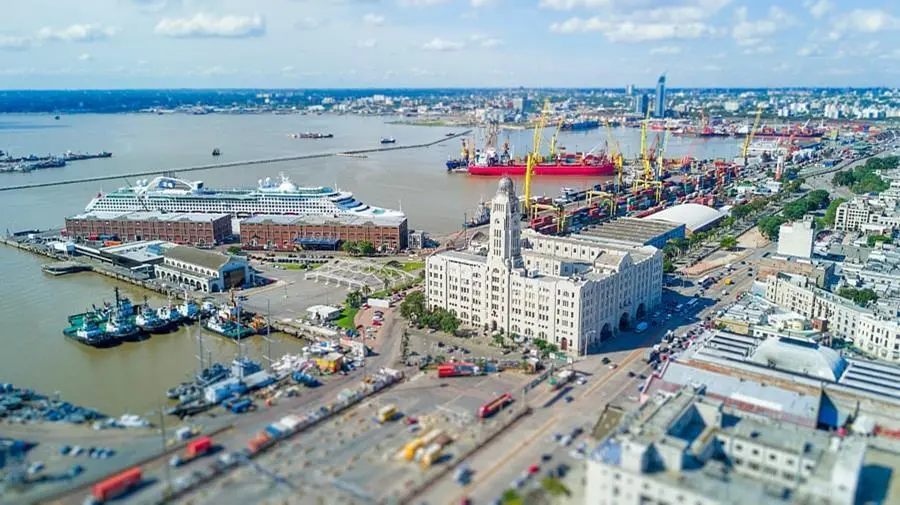
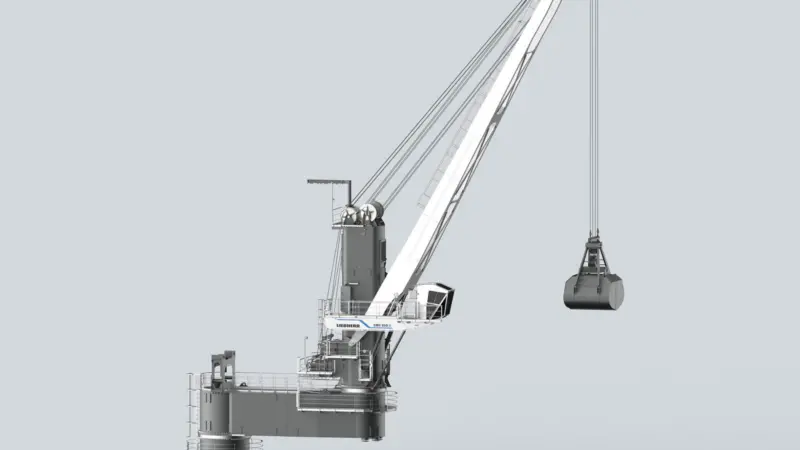
Montecon, which operates three Liebherr LHM 800s in Montevideo, and its shareholders are equally as certain that the bid to grant TCP a monopoly is against international trading rules as well as “being anti-competitive and a contradiction of the Uruguayan Constitution”. Now it will be left to lawyers and judges to determine if there is a case to be made and who is right.
On top of this many shippers and port users in Montevideo are disappointed that the long-standing disagreement has broken out into such far-reaching warfare as they are looking forward to the US$600M of improvements that KN will be undertaking at TCP, which will increase capacity by 150% to 200%, from the current 1MTEU per annum up to “at least 2.5MTEU and possibly to 3M TEU”.
HUB PORT AMBITION
With its current expansion plan, TCP is increasing its quay length from 638m to 1368m and bringing in five more Ship to Shore Gantry Cranes (SSGCs) in July 2025, with the intention of becoming the Hub Port not only for the River Plate, but also for Southern Brazil. The lengthening will allow the facility to handle four ships simultaneously (two x 335m long and two x 300m) – as opposed to just two today – and the capacity and increased draught, which will improve from today’s 13m down to 14m, will allow Montevideo to siphon off even more cargoes from Buenos Aires, including Paraguayan transshipment volumes.
Hontou tells Port Strategy that the extra capacity is needed because large numbers of containers destined for Argentina and the terminals of Buenos Aires, can no longer be accommodated there because of a lack of draught and investment in gearing up for bigger vessels. (see various Port strategy features covering the woes of Puerto Nuevo, in Argentina).
In recent years Montevideo has also been winning back some of the 120,000TEU of transshipment cargo from land-locked Paraguay which, from 2018 to 2022 mostly switched from Montevideo to Buenos Aires because of lack of capacity at the Uruguayan capital. Nowadays Paraguayan cargoes, especially import boxes (such as electronics and white goods from the Far East) and exports, such as frozen beef, are returning to Uruguay, as the Argentine capital’s port has lost some of its draught (down from 10.5m to 10m) and there have been ongoing “major problems with the customs operations in Argentina”.
With the size of vessels calling East Coast of South America rising from 9 to 10,000TEU back in 2017, up to between 12,600 to 14,000TEU today, carriers, importers and exporters in the River Plate countries desperately need more capacity especially with the Argentine economy is expected to pick up with the new right-wing, free enterprise government of Javier Milei (beginning in December 2023).
Hontou says that the investment cost rising from US$430M to US$600M is due to inflation, generally rising costs and the need to remove a large rock near the new quay extension.
ANP will pay for the channel to be eventually dredged down to 15 metres.
Three years ago KN signed an agreement with Lacalle’s government to extend its 30 year lease for another 50 years, so it will now expire in 2081.
In 2022, the port of Montevideo as a whole broke the 1M TEu barrier as it handled 1,070,000TEU. The previous record was 940,000TEU back in 2017, but a stagnant economy and Covid stymied increases since then.
In Montevideo KN currently operates seven Ship to Shore Gantry Cranes and can accommodate post panamax ships up to 22 containers wide.
“THE FUTURE IS OURS”
Ironically, back in 2021, KN was threatening legal action and a demand for more than US$1.3BN in damages against the Uruguayan government for allowing the alleged “unfair competition from Montecon in the public docks”. The Belgians argued that this was against the Treaty of Reciprocal Promotion and protection of Investments between Belgium/Luxembourg and Uruguay. As a sop to TCP and to settle the dispute the government agreed to grant a 50-year concession extension (from 2031 up to 2081) as long as more than $455M was spent on infrastructure and equipment improvements.
But now relations are good with the government, and Presidential elections in October are not likely to cause any changes in this, according to several River Plate sources.
“Everything has been Upside Down along the ECSA over the past year and we have been trying to take up the slack but without the capacity,” concludes Hontou. “But, as from next July we will have the space for more. We believe the future is ours.”
Related Articles
 EQUIPMENT
 OPERATIONS
 OPERATIONS