![PortStrategy[GreenPort]](https://www.portstrategy.com/wp-content/uploads/2026/09/PortStrategyGreenPort.svg)

NEW SUPPLY CHAIN PLAYBOOK
The existing container ports on the US Gulf Coast, and further afield in the US, look set to be challenged by a new facility with potential to change the status quo. A J Keyes reports
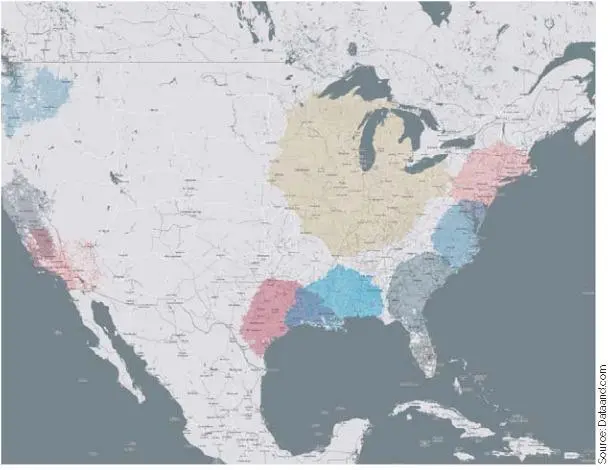
The make-up of the US Gulf container port market looks set to change. Houston, New Orleans and Mobile all play an integral role in serving localised markets, but, now plans are also afoot to serve the massive US Midwest markets via a new gateway port on a highly cost competitive basis.
So, what is changing the status quo? The Plaquemines Port Harbour and Terminal District will be home to a new terminal, the Louisiana Gulf Gateway Terminal (LGGT) at Plaquemines Parish, located 20 miles south of the Port of New Orleans at the mouth of the Mississippi River, which is actively targeting the US Midwest markets and exploiting the Mississippi River.
APM Terminals North America, has expressed strong interest in the project and Wim Lagaay, the company’s CEO notes: “We see tremendous opportunity to write a new supply chain playbook for US exporters and importers with this location.”
Specialist barge operator, American Patriot Holdings (APH), is also an interested party in this project and is keen to target US Midwest grain and agriculture exports (and consumer imports) with a barge service hubbing at the Plaquemines site.
INFANCY ON THE MISSISSIPPI
Container barging remains in its infancy on the Mississippi, but as Port Strategy Editor, Mike Mundy, reported in September 2021, there are favourable cost structures to support new activities, with investment interest in an environmentally friendly transport option that can serve import and export demand.
With continued US port congestion in Southern California this new project at Plaquemines Parish can offer beneficial cargo owners an alternate routing, especially for serving such key locations as Memphis and St. Louis. Coupled with this, opportunities have been identified for export opportunities for manufacturing and dry bulks. There is potentially wide market coverage extending over some of the major regional consumer markets in the South and on to the US Midwest.
The planned Plaquemines facility will be located on the lower Mississippi River, 50 nautical miles from the Gulf of Mexico. The site benefits from a water depth of 50ft and 8200ft of waterside frontage offering the potential for container ships of up to 22,000TEU at a site which has a land bank of up to 1000 acres.
The terminals developers, LA23 Devco, note the terminal will be environmentally-friendly, with power provided by a combination of natural gas and electricity, clearly targeting a robust “green” footprint for its operation. Also highlighted, is the application of modern infrastructure technology and engineering to provide protection against storm surges and wind damage – certainly needed for a port located in the US Gulf.
COMPELLING COST RATIONALE
To many industry stakeholders, the Mississippi and its tributaries represent an under-used opportunity for container distribution. The Plaquemines project offers a compelling transport cost rationale, with use of new-Panamax deepsea container vessels (14,000 TEU+) and relatively low-cost stevedoring combined with specialist inland vessel operations, indicating a cost saving of at least US$400 per 40ft container for imports into the Memphis and St. Louis markets versus use of West Coast terminals. This is a real key driver for demand.
Transit times to Plaquemines may be longer than via West Coast ports but given the ongoing situation in Los Angeles/Long Beach, and the East Coast potentially seeing similar issues, this may not be quite the factor it was in the past. For the US Gulf and the wider US container port market, the status quo may be set to change.
REDUCTION IN FLOOD RISK
The fact that the port and connecting infrastructure will be built 16ft above sea level is further recognition of the appealing geographic location.
Moreover, to reduce the risk of flooding of the terminal site and surrounding area, the US Army Corps of Engineers (USACE) is building a new Federal levee system. This will raise the existing flood protection from a 4ft height to a new height of 14ft and will tie back into the Mississippi River levees at a height of 15ft.
All this means that once completed, the planned system will be able to protect the site from devastating storm surges of the type experienced in the past. Construction of this flood protection profile is scheduled for completion in the spring of 2023.
As mentioned above, another party involved in the process is APH, the exclusive marine transportation service provider between PPHTD and an inland network that includes St. Louis, Memphis, Joliet, Kansas City, Cairo, and Western Arkansas.
APH is planning to introduce new LNG-fuelled ‘Hybrid’ vessels, with initially four ships most likely needed to provide a weekly service covering key inland locations and linking to the new Plaquemines terminal. Further vessels will be introduced in line with a projected ramp up in traffic. Current indications are that the APH vessels will offer a capacity of 1800TEU.
Related Articles
 EQUIPMENT
 OPERATIONS
 OPERATIONS