![PortStrategy[GreenPort]](https://www.portstrategy.com/wp-content/uploads/2026/09/PortStrategyGreenPort.svg)




Pacific ports push-on
Mexico’s two key Pacific Coast ports – Lazaro Cardenas and Manzanillo – are pushing on with major investments to meet new demand. Nearshoring also has the potential to accelerate growth elsewhere, A J Keyes maps the path ahead
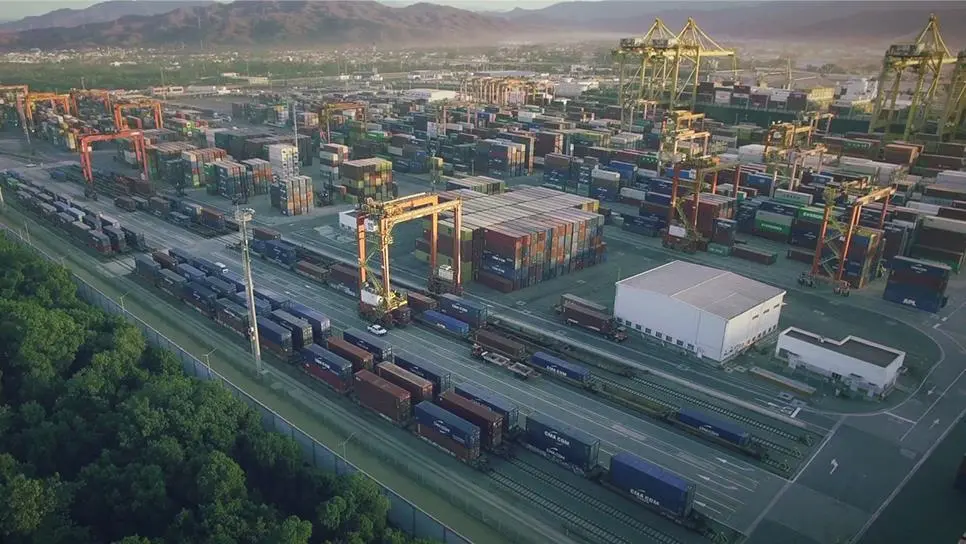
Mexico has two largescale ports on each of the Pacific and Atlantic coasts. Based on share of total container throughput in 2022, Manzanillo and Lazaro Cardenas on the Pacific Coast and Altamira and Veracruz on the Atlantic side account for 90 per cent of the national total. Ensenada handles the majority of the remaining throughput.
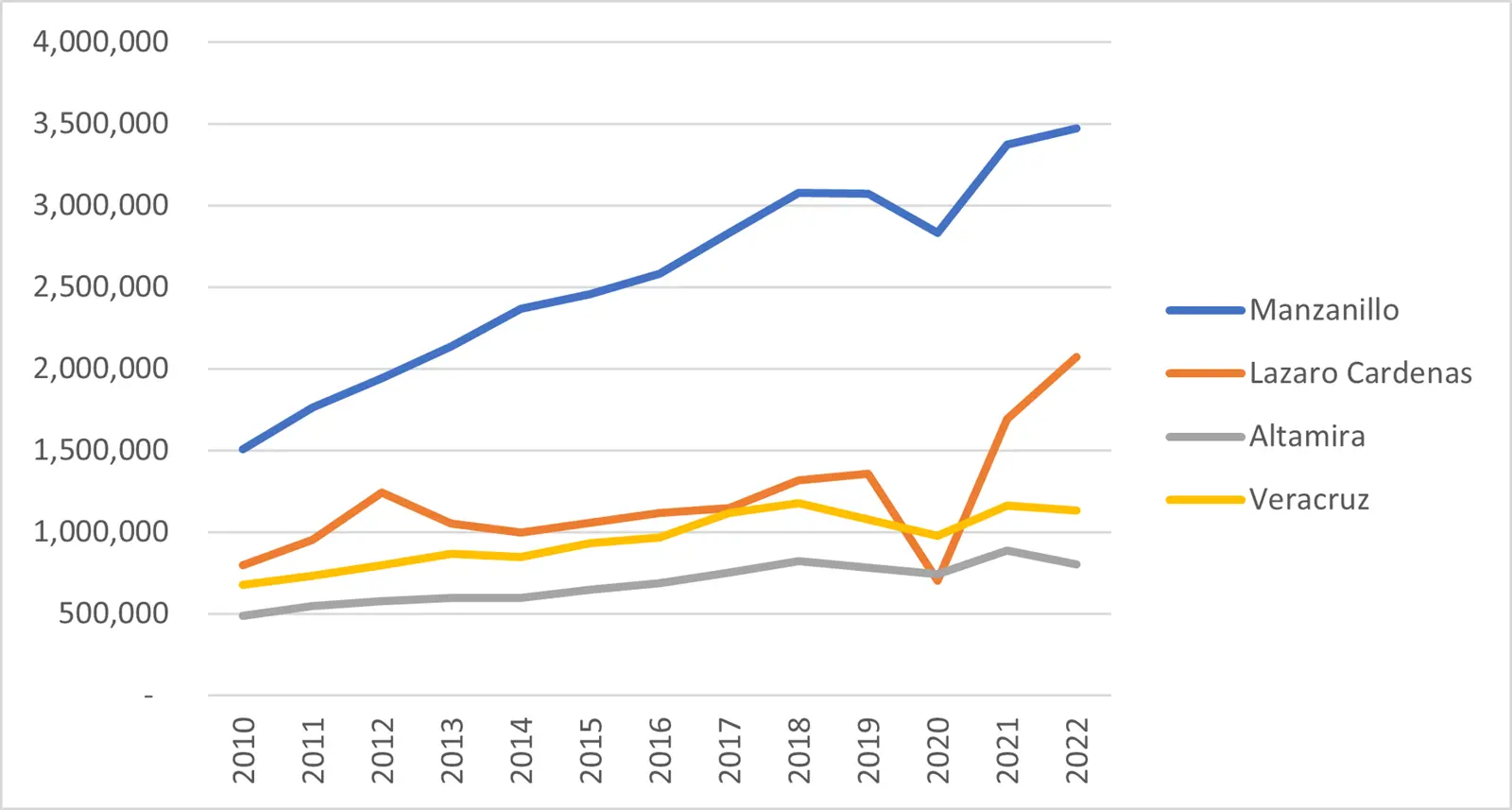
The size and make-up of the container port market in Mexico is highlighted in Figure 1, which details the development of container traffic at the four dominant ports in the country.
Both Lazaro Cardenas and Manzanillo saw a drop in container throughput in 2020, due to their larger exposure to Asian trades, albeit that there was a recovery in both 2021 and 2022. This was particularly notable for Lazaro Cardenas which fell from 1.36 million TEU in 2019 to just 701,350 TEU for 2020 before a rebound to 1.69 in 2021 and 2.07 million TEU for 2022.
Manzanillo’s handling activity followed a similar pattern, although volumes were higher and the drop less severe. Overall, the port has continued to increase its total container throughput, with the 2022 total more than double the 1.51 million TEU handled in 2010.
Atlantic Coast ports did not experience such volatility during the pandemic period and while there has been some growth generated in total container volumes both facilities are seeing their respective shares of the “big four” traffic falling. In 2010, Altamira and Veracruz recorded 13 per cent and 18 per cent, respectively, but for 2022 the numbers were just 10 per cent and 14 per cent.
The rising volumes at the Pacific terminals have been due to increased Chinese containers at the expense of San Pedro ports. Traffic utilising Mexican gateways that is destined for the US and also traffic supporting the increasing nearshoring activities in Mexico. Further, it is clear that in the future, goods sourced in Mexico will not just be from zones adjacent to the border but from a wider geographical range involving other regions. This will, in all likelihood, deliver increased opportunities for Atlantic coast ports.
The trend lines visible today clearly underline that port expansion is necessary to feed Mexico’s efforts to attract nearshore companies and to establish good supply capacity for them. Plus, at the same time, expansion is generally needed to support growing volumes, notably with Asia/China trade and to service potential transshipment traffic coming from the West Coast of Central America.
MAJOR PLAYERS
The Pacific Coast ports are set to remain the major players with new investments consolidating this position, offering increased terminal capacity and improved rail connectivity.
More than US$322 million in public and private funding is being directed to a range of projects expanding cargo-handling capacity at Lazaro Cardenas, including a new 32 acre yard for import-export of 7560 automotive units.
Included in the port investment is the US$140 million APM Terminals (APMT) is spending on its Phase II expansion plan. This will generate an additional one million TEU of annual capacity at the semi-automated terminal. The project will see the yard expanded by 15.7ha and the introduction of the Navis N4 terminal operating system. As a result, total capacity will be 2.2 million TEU per annum when it is fully operational in Q1 2026.
Rail is already a key component of this facility’s activities. There is direct connectivity to the APMT intermodal facility in Mexico City, reducing lead times for deliveries to this key market by almost five days compared to traditional road transport. This enables daily services connecting though all Kansas City Southern Mexico intermodal network, with capacity for building four full trains per day.
Also at Lazaro Cardenas, Hutchison Ports Mexico (HPM) has selected dexFreight to utilise its smart contracts and block train infrastructure to seamlessly and transparently organise container shipments at port terminals in Mexico. The programme was initiated at the port of Veracruz, an inland terminal in Hidalgo and in conjunction with Hutchison’s Lazaro Cardenas terminal with the ability to be rolled out to cover HPM terminals throughout Mexico.
Contecon Manzanillo (CMSA), the Mexican subsidiary of International Container Terminal Services, Inc. (ICTSI), is also employing and growing its block train linked services. The company is coordinating with CMA CGM and Grupo México to offer the first block train for Walmart de Mexico. The operation is part of the French shipping company’s third block train service in Mexico and serves as another milestone for CMSA, which recently obtained certification as North America’s first carbon-neutral port.
CMSA is also progressing its Phase III expansion project. As a result, capacity at the facility will increase from 1.4 million TEU per annum, on a phased basis, to in excess of two million TEU per annum within the next five years. This US$230 million investment covers upgrades to terminal infrastructure, storage yard and container-handling equipment. As a result, when the project is completed Contecon Manzanillo will be the largest container terminal on the Pacific Coast of Mexico.
There are also projects ongoing for a second northern access to Manzanillo for terminals handling agricultural bulk, mineral bulk, and hydrocarbons. This is all part of a longer-term plan involving investment of US$1.2bn from public and private sources and dredging of the navigational channel and other environmental works in the northern area of the port that have already been undertaken.
The position on the Atlantic Coast is less clear. The Veracruz Port Expansion Project continues to face environmental challenges, with the latest being filed by IDA (Interamerican Association for Environmental Defence) and Earthjustice with the Fifth District Court of Veracruz to help protect the Veracruz Reef System.
LEADING THE CHARGE
Mexico’s Pacific Coast ports are clearly leading the charge in preparing for future container demand growth with catering for Asian trade underpinning this. Increases in nearshoring activity have the potential to boost shipments including via the Atlantic ports to the major US markets to the north. At the same time, this trend has the potential to generate shipping options for more remote Mexican ports, notably Caribbean ports may benefit from shipping links to the US East Coast.
Mexico generally has entered an era of development with increased foreign direct investment being a major hallmark of this position. The country has to ensure that port and road and rail infrastructure is optimised in order to derive the maximum benefit from this – a challenge that is not new, but which today has grown in importance.
Related Articles
 EQUIPMENT
 OPERATIONS
 OPERATIONS